Vanessa Vallely Interview: Founder of We Are the City – Part One

I met Vanessa in the City. She is fashionable, warm, friendly and passionate. I came to interview her about her amazing site for women in the City: wearethecity.com. A place where women can find help and advice with their work, life and careers.

Vanessa Vallely:
“There are three core values that I had in mind when I set it up that hold true. One, that we provide a platform for female entrepreneurs to get their products to market on the basis that it fits into our members’ demographic. We do that by taking away hefty advertising fees for them and to give female entrepreneurs a bit of a leg up. We are also a conduit to charities to get to high net worth women. We will actively promote any network or any organisation that is free that will develop skills for women. So probably 40% of what we do on the website falls into that value set, that is really important to me.”

Frost: First of all, what are you wearing? You look great.

VV: “I am wearing a Britt Lintner dress with my normal Gucci shoes and scarf. She is a fantastic designer. She set herself up a couple of years ago doing dresses and managed to get her collection into Harrods, although she’s  taking some time out because she’s raising some small children.”

When did you know you wanted to go into business?

“I left school at 16 with just a couple of GSCEs and headed out into the city with 15 pence and a bag of ambition because I wanted to change my lifestyle and my mum’s as well. We come from a very socially and economically-challenged background, so I knew that I wanted to be successful, I knew that the financial district was two miles away from where I lived and that was where I was going to start.

“I actually realised I wanted to develop the website three years ago due to my frustration with not having a site that covered everything in my life. There needs to be a bit of lifestyle in there because let’s not hide it, I am a woman. I need to eat, I need to have my hair done, I need to find a dentist. But I also wanted to upskill myself outside of my corporate environment, so how was I going to that?

“Women’s networks, courses I could go on –  for me it’s frustrating. If I Googled that information, I would spend hours on the internet. I wanted to find it all on one site so my husband said, ‘Why don’t you create a website for women?’ and we built it together.

“So that’s when I knew that I wanted to work for myself. I love my corporate job and run the website outside of work.

“My aspirations in 10 years time are to be the CEO of a charity, because I do a lot for charity still.”

Tell me about being a Pearly Queen?

“It has been in my family for 100 years. The Pearly Kings and Queens were started by an Orphan called Henry Croft and he used to sew buttons on his suit, he was a rat-catcher in the markets.

“If you think about London 100-odd years ago it was still markets, no superstores or anything. So he used to hang around the markets with the costermongers who were the apple sellers. They used to sew buttons on their suits and were called flash boys.

“If the costermongers were down on their luck, their entire family was affected if someone was ill. There was no social security then, so he used to raise money in the markets for his fellow orphans. Eventually he was so much in demand, he couldn’t be at all the markets, so he made head Pearly Kings and Queens of each of the 20 boroughs of the London of the time and they’d raise money for individuals in that borough. My granddad was pearly King of East London and he passed that title to my father and my father passed it to me.

“I have been a Pearly Queen since I was three years old. I was Pearly Queen of Hoxton until this year when I gave that title to my 11-year-old daughter and I have taken the City of London from my dad. So we still go out and put our buttons on for various charities. I don’t quite sing and dance the way I used to, but it is a lovely part of London heritage and we are as famous as the Chelsea Pensioners, so why not do it? The fact that I have a profile in the City helps because it could die out with people getting old.”

I read that you could see the city from….

“I could, from my tower block window. I lived on the 18th floor and could see NatWest tower. I used to say to my mum, ‘I am going to work there one day and I am going to change how we live’. My first job was in that building.

I drive past there now and I look up at that tower block and I think, That’s where it all began’. We were broke half the time. There were lots of people with challenges and me and my mum were one of them, but bit-by-bit we made it out through sheer hard work. Most of my childhood was spent going to school and then cleaning betting shops until 11 pm. I don’t know if my mum still has it, but I think there’s a picture where I am holding a mop that is bigger than I am. I still love to clean – mopping and stuff like that.”

Was it hard getting to where you are now? Any reinforced ceilings?

“Yes, in the City I was different in a time when diversity wasn’t really appreciated. I didn’t speak the right way, I didn’t look right, and had a bit of an attitude. I was quite precocious and quite a forceful individual because I wanted to get ahead. I never had a college network to back me up, I never knew anyone, so I had to fight my corner a little bit harder.

“There were individuals who I worked for along the way who told me I can’t do what I have done. They said I’ll never succeed or I’ll never cut it or I’ll never get that job. I love people like that because they fuel my fire and I love to say to them, ‘Well, actually, you were wrong’.”

It’s all connections isn’t it?

“Absolutely. And I spent the past six years building those connections, not just for me, but for other people. I find people jobs, I mentor, I connect businesses, source providers. I spend probably 30% of my week connecting people to others. That’s why my strapline is ‘Make The Magic Happen’. They can go off and do stuff together. They call me a ‘contentpreneur’. I enjoy doing that and enjoy hearing about what other people have done as a result, because I feel like I was part of it.”

I heard that you were the most connected women in London….

“I do know a lot of people. I do agree that there are only three degrees of separation. I can get to most people if I need to. But I don’t call on favours often. I only call on them when I need them. I am more likely to be found giving favours or doing stuff for other people. That’s my model and I enjoy doing it.”

What do you think made you successful?

“Passion and drive. But also I open most conversations with, ‘what can I do for that person?’ and I think what you end up with is thanks. You are good to other people and they want to help you back. Also volunteering for things other people didn’t want to do. People would say, ‘oh, I don’t want to do that’ if there was a project that was really messy. I was the first one with my hands up, because I think you learn so much as a consequence of being in a mess, fixing it, and getting yourself out of that mess.

“I have always volunteered for projects that other people don’t want and for things I don’t necessarily have the expertise for. There are things I have worked on when I’d have to come home and study. I would read books and call on my network, saying, ‘Can you help me understand this stuff?’. I am not a hugely academic person, but I get things done and I have people skills. I get along so well with people. I think if you approach it a certain way, then people will help you.”

What do you think about the global economy?

“I think we’re in a tight space. I think we have been in a tight space since 2008. You look at what happened with the banks out there, Northern Rock and stuff, it has had a knock-on effect. It’s wider now, it’s countrywide, Portugal, Greece, Ireland.

“I think it’s a tough place to be. I think it’s a tough time for businesses, but I also think tough times are the best place to grow sometimes. You are starting from a very low point. I think there are people who will thrive as a consequence, but we have to watch what we are doing. It’s difficult. It’s difficult for public services, schools, I mean I do a lot of work within charities who have had their funding cut. I think the whole world is feeling the pinch. It’s a scary place to be.”

What was the original idea behind Wearethecity.com?

“It was my frustration that there wasn’t really a website for women. There wasn’t something that showed me a one-stop shop where I could make a change. There are now 20-30 charities that we promote and we have over 200 writers.

“These are girls that have never written for publications before and are amazingly talented. Some of them want to share their experiences and they are writing about a myriad of things, those problems that women face in their careers, life, childcare, elderly care, career aspirations, setting up a business. We are giving them the opportunity.

Wearethecity has grown from being a website that was built on an £8 a month web builder tool that anyone can get off the internet to a website that gets a million and a half hits every single month.

“Let it be noted that I have not done it on my own. There wouldn’t be a me without my husband. He built the website, he is the technical person, he has a full-time job, he believes in the power of women, he believes in me and it is a very supportive partnership. That enables me to do what I do. It is shared responsibility. Yes, when the kids are away we have an argument about whose week was more important, but he is a massive support, I couldn’t do it without him.”

How do you juggle kids with a career?

“Again, it’s a tough one. The kids come first. They have to come first. You have to spend quality time with them and it is quality time. I get up at 5:30 in the morning, generally I am pulling letters out of school bags, I write a few cheques, and I get prepared. I have a childminder that comes at 6:30, I literally hand over as I am walking out of the door. I get into work at 8:45 and I do my full day job. I see people, I do work on wearethecity on lunch breaks or after work, so I don’t mix the two.

When I am here in work, I am here in work. I do my emails on the train. I get home at 7. I see the children, the childminder goes. We tend to do a lot of quality stuff. We go to the theatre and we travel a lot because we live in quite a middle class white area and I grew up in the culturally mixing pot that is Hackney. I don’t want my kids growing up thinking the world is flat or white. I want them to have an appreciation of different religions and cultures. We cook a meal from the culture that we are visiting and then we travel there.

“My kids have a huge world map, probably three feet by two feet, that I bought them a few years ago. Every year, we choose two countries and then we go through a process. They do a little project, we talk about it, we cook a meal and we go. My kids can navigate Heathrow airport, Gatwick, Stansted like you would not believe. It has helped them to grow up. I want them to be the kind of individual who would see a person properly, for what they are, not what they look like or what their beliefs are. That is very important to me.”

Do you think the City is a good environment for women?

If you think of where we came from in the last 40 years, from being able to vote and stuff like that, I still think it is sad that we have to celebrate en masse when a women gets a board position. I would rather that was the norm.

“I also think women in my position should be role models and mentor these women because we need to build the next generation – that next pool of talent – or we’ll never get women who are ambitious enough to get onto boards.

It’s a good spot for women. The young girls that I talk to are coming out with different dreams and aspirations, with a ‘why can’t I?’ attitude, which I like because I think women should continue to push boundaries and I fully support that.”

What advice would you give to other women in business?

“Don’t take no for an answer. Try to remove the emotion. With some things that happen, it’s very easy to get a bit deflated. They just have to dust themselves off, get up and keep trying.

“Networking is one of the most important tools. Meet people, even if you can’t see an immediate need for your business. You never know when that person’s name is going to come up, so spend a lot of time networking with the right peer group. Keep those relationships warm, don’t be transactional, keep in touch even if it’s not a close contact. If it’s a peripheral contact, keep in touch every six months. Drop them an email saying. ‘I thought of you’, that sort of thing. That is massively important.

“Don’t give up. If you have a dream in your head, think about, ‘How do I get there?’. You may be back at the start and your dream is two miles ahead, so how do we get to mile one? Who do we need to help us to get there? What do I need to learn?

“Visualise that short-term goal, but keep the long-term one in mind as well. You just have to keep pushing on. It’s not always easy. I’m not perfect. I had times when I put my head in my hands and thought, ‘Why am I doing this?’  Or when I want to give up, that network around me are the ones that give me the push. You need to push on. That is what I give to my network now.”

I know what you mean, I have times when I think, ‘I can’t do this’.

“But then one of your friends will be strong and they will say, ‘Yes you can’. Then they might have a moment. I think it’s a fantastic time for women, and again, if you hang out with the right set of women who support women, it’s a fantastic place to be.”

It was Madeleine Albright who said there is a special place in hell for women who don’t help other women [Vanessa finishes the quote with me]

Absolutely. And she’s spot on. She said a lot of profound things. She is one of my women that I aspire to. She’s amazing.”

It is an annoying myth that women don’t help other women.

“I can honestly say 99% of women I associate with are absolutely supportive. If we don’t make a difference, if we don’t support other women, if we don’t tell young girls that they can do it, and influence and navigate….

“I don’t think a woman should ever change her make up. I look back at the pictures of me early in my career and I look like a guy, I have a pinstripe suit on. The only thing that says I am feminine is my hair and a bit of make up, because that’s how I thought I needed to be. In order to succeed, I needed to be one of them. I needed to be a ball breaker, I needed to be, ‘I don’t care. I’ll sack that one and I don’t care’.

But you know what? I am absolutely proud to be a woman. Unfortunately, women get labelled very easily, so if you are outspoken about something, you are having an emotional breakdown. If you react to something in a certain way: you’re sensitive, so it is very easy to slap a label on women, and I am like, ‘Why can’t my outburst be described the same as yours? I have a label and you are just being seen as being passionate. There is no difference.”

It’s like that quote: a women who has an opinion is a bitch, but a man with an opinion is strong.

“Exactly. A man and women can say the same statement and people will go ‘Ooh!!’ to the woman and with a man they just say, ‘Alright’. They see things how they are and won’t bat an eyelid. It is easy for women to be labeled and it’s a shame, it shouldn’t be that way.”

Part two is here.

Miki Yamashita On Acting | Frost Interviews

What made you go into acting?

I think I was interested in the arts and performing even before I was aware
of it. My mother says that as a child, I danced and sang around the house so
much that she put me in lessons as soon as I was old enough, because she
wanted me to learn how to do it right. My parents are both teachers, so their
solution for everything is education. It’s actually a pretty good philosophy.
As I grew conscious of my passions in life, I consistently made life
decisions that propelled me towards a life as a performing artist. Let’s just
say I never gravitated towards coal-mining.

Could you ever do anything else?

I guess the right answer is that I actually do many other things. Having
spent my life around many other actors, I have observed that I may be a
slightly different breed than most. I have a group of actor friends that I
started out with performing improv and sketch comedy with at Walt Disney
World, who are still doing only that; I have another group who I did a lot of
musical theatre with, who are still focusing only on Broadway; same with
opera people and comedy writers and commercial actors and episodic
television actors. I am really lucky in that I am actively able to book work in
all of these areas, and I consider that huge spectrum of interests to be my
pursuit as a whole, so if my universe is that huge, understandably there
really isn’t an “anything else” for me.

You famously said: ‘If this business kills me, it will be after everyone in it has my
headshot.’ That’s a go-getting attitude that can be missing in a lot of
performers. Do you agree?

My dear friend Bonnie Gillespie was kind enough to include that in her
brilliant book, “Self-Management for Actors.” When a newer edition came
out, she asked if she could include it again, and I said of course, except that
I didn’t want to imply that manically blanketing an acting market with
headshots was the technique I was espousing. I believe in being fiercely
motivated, but in a very focused and strategic manner. There’s a young actor
in LA, I haven’t seen him in a while, but this crazy kid literally plastered the
exterior of his car with his headshots. I swear! He drives around in this car
all day long hoping for, I don’t know, to get pulled over by a casting
director and get asked to do a monologue by the side of the road?? I don’t
know! But it’s pretty delusional and highly misguided. I guess what I meant
to say is that “If this business kills me, it will be after everyone in it whom I
have researched and targeted as potential buyers for my product has my headshot.”

Over the years, I have met so many actors; some have almost zero
motivation and ambition to do the basic work that is necessary to even have
a chance at success; others are rabidly foaming at the mouth and doing
everything they can desperately and inefficiently so that they can get ahead.
What I’ve learned from these actors is that there is a better way, there is a
sweet spot, where you have a calm, cool, focused energy that propels you
forward slowly, steadily, and intelligently. Wow, I think this is officially the
most Asian thing I have ever said!

I find you incredibly funny, has your sense of humour helped you survive in
showbusiness? Is it possible to do this without one?

Thank you! I think it’s literally impossible not to develop a sense of humor
as a professional actor. I was once asked to sing opera while running full
speed on a treadmill in a sequined gown. I was once told to continue
reciting my monologue while the casting director got on her cell phone and
ordered a chicken salad. I was once physically threatened by a male chorus
dancer. I mean, as actors, this is daily life, okay? And I think if you don’t
find it hilarious, you become seriously mentally damaged in a way that
prevents you from functioning in society as a normal adult. And then it
becomes this wonderful tool to help you consistently cope with the vast
array of indignities that actors face all the time.

What’s the hardest thing about being an actor?

The hardest thing about being an actor is when Chanel sends you so much
free couture from their latest collection that you run out of assistants to re-
gift them to. JUST KIDDING!!! That’s what most people think actors’
problems are. The general public is fed nothing but lies about our
profession, and they are only provided with the success narrative. It’s part
of the machine that allows the industry to maintain its operations, so you
have to accept that civilians are not ever going to get what most of us go
through. The most difficult thing is really how seldom we are actually able
to do our work, and that we must spend an inordinate amount of time doing
work that has nothing to do with performing in order to bankroll the pursuit
of our REAL work.

And the best?

The best thing about being an actor is getting to crash your car into an 18-
wheeler, blaming it all on your assistant, and showing up 4 hours late to set
where they will still tell you you’re the perfect choice to play Liz Taylor. HA
HA HAAA. Seriously, the best thing about this profession is that we are
constantly challenged to imagine what is possible. Every time I get an audition,
whatever it is, a commercial where I’m a pretty Asian mom, or an
opera where I’m a flying ghost bird-spirit, or a daytime drama where I’m the
secretary to the family patriarch, I get to make decisions about these
characters based on my imagination, my life experience, and what is on the
page. And no one else is going to make the same set of choices that I will.
Even if I don’t get the part, for a brief moment, for the duration of that
audition, my humanity was merged with that character, and I find great
fulfillment in my ability to execute that with consistency and quality.

What is your favourite thing that you have worked on?

My favorite thing that I have worked on is an original new work in which I
sang a principal role, with Los Angeles Opera. The piece was called “The
White Bird of Poston,” and it was newly commissioned specifically for the
purposes of educational and community outreach in the city of Los Angeles.
The opera is about the Japanese American Internment during World War II, a
very dark part of American history. The music and the story are so
beautifully written, I felt so honored to be a part of it, and I felt like it used
so many of my skills simultaneously—my classically trained voice, my
acting training, my dance training, and even a little bit of my abilities as a
comedienne. And on top of that, it had such profound cultural significance
to me as a Japanese American.

You have a great niche as an actress: you studied opera, has this greatly helped
your acting career or is it separate thing?

As I mentioned earlier, there are a lot of people that I started out with,
training and performing professionally as serious classical or musical
theatre singers, who are still completely focused on only that sector of
performance. For me, singing eventually became something glamorous and
glorious that I could just keep hidden in my back pocket, and whip it out
suddenly and just stun people with it as needed. This evolution mostly took
place because I moved from the New York acting market which is very
heavily theatre-based, to Los Angeles, which of course focuses much more
on, well, speaking and not singing. But even without the move, I think I was
really adamant about transcending musical theatre; I felt that I had more to
accomplish in other areas, and my interests had a much wider span than just
singing in musicals until I was dead.

Advice for actors?

My advice for actors is pretty depressing, but realistic. If at all possible, get
a degree in a subject that has nothing to do with drama or music. I’ve made
a lot of hideous mistakes in life, but the one thing I did right was to earn a
college degree in English literature instead of acting or vocal performance.
Even though many would say a degree in English is almost as useless, I
would have to argue otherwise. The acting business becomes more and
more competitive every day, and what sets me apart from many others is my
relentless desire to articulate my own experience. As a writer, I have a
heightened sense of power because for the most part, words on a page
cannot be refused or rejected because the writer isn’t blond or skinny. I am
shut out of thousands of performing job opportunities a day simply because
of my physical appearance, something that cannot be transformed by
“working hard.” Trust me, I’ve tried. Exercising cannot change your race!

So my advice is to find tangible skills that will enable you to support your
pursuit of acting for a very very long time.

But ultimately, have faith that you are answering a divine calling by being an
artist. And know that you are in control of what you choose to sacrifice for
this calling.

What’s next for you?

I’m about to make big changes to my online presence; a fellow LA actress,
Sarah Sido, taught me a lot about building websites, so I’m going to use
those skills to rebrand my personal page, as well as start a blog about
acting. Wow, now I’ve said it so I better do it!

FAVORITE ACTORS/ACTRESSES – I think my favorite male actor is Jim
Carrey. A lot of my earlier sketch comedy and improvisational work I did at
Walt Disney World was heavily influenced by him, and I have deep respect
for his significant capabilities as a dramatic actor. He is so interesting to
watch doing anything! Let’s say if, starting tomorrow, he stopped making
studio feature films and decided to just host a vegan cooking show on
HGTV, I would watch that.

For female actresses, I would rather be executed than name just one. Meryl
Streep seems to literally becomes other human beings, to the point where it
actually scares me. Meryl is a frightening example of sheer mastery of the
craft. I would like to see her play some kind of deep sea creature or
something, because that lady would seriously prepare for the role by eating
paramecium and withstanding 500 bars of atmospheric pressure. And that’s
entertainment, my friends.

I love Julianne Moore’s work, because I find that no matter who she plays,
her characterization is so detailed and complete that I feel like I actually
live out the movie in real time as her role. The performance is so intimate
and honest and infused with inner life that I feel like I AM her character.
Believe me, it takes skill to convince a short Asian girl that she is a white
1950’s housewife.

Photo credit: David Muller

Reggie Yates: How to take a photo

Love photography? Watch this video where Reggie Yates shares his valuable advice on photography

Reggie Yates is best known for his work as a TV presenter on The Voice and his shows on the radio; but what most people don’t know is that he is also very passionate about photography.

Reggie first got into photography as a bit of fun when he was studying and now these days his photos get used by magazines, he has his own photography website and has taken photos of the likes of Tinie Tempah just before the Brits.

As he is so passionate about photography, he has joined the Pentax Meet Britain campaign which is a nationwide competition calling on members of the public to submit images of the things which they feel encapsulate our iconic Britishness. The best images will be chosen to appear in a public exhibition in September. Entrants have the chance to win a new Pentax K-30 camera and there is a £1,000 prize fund up for grabs.

Watch our video where Reggie gives his top tips on how to take the perfect photograph and gives his advice on light, composition and the rule of thirds. All these can seem quite daunting to the amateur photographer but stepping out of your comfort zone can really help you develop your photography skills.

Website: To find out more about the Meet Britain campaign visit: www.facebook.com/pentaxuk

Professionally Resting Interview: Lifting the Lid on Acting.

The talented actor behind the blog Professionally Resting first caught my eye on Twitter. She is brave, witty and accurate about the downside of the acting industry. As an actor myself I just read her tweets/blog posts and nod. I just had to interview her for Frost, so here it is! I also have a guest post coming from her soon, so look out for that too.

What made you start your blog?

I’d been reading a few other acting blogs online and I soon realised that none really covered what it’s like to be an actual working actor. Many are written by actors who are constantly in work and that was something that I just couldn’t really identify with. Most actors I know spend a great deal of their time resting and I wanted to create something fun and supportive for those of us that regularly find ourselves within the unemployed majority. I also wanted to use it as an excuse to keep busy. There are days when there’s very little work coming in and having a blog to think about really keeps me feeling like I’m at least doing something creative.

Tell us a bit about yourself (without giving too much away)!

It’s always tough answering these questions without sounding like you’re on Blind Date! I’m in my late twenties and have been acting (on and off) since graduating from drama school in 2006. I had a break for a couple of years after getting a bit trapped in a temping job that became permanent. It was a horrible job but it meant I could have a couple of years actually earning money and being able to buy things that had previously been a luxury like food that isn’t on the reduced shelf. However, there’s nothing quite like a miserable job to remind you exactly what it is that you really want to be doing and that was the catalyst to making me find acting work again so that I could finally escape.


What do you think of the acting industry?

It’s very much a love/hate relationship. I regularly complain about it on Twitter and on my blog because it honestly drives me insane. It can feel that it often has more to do with luck than talent and you are completely at the mercy of those in control of the work that is out there. It often feels like many companies and channels operate a closed shop policy and I think many of them are guilty of working with the same very tiny gang of actors time and time again. I read an article recently that said there was a very small pool of talent out there which simply isn’t true. There’s an absolute ocean of clever and gifted people out there but they often get ignored as there are other names and faces that are deemed more popular. Unfortunately viewing figures and ticket sales are placed about creating quality work and while I accept that many of those performers that are used time and time again are very good at what they do, a bit of variety really wouldn’t go amiss!
However, having said that, there are very industries that would pay you a month’s rent to mess around as a time-travelling police officer for the day and that’s why I’m still slogging away at it!

What is the worst casting you have ever seen?

There are so many to choose from! The reason I started tweeting about castings was because people were so shocked at just how insulting and offensive and downright baffling they often were. Ones such as ‘No pay unfortunately but you will get to ride in a white stretch limo with a midget and the band’ and ‘She looks a bit like a trollop but tries to dress a bit classy’ have been incredible finds. However, I think the worst has to be one that I saw recently asking for actors to play characters in a sweatshop and the company (a very well-known TV channel) were only offering expenses. I thought I was past being shocked by castings but this one was offensive on so many levels that I genuinely had to keep re-reading it just to make sure that I was seeing it properly. Sadly I was.

What was the catalyst behind you starting your blog?

As I said, it was because I felt like I couldn’t relate to the other acting blogs out there and I felt that there needed to be a voice that represented normal working actors who often find themselves out of work. However, although I knew that it was something I wanted to do, it took me a while to actually get it started. It only happened when I was coming back on the train after a month performing at the Edinburgh Festival. I’d stupidly forgotten to bring a book and my boyfriend and I were unable to sit together so to keep myself occupied, I just started writing. After nearly 4 hours of solid writing, I realised I had a lot to say on the subject of acting and after a bit of encouragement from my boyfriend who’s also a blogger, the blog was born.

What can be done to improve the kind of roles women get?

It has to start with the writing. There is not a day goes by that I don’t see at least one casting where a woman isn’t required to either be a stripper or a prostitute and although I often make a joke of it on Twitter, it is very worrying too. There is such great writing out there for men but female roles are so often overlooked. So many times I read castings where all the male characters are given weird and wonderful characteristics while the women are just written to look nice. There are some incredible writers out there who are really trying to make sure that there are strong, interesting roles for women but they need support from the major producers for their work to get made and seen. I do think that it’s changing and television and film is starting to listen but it feels like a very slow process that needs to speed up a little!

What is your favourite, and least favourite, thing about the industry?

Let’s start with my least favourite and get the negative stuff out the way. It has to be the lack of good, paid work out there for actors. So many companies expect actors to work for free and although I completely understand how difficult it must be working on a tight budget, it’s tough when you’re faced with it day after day. Acting is something that I stupidly want to do for the rest of my life but it’s hard when people seem to think that by offering you a limp cheese sandwich and £5 to cover your travel expenses, they’re doing you a favour. I’ve done jobs in the past where I’ve essentially been paying to be part of them and that’s when you know that something has gone wrong.

And my favourite thing about the industry? It’s that you just don’t know what’s coming up next. A few months ago I was whinging on Twitter about how there didn’t seem to be any work out there and literally minutes later, my agent was on the phone with an audition for an incredible part in a feature film. I didn’t get the role but I do love how your luck changes from one minute to the next. Although it can be pretty unnerving at times, especially when you’re going through a particularly quiet spell, it’s incredibly exhilarating too. I think it’s a little bit addictive which is why actors put themselves through such torment.

You blog and tweet under a pseudonym, do you believe it would harm your acting career if you didn’t? Can you be critical?

The decision to write under a pseudonym was made so that I could be openly critical about the industry. As an actor you have to be so careful because you never know who you’re going to be working with next and I think that means a lot of actors are worried about speaking out about how infuriating this industry can be. Writing anonymously gives me the freedom to be brutally honest about the problems I face without jeopardising my acting career. Although there are days when I wish I could just tweet under my real name, I’m sure I’d have been in a fair bit of trouble for some of my comments, especially about casting calls and auditions.

What was your favourite ever job?

Despite going on about getting paid, my favourite job was one when I didn’t receive a penny. It was one of the first jobs I did after graduating from drama school and was a devised piece. It was pretty shambolic most of the time and we didn’t even get expenses but it was incredible experience seeing a project from the first meeting where we had some terrible ideas to the final night of performance. We barely sold any tickets (mainly because it was listed incorrectly meaning that most audience members turned up about 5 minutes before it was about to end) but it was great fun and real learning curve for me as a new actor.

and your least?

A summer-long Shakespeare festival. It was fun for about a fortnight but after three months away from home on only £25 a week, I was a state. The plays were performed outdoors and it was a particularly bad summer which meant that we spent a lot of time performing in soaking wet velvet dresses. British audiences are incredibly resilient and would determinedly sit there huddled up in anoraks and shelter under umbrellas while we battled with wind, rain, thunder and lightning. Because I was earning so little money, I was mainly living off value bran flakes and tomato soup so I ended the three months malnourished, exhausted, utterly sick of the sight and sound of Shakespeare and with about £4 in my bank account. That was something they really didn’t warn me about in drama school!

You can read the Professionally Resting Blog here and follow her on Twitter.

Curried Chicken Kiev With Squash Sag Aloo Recipe

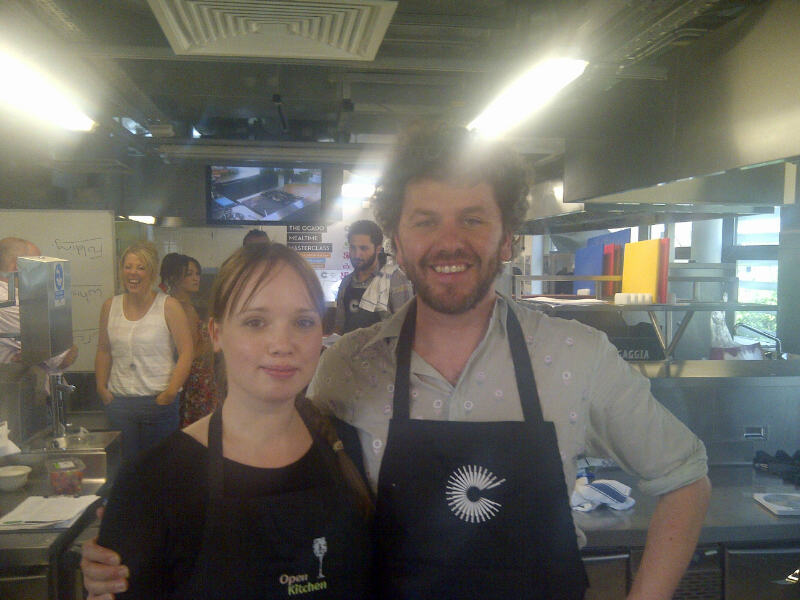
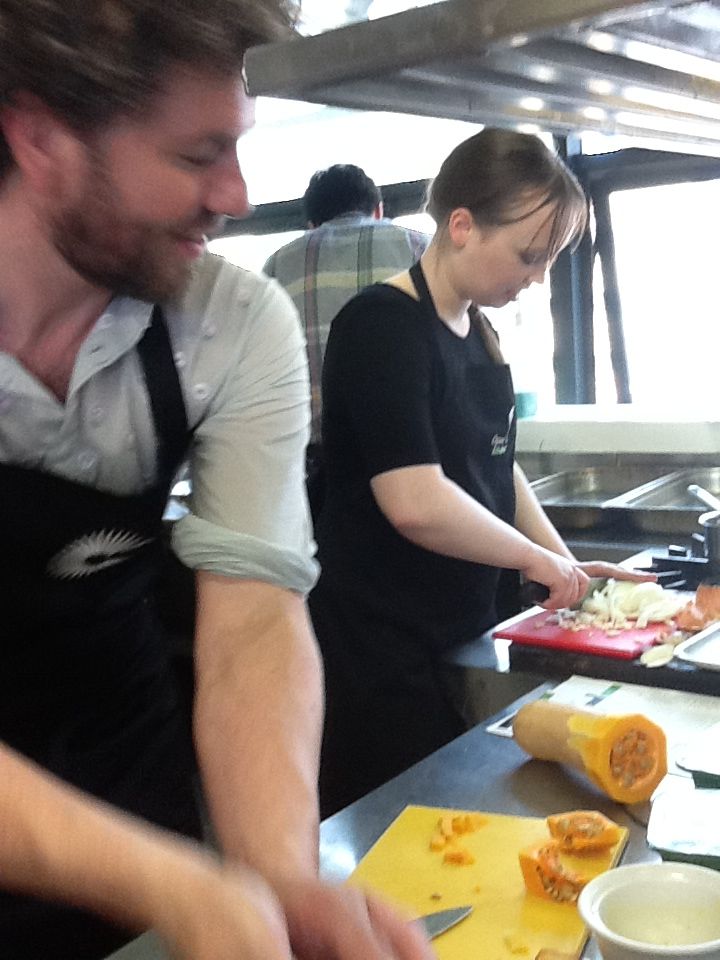
I was invited to take part in a Ocado Masterclass with a Michelin star chef; Simon Hulstone from The Elephant, Torquay. I have been getting better at cooking, but was thinking, upon seeing the recipe, that there was not a hope in hell of me managing to make the Curried chicken Kiev with squash sag aloo. Thankfully, with the help of Great British Chefs Elliot Collins and Ollie Lloyd I managed to make the dish. It looked amazing and it tasted sublime. Simon has made a killer recipe. Do try this at home.

Some tips that I picked up are: when cooking something try to cut the food in the same shape and size, if not, they will not all cook at the same time. Obvious but brilliant. If you want to become a good cook: practice, and when bashing the chicken (read below) but cling film over it. It will stop you having to wash more things because it is contaminated with raw meat.

Ocado have lots of brilliant recipes and are also doing live streaming masterclasses. These live stream masterclasses are the first of their kind. What makes them unique is that you can interact with the chef. Be sure to check them out. I am going to try their Pimm’s Jelly next.


Curried chicken kiev with squash sag aloo

by Simon Hulstone

chicken kiev
• 4 chicken breasts, skinless
• 400g of panko breadcrumbs
• 4 eggs
• 100ml of milk
• 200g of flour
• salt

curry sauce
• 25g of butter
• 1 shallot, sliced thinly
• 1 garlic clove, sliced thinly
• 20g of flour
• 100ml of chicken stock
• 75ml of coconut milk
• 1.5 tbsp of curry powder
• salt
• 100g of butter, softened

squash sag aloo
• 1 small onion, chopped
• 1 garlic clove, crushed
• 2 tbsp of olive oil
• 0.25 tsp of coriander seeds
• 0.25 tsp of cumin seeds
• 0.25 tsp of chilli powder
• 0.25 tsp of ground coriander
• 1 tsp of fenugreek seeds
• 350g of baby spinach, washed
• 300g of potato,
peeled and diced into 5mm cubes
• 300g of butternut squash,
peeled and diced into 5mm cubes
• salt

to plate
1 handful of coriander

method (serves 4)

1. Start by removing the butter from fridge to soften. Next, thinly slice the shallots and garlic and
prepare your 100ml of chicken stock
2. In a saucepan over a medium heat, melt the 25g butter and add the shallots and garlic. Cook
until soft and slightly golden. Add the 1/4 teaspoon of curry powder & cook for 30 seconds, then
add the 20g flour and cook for 30 seconds more. At this stage, add the chicken stock, making sure
to stir constantly. Cook while stirring for 1 minute and this will thicken very quickly
3. Add the coconut milk and bring to the boil. Once the mixture thickens again, remove from the
heat and transfer to a blender. Slowly take the blender up to full speed and blend until smooth.
Add salt to taste
4. Pass the mixture through a fine sieve and set aside to cool
5. Now prepare your mixture for the sag aloo – slice the onions and garlic. Peel your potatoes and
butternut squash and dice them into 5mm cubes – place them in separate bowls, covering the
potatoes in water. Set aside while you prepare the chicken Kiev
6. By now your curry mixture will have cooled sufficiently – combine with the softened 100g of
butter and whisk until fully mixed – it should turn slightly more pale in colour
7. On a large piece of cling film, put the butter mixture down the middle creating a thin sausage
with gaps at both ends of the cling film. Fold the cling film over the mix and roll to form a neat 2cm
diameter cylinder of butter. Tie off the ends of the cling film and set in the freezer until required
8. Now return to your sag aloo. Boil a kettle and place 2 small pans of boiling water over a high
heat. As soon as the water is boiling, add a large pinch of salt to each. Strain the water off the po-
tatoes and add to one pot, add the butternut squash to the other. Cook for 10-15 minutes or until
the squash and potatoes are just tender. Strain and place on a tray to cool
9. Meanwhile, as the squash and potatoes are cooking, place a large frying pan over a medium
heat. Once hot, add the oil, onions and garlic (you sliced earlier). Cook until tender or slightly
coloured

Ollie Lloyd and Catherine Balavage

10. Grind the fenugreek in a mortar and pestle and mix with the other spices. Add the spices (co-
riander – seeds and ground, fenugreek, chilli powder, cumin seeds) to the pan and cook for at least
a minute. Remove from the heat and set aside
11. Prepare a bowl of ice water and set aside. Blanch the washed spinach in the boiling water for
no more than 10 seconds, strain and then plunge into your ice water. Discard the boiling water.
Once the spinach has chilled, drain the spinach and squeeze any excess water out with a cloth
12. Place the pan containing the onions and spices back onto the stove over a medium heat. Once
the onions begin to fry again, add the potato, squash and spinach
13. Mix all the ingredients; you want the edges of the potato and squash to break up a little bit, but
not so they are mashed. Add salt to taste and place on the side until required
14. Preheat the oven to 180°C/gas mark 4, and set your deep fryer or get your pan with oil to
180°C (using a sugar thermometer to check the temperature)
15. Lay a chicken breast down on a chopping board. Use the palm of your hand to hold the breast
in place and slide a knife through the side of the breast; so it opens like a book but doesn’t create
2 separate pieces. Place each chicken breast in between two sheets of cling film and tenderize
gently with a rolling pin
16. Remove the curry butter from the freezer and peel away from cling film. Slice the curry butter
cylinder into 2cm thick discs. Remove the top layer of cling film from the chicken breast placing a
each disk of sauce in the middle of each chicken breast. Then, fold the outer edges of the chicken
breast over, so that the curry sauce is enclosed. Repeat this process for each breast
17. Set up your dipping station with three bowls big enough to coat your Kievs in. In one bowl, add
a pinch of salt to the flour. In another, beat the eggs with the milk and a pinch of salt. Place the
breadcrumbs in the third bowl
18. Roll each chicken breast, one by one, in the flour, trying to maintain the ball-like shape. Roll into
the egg mix, making sure they’re covered. Shake any excess egg off and then roll in the bread-
crumbs. Dip again in the egg mix and then back into the breadcrumbs for a second coat
19. Shape the Kievs in your hands so that they are still round. Gently place into the deep fat fryer
until golden all over
20. Once golden, remove from the fryer and place on a greaseproof paper lined baking tray and
put in the preheated oven for 15-20 minutes. Using a temperature probe, heat to 63°C, then turn
off the oven leaving the Kievs in to keep warm
21. Reheat your sag loo on the stove. Once hot, arrange the sag aloo in the middle of each plate
22. Sit the cooked Kiev on top and arrange the coriander neatly around the plate. Serve immediately

Jimmy Carr Apologies For Tax Avoidance.

Jimmy Carr paid £8.5 million in cash for his home. He has pulled out of the ‘tax avoidance scheme’ and has apologised. The comedian admitted he had ‘made a terrible error of judgment’

He also said his accountant told him the scheme was legal. Carr was one of thousands to use an off-shore scheme to pay as little as 1 per cent income tax. His credibility has been severely affected.

Prime Minister David Cameron branded his partaking in the scheme as ‘morally wrong’.

In a statement, the comedian insisted that he was told the scheme was ‘totally legal’. After intense public pressure he admitted he has withdrawn from the scheme.

A Downing Street spokesman said:

‘I think it is obviously welcome,’ a No 10 spokeswoman said.

‘HMRC are working hard to investigate the sort of scheme that Jimmy Carr had been reported to be involved in to ensure that they are not aggressively avoiding tax, and, if they are, they are closed down.’

The spokeswoman defended Mr Cameron’s to speak out against Mr Carr.

‘The Prime Minister was expressing what probably lots of people felt after reading the coverage,’ she said.

The revelations are worse as Carr has publicly mocked tax avoidance schemes.

Apparently Carr puts away £3.3million a year via the K2 tax scheme, which is used by more than 1,000 tax avoiders.

Zaggora Hotpants Review: Do They Work?

I have heard of leggings and tight with special technology that makes people slimmer or improves cellulite, but I have never heard of a product which claims it can do it that has such a following. Zaggora have over 250,000 likes on Facebookand have sold over 420,000 pairs of their ‘HotPants’

The Hotpants have Celu‐Lite™ technology which increases core body temperature while being active leading to increase in calorific expenditure during and after working out as well as short-term weight loss immediately following working out. The Celu-lite technology has specifically designed lining which insulates and increases heat generation during working out to deliver better results in the short and long-term.

So, that is the science over, but do they work?

I have been exercising to lose the last bit of extra weight I still had from Christmas (ahem) and there was just this bit from my stomach that would not budge. I tried everything; working out 6 days a week, not eating dessert, spanx, but it would not budge. Until the hotpant. I decided to do the two-week challenge, but to be honest, I did not need the other week.

All I did was exercising in them three times that week for one hour and wore them (underneath my clothes) for another day. I lost about 2 inches from my waist and an inch and a half from my hips. My legs are also slimmer. The little bit of annoying weight in my stomach has gone. The hotpants would also be amazing in winter: brilliant thermals!

I recommend these. I don’t know if you could just wear them and sit around the house, but as long as you exert yourself in them they definitely work. You can even wear them doing housework. They at least double the benefits of your workout.

Zaggoro Hotpants: Frost loves.

[Disclaimer: I received a free pair of hotpants to review]

Michael Fassbender on Being Poor and Oscars.

Michael Fassbender has done a fascinating interview with the Hollywood Reporter. You can read the full article at the link, but here are a few good quotes.

On how he survived years of struggle: “I would say to myself, I’m good enough. That became my mantra.”

ON GOING NUDE, MEETING SEX ADDICTS AND USING YOUTUBE TO HONE HIS CRAFT
Fassbender says what attracted him to the role of Brandon, a sex addict in the Fox Searchlight indie drama Shame– produced by See Saw Films and Alliance–was the chance to explore the desperate search for connection; playing a young Jung in A Dangerous Method allowed him to morph into a historical character. “I was a bit worried that I’d perhaps bitten off more than I could chew,” he says. “But I’m always interested in trying to investigate different personalities. I want to keep myself guessing and keep the fear element alive, so that I don’t get too comfortable.” Jeremy Thomas, a producer on Dangerous Method, says Fassbender who was director David Cronenberg’s first choice to play Jung read the script over and over again, even during production, something Thomas has never seen an actor do. “It’s one of his secret weapons,” he says. Fassbender says he’s grown deft at using YouTube to study accents (his own is Irish) or to watch a grainy interview with an elderly Jung. For Shame, he met with recovering sex addicts: “One man had the same intimacy issues that Brandon had, so it was very helpful to me, and I was very grateful that he opened up.” Additionally, he says there was no time to feel too self-conscious when shooting Shame, says Fassbender. It helped that director Steve McQueen kept the set intimate. “We moved very fast. We shot it in 25 days, so I kind of had to get over it and get on with it,” he says.

THE ACTOR ONCE LIVED WITH REJECTION, A HOLE IN HIS WINDOW
The son of two restaurant owners, Fassbender moved to London at 19 and attended the Drama Centre. “It took me a while to come to grips with how expensive London was. My parents helped me out, but we never had a lot of money,” he says. “So it was very sticky the first three or four years between paying drama school fees and surviving. The first place I lived was a studio I shared with a Brazilian girl. We weren’t seeing each other or anything, but I remember there was a big hole in the window and it was so cold in the winter.” Fassbender’s first acting role of note was in HBO’s Band of Brothers, which aired in 2001. He was confident it would lead to other offers. It didn’t. “I came to Los Angeles and did auditions for television. I made a terrible mess of most of them and I was quite intimidated,” he recalls. “I felt very embarrassed and went back to London. I got British television jobs intermittently between the ages of 23 and 27, but it was very patchy.” Between roles including a Guinness commercial (in which his character swims from Ireland to New York) and a one-off, Agatha Christie’s Poirot, he took odd jobs to survive, unloading trucks or bartending. He even did market research. “I had to call people who had filed complaints about the Royal Mail and see if they were happy with how their grievances were dealt with. Most of the time they weren’t,” he says. All along, he says, “My goal was for acting to become my main income. I would say to myself, ‘I’m good enough.’ That became my mantra.”