The Business of Books: Fresh Endeavours

The Business of Books: Fresh Endeavours 

Jane Cable talks to former publishing director of Endeavour Press, Amy Durant, at the start of her freelance career

1) What is your book related job or business?

Until earlier this month I was Publishing Director of Endeavour Press, but I have just left to move into freelance work, specifically in editorial and consultancy. I have worked in digital publishing for four years, and manage everything from commissioning new titles to overseeing marketing campaigns.
2) What is the most rewarding part of it?

The most rewarding part of my job is finding and falling in love with a book, and then getting to meet the author and sharing my enthusiasm. Seeing a book grow from a submission to a published book; and working with the author on everything from edits to cover ideas to a new title is so much fun! We also worked with a lot of estates at Endeavour Press, and it was great
when you get in contact with the family of an author whose books have gone out of print, and you get them selling again – it is really rewarding to keep an author’s legacy going strong.
3) What do you consider to be your major successes?

I recently got shortlisted for the Kim Scott Walwyn Award for exceptional women in publishing, which was a great honour and personal success, and I feel privileged to have been on the same shortlist as so many inspirational women (including the wonderful publisher and editor Alice Curry of Lantana who won!). My major successes at work have been mainly around tracking down obscure literary estates (I have spent many an afternoon stalking unsuspecting relatives of authors on the internet!); signing them up; and injecting new life into the books – transforming them from hard-to-find second-hand copies, to shiny new ebooks, which are reaching a whole new generation of readers.

4) Have you always loved books and what are you reading at the moment?

My father is a writer and he worked in children’s publishing when I was growing up, so I was lucky enough to always have a house full of books! I have a few books on the go at the moment: I have just finished working my way through nearly 100 submissions for the HWA Endeavour Ink Best Historical Novel Award, and at the moment I am reading (and thoroughly enjoying!) The Girl in the Glass Tower by Elizabeth Fremantle; I am also reading The Queen’s Mary by Sarah Gristwood, which will be published as an Endeavour Ink book this summer; and The Power by Naomi Alderman, of which I have heard great things!

BIO
Amy Durant is a freelance editor and digital publishing consultant. She is also working part-time on a PhD on the works of Aphra Behn.

Contact Amy on Twitter @SavingBooks


The Business of Books: A Taste for Romance | Jane Cable visits a Choc Lit roadshow

Jane Cable visits a Choc Lit roadshow

As regular readers of this column will know, I’ve been keeping my eye on Choc Lit for a while. As a writer of romance, you simply can’t ignore them; they’re up there, they’re out there – and they have a definite brand.

It’s this clear branding which draws me to them as a publisher. They have prettily and cleverly set out their stall as purveyors of delicious (in their words) women’s fiction from historical romance through to contemporary romantic thrillers. The books they publish are accessible and good quality; their readers know exactly what they are going to get.

When I saw that one of Choc Lit’s roadshows was coming to Southampton I knew I had to sign up. I was fascinated to see how they balanced an event aimed at readers and writers – not always the easiest of tasks. And the promise of chocolate was pretty enticing too.

Initially I hadn’t intended to pitch to one of their editors but when the email came through confirming my place I wondered if I should. Careful of their brand, Choc Lit have very precise submission criteria and I wasn’t sure I had a manuscript which would meet them. Or to be honest, one of them in particular: the requirement (for all but their Choc Lit Lite imprint) to show the hero’s point of view.

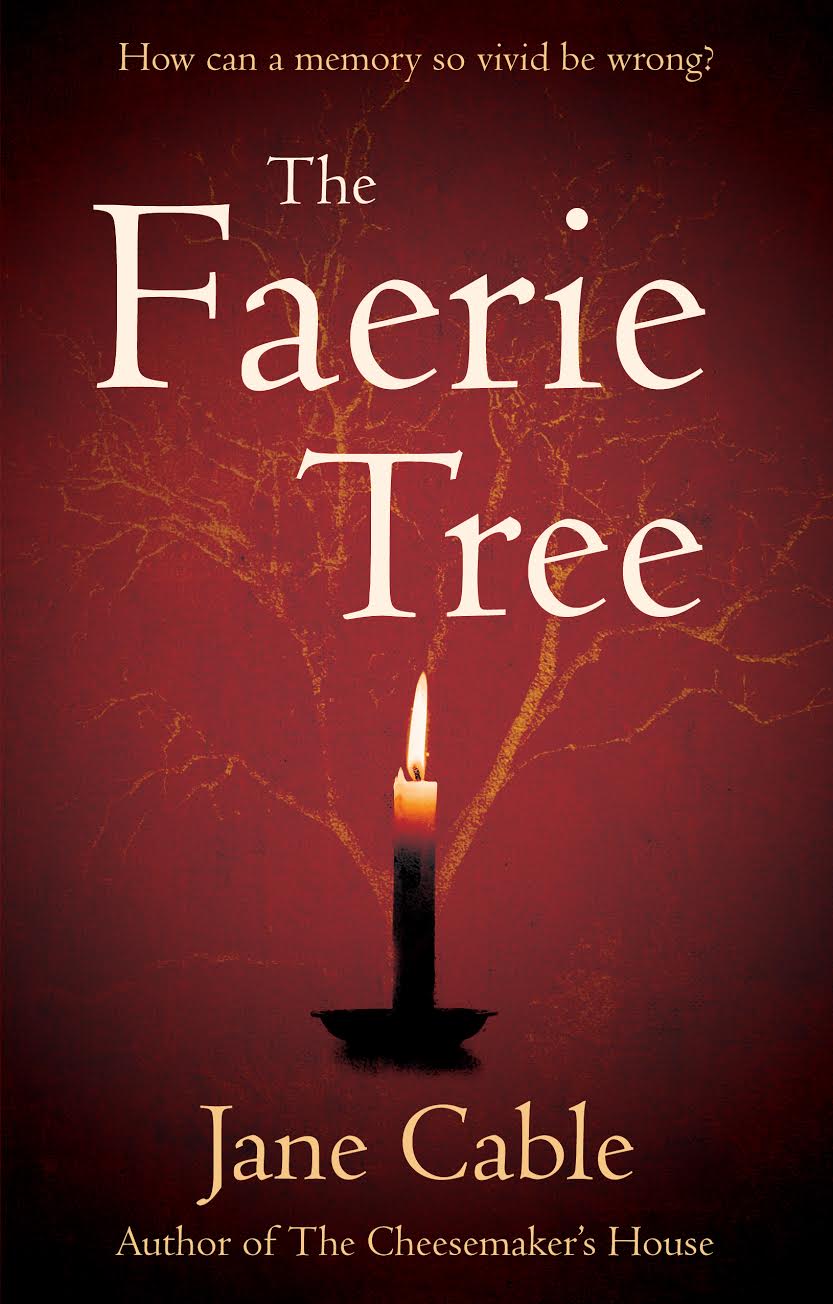
The book I am just starting could certainly be written that way, but Choc Lit only want completed – and professionally assessed – manuscripts. This is a really sensible move as it must make their slush pile less, well, slushy as a certain level of quality is assured. But reading their requirements again it became clear that self-published novels are acceptable and one of mine, The Faerie Tree, fits the bill.

The basic premise of The Faerie Tree is that when a couple meet again twenty years after their brief affair they discover that their memories of it are completely different, and this meant that the best way to tell the story was to alternate the hero’s and heroine’s points of view. It is the right length and certainly has romance at its heart, so I decided to give it a go.

If nothing else, it could be a foot in the door. Choc Lit are looking for authors with whom they can build a long term relationship, and as a writer, that’s what I am looking for too. I would love to be able to work with an editor to plan books ahead, knowing that they had a home when the writing was done. I would love a publisher where I could build my author brand alongside their own.

After listening to the Choc Lit authors’ stories (one of them, Laura E James, will feature in Business of Books later this summer) I was even more excited about setting out my stall to editor Lusana Taylor. In the main she was interested in my social media profile and how I marketed myself as a writer. I wanted to know about the importance of the hero’s point of view and what they looked for in an author. When we finally got around to talking about The Faerie Tree, she delighted me by asking to see the full manuscript.

Except it isn’t Lusana who will be assessing it. Choc Lit have a unique and rather wonderful way of choosing manuscripts for publication – their Tasting Panel of real readers. How refreshing is that? Once Choc Lit consider an author has potential it is up to this panel to decide whether the actual book is good enough. It seems a fairer process and a recipe for commercial success. I’m just hoping that The Faerie Tree delivers on flavour.

The final Choc Lit roadshow of the summer is at Stockton on Tees on 17th June. Find more details here: http://www.choc-lit.com/choc-lit-on-tour/


Business of Books: Behind the Best-seller Jane Cable Meets Rosanna Ley

the-business-of-books-interviewswithjanecableThis week I am especially delighted to welcome one of my favourite writers, best-selling author Rosanna Ley.
BUSINESS OF BOOKS- Behind the Best-seller rosanna ley

1)      How much of your working life does the business of books take up?

Pretty much all of it! I work full time from home: writing, researching, editing, writing publicity material and taking part in events and occasionally doing a manuscript appraisal for an author (I used to do more of these but now although I’d love to, I simply don’t have the time). I also run an annual week’s writing retreat in Andalucia in July for around 12 writers at finca el cerrillo which I adore. It’s a haven of tranquillity and it’s so good to work with other writers. I used to do a lot more tutoring of creative writing and also working with community groups on therapeutic writing but I have had to let this go. Very reluctantly. But writing and editing a book a year (of around 130,000 words) is very time-consuming!

2)      What’s your business model to earn a living from writing?

I’m not sure that I have a business model at all. I’m fortunate in that I do earn a living from writing. It’s hard in these days of low advances and competitive deals from independent publishers, not to mention the number of authors who self-publish who have to work so hard to earn from their books. I would certainly consider running creative writing courses as a good way to supplement income, and there are appraisal agencies who take on experienced readers to give constructive feedback on writing for authors who go down this route. Apart from that, my model would be to keep writing, keep publicising and hope that your work is eventually recognised. Just keep getting it out there…

3)      What do you write and what do you consider to be your major successes?

I write novels often described as ‘commercial women’s fiction’ which are contemporary but also contain elements of the historical. They offer a bit of mystery and some romance and are set in stunning locations such as Sicily and Sardinia (as well as my home turf of West Dorset and also Cornwall). I have also set novels in Cuba, Burma, Morocco and Barcelona. Yes, I like to travel… My books are often called ‘holiday reads’ because of the locations I choose, but I like to think they offer a bit more than that…  I like to include some (hopefully) thought-provoking subject matter and I like to explore human relationships and the ‘tangled webs we weave’. My biggest paperback success has been ‘Bay of Secrets’ which takes on some rather dark and hopefully intriguing subjects centring around the Spanish Civil War when a woman from Dorset in 2012 goes looking for her birth mother. My biggest e-book success was ‘The Villa’ which is about three generations of women and their journeys – one to find her lost love, one to discover the secrets of the past and one to find her own sense of self!

4)      Tell me about your latest project.

The project I am currently working on is entitled ‘Her Mother’s Secret’ and is set in Belle-Ile, a small island off southern Brittany, France. It centres around Colette, who left the island when she was eighteen and who returns when her mother Thea is ill in order to care for her and help run Thea’s flower shop. I have finished the first draft and am doing some editorial work on that now. We are also looking at cover ideas. I am also doing some publicity work for ‘Little Theatre by the Sea’ which is out in hardback with Quercus already and will come out in paperback on June 1st. This book is about restoration and change. Faye travels to Sardinia to take on the project of re-designing the little theatre and finds much more than she ever bargained for…

Rosanna Ley is the best-selling author of The Villa, Bay of Secrets and Little Theatre by the Sea. Her books are published by Quercus.

Business of Books: Jane Cable interviews designer and digital marketing specialist Aimee Coveney

the-business-of-books-interviewswithjanecableBUSINESS OF BOOKS: BETTER BY DESIGN

Jane Cable interviews designer and digital marketing specialist Aimee Coveney

What is your book-related job or business?

I started out by opening my own freelance design consultancy after finding my niche of working with industry professionals and directly with authors themselves. I am now co-founder of Bookollective and run the Design and Digital Marketing areas of the business. As part of this, I regularly design book covers, websites and promotional material, as well as running social media campaigns and blog tours. I see design and digital marketing as increasingly appreciated areas of the publishing sector, with many having put these on the back burner for years. Design is key to visually presenting yourself as an author and also transitions over to the marketing of your work both on and offline. Digital marketing is regularly misused, but its values are increasingly apparent to authors and professionals. When understood and targeted correctly it can quickly grow your visibility and credibility within the marketplace.

 Jane Cable interviews designer and digital marketing specialist Aimee Coveney

What is the most rewarding part of it?

I love hearing back from authors and publishers on how much they love a design; especially book covers. After what can be years of writing their book, it can often be an emotional moment seeing it in its final ‘wrapping’. I think independent authors sometimes feel their writing doesn’t deserve a professional design and when they decide to take that route, it is an honour to be the person to work with them and create something that visually represents their hard work. Publishers are always passionate about books and I love their enthusiasm for good design.

On the digital marketing side, I love finding new opportunities and contacts for both authors and Bookollective as a business. There’s no greater feeling than building on something you feel strongly about and helping others to do the same. Interacting online, sharing knowledge and the Bookollective mission to create a community within the publishing industry is a reward in itself.


What do you consider to be your major successes?

With a vast amount of books being published every day, it is always a success when one you represent gets favourably acknowledged in some way. This year I was thrilled to win a cover design award and also seeing my expertise recognised with an article in the UK’s bestselling writing magazine. Bookollective was also ‘Start-up of the Week’ in The Bookseller which was a fantastic accolade. It’s been a busy and exciting start to the year and I can’t wait to see what else it will bring.


Have you always loved books and what are you reading at the moment?

Absolutely! I can vaguely remember being delighted at winning a book whilst in nursery: it’s one of my earliest memories. I grew up reading classics such as Beatrix Potter and Judy Blume before being brave enough to read outside of my comfort zone and now enjoy a wide array of genres. At the moment I am reading Asking For It by Louise O’Neill; an emotional roller-coaster for me. I don’t read every book that I work with, but I am a self-confessed book hoarder!


Bio: Having enjoyed years in the publishing industry, Aimee’s award-winning experience means she is well-placed to offer top advice on the design and online marketing of your book/s. Aimee regularly contributes articles for the ALLI Self-Publishing blog as well as other publishing related websites and magazines. Aimee is a Partner Member of The Alliance of Independent Authors. 

To find out more about Bookollective’s services for authors and publishers, visit her website bookollective.com

You can connect with Aimee on social media: 

Twitter: @authordesigner / @bookollective   Facebook: @bookollective  

For further information, authors & publishers can email: aimee@bookollective.com


Business of Books: Jane Cable talks to author & book designer Christine Hammacott

the-business-of-books-interviewswithjanecableJane Cable talks to author and book designer Christine Hammacott
 
How much of your working life does the business of books take up?
The business of books is extremely varied these days. Being an author doesn’t just involve writing a book. It can involve research, editing, marketing and promotion, social media, blogging, events and book festivals, to name but a few – anything that can help raise your profile.
I’m an author and also a book designer. I run my own graphic design consultancy and spend a lot of time working on logos and brand development across all media both in print and online. Three years ago, I joined forces with a couple of other writing friends to set up a indie-publishing co-operative. We’ve published seven titles so far including my own book. As a result of this I’ve been asked by other authors if I would design their covers. So two years ago I added book design to my portfolio of offerings and word seems to have spread as I’m now constantly working with other authors.  
My writing is a lot less disciplined than the design side, as I’m forced to write around family commitments, often snatching time at the laptop or with notepad and pen in car parks and corridors while my daughter is at one of her out of school activities. It isn’t ideal but it’s a one way of ensuring I have some regular time to write.
Jane Cable talks to author and book designer Christine Hammacott
What’s your business model for earning a living from books?
As far as earning a living from my writing goes I’m a long from doing that. I’m not convinced I’d actually like to solely write, although I would like to address the balance better. In an ideal world I’d like to spend the mornings writing and the afternoons designing with a walk with the dog in between.
I really enjoy designing book covers. My first job after art college was working for a publisher doing just that. I turn an author’s manuscript into a marketable ‘product’ that is visually appealing and conveys the genre and essence of the book. It can be quite difficult getting this across sometimes to an author but it’s important for a potential buyer to know immediately what they are buying and whether they want it. 
I think authors like working with me because I’m an author too and therefore understand where they are coming from and that their work is precious. A lot of them haven’t published before and part of my role is to gently hand-hold them through the process.
What do you write and what do you consider your major successes?
Years ago when I first started writing, I entered a Writing Magazine short story competition and won first prize. That success gave me the confidence to believe in my writing and undertake something larger. I now write psychological suspense. I enjoy finding out how ordinary characters cope in extraordinary situations. My debut novel is about a young woman who just want’s to get back to some sort of normality after a devastating fire that has left her homeless and a neighbour dead. Only she then finds she has a stalker and begins to fear for her safety. It’s a genre I particularly like as it’s very easy to imagine myself in the protagonist’s position and that makes it scary.
Tell me about your latest project
I’m working on another psychological suspense. This one is set in the New Forest and is all about living with consequences, morality, family relationships and how easily a situation can get out of hand. 
 
 
facebook   christinehammacott.author/
twitter @ChrisHammacott
 

The Business of Books: Writer as Reader

the-business-of-books-interviewswithjanecableJane Cable admits to sometimes having a slightly uneasy relationship with other writers’ books


Writers are by our very nature readers. We tend to have fallen in love with stories at an early age and as children at least devoured every book we could lay our hands on or persuade someone to read to us. We disappeared into the magic of lives so very different to our own, travelling time and the globe with the carelessness of youth. Except that I was terrified of swings for a long time after reading What Katy Did.

I suppose it is no surprise that one of the first characters I can remember really relating to was Jo in Little Women. When Amy burnt her story I felt real anger and cried bitter tears. I guess I was already sucking my own pencil and waiting for the words to come.

From teenage years onwards real life started to intervene in my bookish world. In sixth form I still bought a paperback every week with the money I earned from my Saturday job at BHS and wherever I moved to for college and in early working years the first thing I did was join the local library. But as life became busier time to read became increasingly rare and I relished holidays where in pre-Kindle days my husband and I would almost literally pack a case full of books.

In my forties I started writing my first story which turned into a full length novel and here the dilemmas began. First, there was time: I really didn’t have enough to read and to write. Secondly was the fact that my head was so full of my characters there just wasn’t room for anyone else’s.

Now most writers read voraciously (apparently) and certainly everyone tells you that as a writer you should, but I have to admit to struggling. While I am living and breathing my story, how can I do anyone else’s justice? I suppose I never could read more than one book at once and it used to completely do my head in that my mother always used to have two on the go; one upstairs for light relief and nodding off to sleep with and another, normally something a little more demanding, by her chair in the living room.

The Business of Books- Writer as Reader

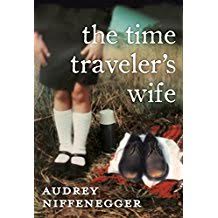
So reading has been pushed to the margins of my life, to the rare times when I’m not working on anything new. An advantage of this is that the great books, such as The Time Traveler’s Wife, really stand out. This one in particular opened new doors creatively speaking because it showed me that if your characters were strong enough you could take your readers anywhere. As a writer, it made me brave and I do wonder what else I would learn if I had more bandwidth to read.

I’m also aware of the need to read successful authors in my genre and books which break out of the ordinary and get talked about. Then there’s the guilt-induced consumption of books by authors you know and feel you should review. So is reading purely for pleasure a thing of the past for me?

Thankfully, no. I have learnt to be incredibly selective and not to finish a book if I’m not enjoying it. There is a difference between books I read for research and books I read for pure joy. And in the last few weeks I actually became very excited about the launch of a new novel for the first time in years. But more about that anon, because Su Bristow’s Sealskin deserves an article all of its own.


Helping Children Sleep By Dan Jones

helping children sleepHelping Children Sleep

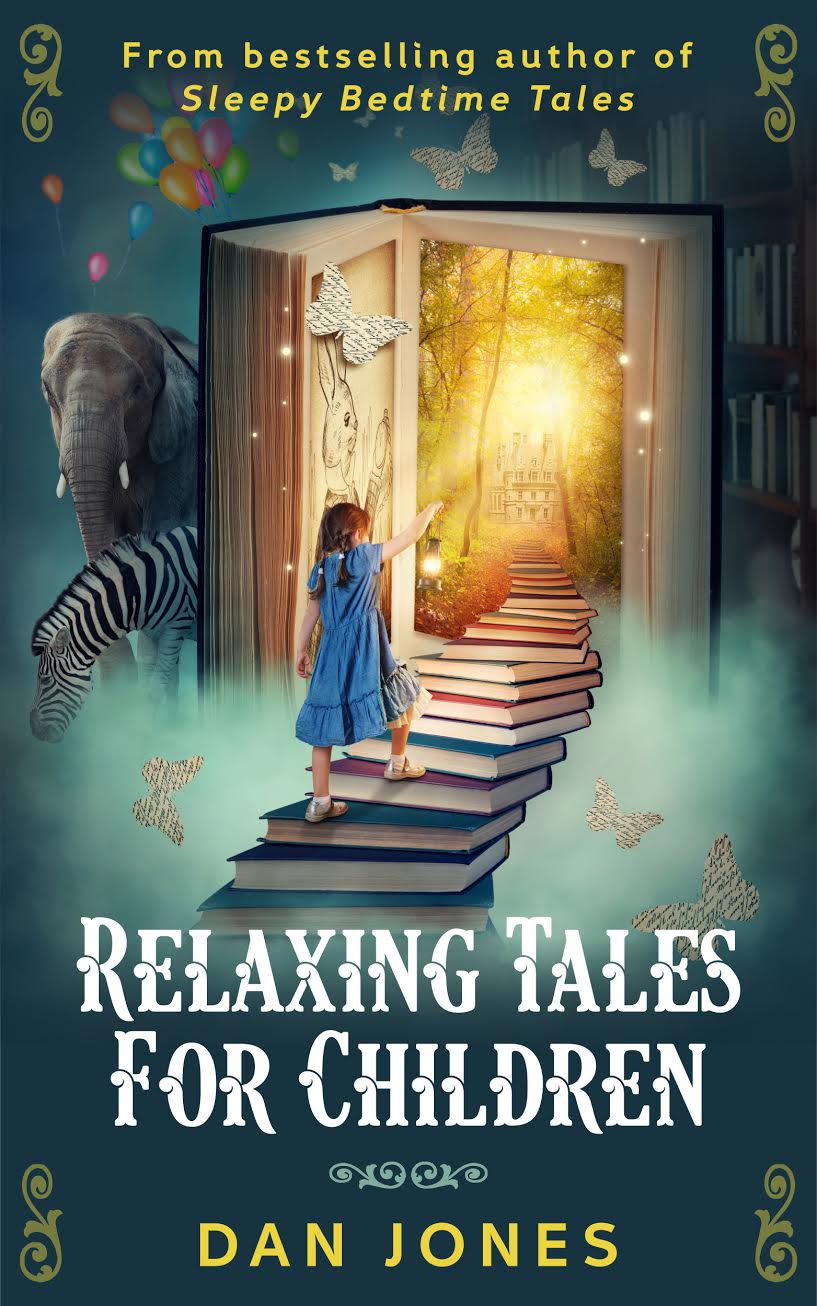
Almost 20 years ago I began working in children’s homes. Many of the children had endured years of abuse and other traumatic experiences by the time they ended up in care, this impacted on their ability to feel safe, relax, and sleep at night. Due to having Asperger’s, a high-functioning form of autism I obsessed about learning communication skills. I used this knowledge with the children I was working with. The children were often happy to have stories read to them at bedtime. I used to read stories to them, but rather than putting on different voices for different characters, or reading the stories lively, I used to read them in a relaxed tone of voice in time with the child’s breathing. Any sentences with words which could be associated with relaxing or inward absorption I would say with extra calming emphasis. This slight shift in how the stories were being read often helped the children to feel calm and comfortable and fall asleep. I started teaching what I was doing to other children’s home staff and to parents to help them to be able to help children sleep comfortably at bedtime without arguments and conflict, and years later wrote two books of children’s stories based around this approach: Sleepy Bedtime Tales, and Relaxing Tales for Children.

How do you help children to fall asleep at night? 

The first thing to be aware of is what actually happens for us to fall asleep. Obviously being tired helps, so not letting a child sleep during the day is a huge help, secondly the environment is important. As bedtime approaches parents can start ‘putting the house to sleep’. What I mean by this is that a few hours before bedtime parents close curtains, turn off main lights and put on small lamps to make the home dimmer, and begin to focus on doing calm, low stimulation things with the children. The focus is on slowing them down, and making the environment quieter. If children are running around until bedtime their heart will be racing and they will be excitable and harder to relax, likewise, if they have been watching emotionally stimulating TV programmes before bed this will reduce their chances of falling asleep. Parents ideally limit screen time in the hours before bed. Mobile phones, tablet PC’s, computers, and TV’s all give off a lot of blue light which triggers the ‘wake-up’ processes in our brain – not what you want when you are trying to help your children sleep.

dan jones, author, book, help children sleep, how to get child to sleep

Once bedtime is approaching parents can have structure around what happens, and let the children know bedtime is approaching. It is more effective to say that it is bedtime in half-an-hour, and then giving notice at fifteen minutes, and then finally saying it is now bedtime, than it is to wait until bedtime and then tell the children it is time to go to bed when perhaps they are in the middle of a game or something and now they have to cut the game short.

Author Dan Jones

Different children like different things at bedtime to help them sleep. Some are happy to be read a story. Although it is fun to read stories and get all involved in portraying the characters, putting on voices, and actions, this isn’t conducive for sleep. The stories need to be read in a calm and relaxed manner ideally framed for the child that they can lie down with their eyes closed, listening and imagining the story as they fall asleep. Most children accept this and enjoy imagining the story play out in their mind. The parent can then read slowly and calmly, adding emphasis and time when giving descriptions to help the child become increasingly absorbed in the inner experience. Another approach children like is for the parent to sit with them stroking their arm, back or hair. If this is done in time with their breathing, so each up-stroke is with an in-breath, and each down-stroke is with the out-breath then the stroking will build rapport with the breathing, and once the breathing is matching the stroking the parent can stroke slower or longer strokes and the breathing will deepen and the child will fall asleep. If the child wakes up during the night they can be encouraged back to bed, then the parent can calmly repeat the same again until the child falls asleep once more.


Monday Club A Collective For Actors and Creatives

ttf-photographer-tom-metcalfe-1Monday Club is a collective of creatives who meet once a week as a company of actors, dancers, writers, directors and more to generate new ideas and to share skills from our various artistic backgrounds. We encourage collaboration and the development of new writing and performance, and support individuals in the exploration and achievement of their artistic goals.

TAKE THE FLOOR

Take the Floor is an exciting new scratch night, hosted by Monday Club at Chelsea Theatre. The night promotes new work within all forms of the arts and forges connections for collaboration between these varying mediums. At the event, we encourage creative support between participants and we provide ‘no pressure’ networking opportunities. All of our pieces are handpicked from a variety of promising new artists with fresh and dynamic ideas.

The evening begins at 6pm when visual artists exhibit their new work in and around the bar. The auditorium then opens at 7pm for a number of eclectic ten-minute performances on Chelsea Theatre’s wonderfully spacious stage. The twenty minute interval sees the first of our selected singer-songwriters perform in the bar, with the second musician playing at the end of the night, when performers and audience members discuss what they’ve seen, and perhaps even swap details for future collaboration over a very reasonably-priced drink at the bar.

Following our first Take the Floor in October, writing partnerships have been formed, advice has been shared from participant to participant, and pieces shown have continued on their various trajectories with feedback from our Take the Floor audience to help shape their development.

A celebration of diversity and collaboration within the arts, Take the Floor is a stimulating evening of creativity for those interested in seeing short bursts of varied entertainment, and those who are looking for inspiration to create their own work.

Visit www.mondayclub.co.uk to find out more.

Date: Sunday 15th January 2017

Time: 6pm for visual art; 7pm for performances on stage

Location: Chelsea Theatre, 7 World’s End Place, King’s Road, London, SW10 0DR

Tickets: £6 for one or £10 for two tickets for the whole night; £3 entry on the door for music only.

Tickets available from www.chelseatheatre.org.uk soon!

Take the Floor is run by James Bailey, Charlotte Whitaker, Robyn Hoedemaker and Guy Remy.

info@mondayclub.co.uk