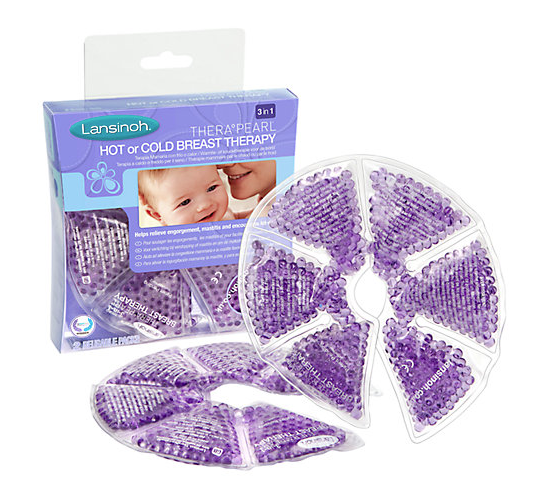
Breastfeeding is tough. No one really says just how hard it is, but even if you are lucky enough to take to it easily you may not be lucky enough to escape engorgement, mastitis, plugged ducts and sore nipples. Luckily there are things made to help, like Lansinoh’s 3-in-1 Breast Therapy. Is it any good? Let’s find out.
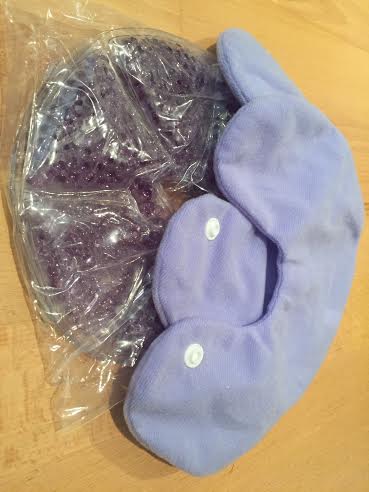
The 3-in-1 Breast Therapy Packs use innovative PearlTechnology to deliver either heat or cold to affected areas of the breast. Chill it in the fridge or freezer for analgesic cold, or pop it in the microwave for penetrating heat and warmth. The pack holds its therapeutic temperature for a full 20 minutes so you get fast, effective relief.
The writer who reviewed this had mastitis and said that it really helped. Her doctor told her to use hot and cold compresses on her breasts and this treatment made it easy. They are convenient and because they can be both hot or cold they multi-task too. Perfect for saving money and space. No more cabbage on the breasts, this handy and effective treatment really works. It can also be used hot to reduce time spend pumping milk. Using it cold relieves engorgement and the hot therapy relieves mastitis and plugged ducts. Our writer says: ‘This is convenient and works well. It can be used for lots of different breastfeeding problems. It is a mum must have.’
Lansinoh Therapearl 3-in-1 Breast Therapy Pack
RRP:£12.95
www.JohnLewis.co.uk
This innovative set includes two reusable treatment packs and covers that can be used hot or cold. The pearl design moulds to the breast to provide all-round relief when breastfeeding.
A miscarried pregnancy can be a devastating experience. The woman has already experienced pregnancy – nausea, swollen, tender breasts, just ‘feeling pregnant’. The couple are sharing a cosy, exciting secret – visualising their anticipated offspring, they may well have chosen some names.
Then, abruptly, hopes are shattered. It can happen in several ways – sometimes there is bleeding, cramping pain, the woman may just not feel pregnant anymore, an ultrasound scan may show that the baby has stopped growing, or there is no heart-beat.
However it happens, both partners usually feel devastated.
And yet, approximately a fifth of pregnancies end as early miscarriages, meaning during the first three months. Sometimes the woman didn’t know she was even pregnant, just experiencing a ‘late period’, other times the couple are very aware, and can experience deep pain and loss.
The baby frequently has a serious genetic/chromosomal abnormality in these cases, and would have been incapable of surviving.
An early miscarriage is usually a one-off event, and the next pregnancy will be successful. However, if it happens during the first one, the couple may feel uncertain whether they can have a child. Nothing will convince them except a subsequent normal birth.
A few couples (around 1%) have recurrent miscarriages – defined as at least three in a row. Even then, three-quarters of these will eventually have a normal baby.
A few unfortunate couples may never succeed – possibly due to a particular genetic problem, but often a reason isn’t found, and it is very upsetting.
Late miscarriages – during the middle third of pregnancy, are less common (only one pregnancy in fifty), and may be due to illness in the mother, or womb or cervix abnormalities. Depending on the cause, treatment may be possible for future pregnancies.
So what if you have an early miscarriage? Firstly, nobody is to blame. Too much exercise, stress, or having sex, for example, do not cause miscarriage. Healthy pregnancies are pretty resilient.
The pregnancy tissue may be lost naturally, through your vagina. However, the hospital may suggest removing any remnants, using a gentle vacuum under anaesthetic. This prevents possible infection, which can be serious, and could compromise future pregnancies.
The experience can impact both partners for a considerable time. The woman experiences physical changes, and both are affected emotionally. The man sees the distress of his partner, and feels he should be the strong one, and yet he is suffering too.
It is important to talk, and grieve together, and, if possible, to share with close friends and family. People can appear to forget very quickly, or don’t even know you’ve had a miscarriage. They expect you to be ‘back to normal’ and don’t always understand your continuing pain.
Specialists and groups are available should you experience difficulty in getting through the grief.
Importantly, don’t forget, if you have had a miscarriage, you are highly likely to have a successful pregnancy next time.
These articles express personal views. No warranty is made as to the accuracy or completeness of information given and you should always consult a doctor if you need medical advice.
After giving birth to daughter North two years ago, Kim Kardashian is now pregnant again. Kardashian previously admitted that she was desperately trying to conceive
As Kim and her partner, Kanye are both in their mid thirties, leading busy and stressful lifestyles, they are in a large group of fertility challenged couples.
According to the Journal of Human Reproduction, woman in their mid thirties with an older partner have a shocking 20 per cent chance of conceiving each month. Notonly does sperm quality decline with age, but also women are born with all the eggs they will ever have, so their fertility only goes down over time*.
The second most common cause of infertility is ‘unexplained’, which means that following thorough investigations, doctors can find no identifiable medical problem for a couple’s infertility. Fertility is multi-factorial so it’s important to look at every aspect of wellbeing, from general health, emotional problems and lifestyle.
‘Although it goes without saying that a healthy diet is crucial to a successful pregnancy and a healthy baby, many people are unaware of the fact that diet may affect the ability to conceive. The following are recommended:
Plenty of fruit and vegetables
Complex carbohydrates – wholegrains like brown rice, oats and wholemeal bread
Organic foods where possible
Oily foods such as fish, nuts, seeds and oils
Reduced intake of saturated fats from dairy products etc.
Increased intake of fibre
Avoid additives, preservatives and chemicals, such as artificial sweeteners
Avoid sugar, both on its own and hidden in food
Avoid the three main fertility busters: Caffeine, alcohol and smoking as they have all been linked to an increased risk of infertility in men and women.’
Food Supplements
‘As well as looking at what you eat and drink there is now a great deal of scientific knowledge about the use of nutritional supplements and their beneficial effects on fertility. The most important nutrients for fertilityare Zinc, Folic Acid, Selenium, Vitamin E and C and Omega 3 Fatty Acids.’
Weight Matters
‘Women are most fertile when they are neither too thin nor too heavy. They need at least 18% body fat to ovulate and the best chance of getting pregnant is when 20-25% of the body mass is fat tissue. On the other hand, the menstrual cycle can be disrupted by too much fat, which affects oestrogen levels. Being 25% over the ideal weight can even stop ovulation. It’s important for the man to keep his eye on his weight too as there is an increased risk of infertility or poor sperm quality and quantity in men who are overweight’
De-stress
‘Stress can cause irregular ovulation and also lower sperm count. To minimise stress, the recommendations are to eat a healthy diet which keeps blood sugar in balance, exercise regularly and get at least eight hours sleep a night. Yoga or meditation can also be helpful and well as seeing a counsellor as infertility is itself stressful.’
Natural Approach
Dr Marilyn Glenville has joined forces with luxury health spa Champneys, to deliver a series of women’s wellbeing weekends this year. These very special one and two day retreats are led by Dr Glenville herself and offer natural solutions and insight into four significant female health issues. Dr Glenville’s Fertility retreat is this November at Champneys in Tring. Groups are kept small to allow for plenty of time for questions and one to one time. Each retreat includes full use of all facilities, nutritious meals and a thalassotherapy session. Champneys.com for booking and more information.
This famous mom photographer shares her secrets with Frost Magazine and SmugMug.
Last year, Elena Shumilova took photos of her sons as they played by the Russian countryside. She uploaded the photos online, they started getting shared, and shared again… until they became a viral sensation, with over 60 million views.
These photos hit something magical all across the Internet — a sense of nostalgia for a childhood past. She even started getting letters from people in their nineties, saying the photos moved them to tears.
As parents, we instinctively want to take photos of our kids. We’re trying to preserve this brief slice of time before they grow up. But when we take our kids to professional photo studios, the results can end up looking stilted and unnatural.
We want to remember our kids as they actually are — not with the forced smile a stranger coaxed out of them at the studio, but with the real smiles and giggles they share with us every day.
How can we capture natural photos of our kids, the kind Elena seemingly has a magic touch for?
Elena has mostly been quiet since her photos have gone viral, undistracted by all the media attention. Instead, she focuses on raising her kids and continues to photograph them every day.
Given how quiet Elena has been, we are excited to share a behind-the-scenes look at her in action.
5 Tips to Get Better Photographs of Your Kids
1. How to get your kids to look natural, not “posed.”
So you catch your kids in the perfect moment — they’re outside playing and laughing, the lighting is just right, and you see this perfect picture you want to capture. You rush to get out your camera, but then…
They see the camera. They stiffen up. They start posing. The moment is lost.
What do you do?
When photographing children, the single most important thing is to photograph them often — every day.
You can’t just do it sporadically, or they’ll freeze up as soon as the camera comes out. Consistency is key. That way they’ll be comfortable around the camera.
It’s these everyday scenes that you want to capture — the ones you’ll remember best when they grow up.
To get the most genuine photos, I try to catch them in the moment — when they’re playing with each other and have completely forgotten about the camera.
Here they’re playing “airplanes,” a game we also play together at lunchtime when they’re feeling picky about their food.
2. The types of clothes that work the best.
I follow a pretty simple rule: clothes shouldn’t be distracting. They shouldn’t take attention away from what’s happening in the photo.
For such a simple rule, it’s harder to follow than you might think. Kids’ clothes today are designed to grab your attention—with bright colours, cartoon characters, and writing all over them. In photographs, all this takes attention away from your kids.
When I started pursuing photography seriously, I actually replaced all their outfits. This took quite a while to do, but now I know that anything I pull from their closet won’t interfere with the photo.
3. How to best capture kids of different ages.
Newborns A lot of parents have asked me about this photo — how did you get your one-month-old to look so calm? Infants are notoriously difficult to photograph because they’re often crying or fidgeting.
Here you’ll have an advantage as a parent. I’m his mom. I’m around him 24 hours a day, and I know when he cries and when he doesn’t. Let your parenting instinct help you choose the right moment.
The Golden Age: Ages 2–4 Something I noticed while photographing many children, including my own, is that there seems to be a universal age when kids are the most photogenic.
That seems to happen between ages two and four.
Kids around this age behave very naturally. They don’t care that someone is looking at them, they don’t care what others think, and they don’t care that a camera is pointed at them.
They aren’t yet self- aware. And so, they’re free.
Ages 5 and Older It gets a bit more difficult when they’re older. As early as age five, they start to become more self-conscious when the camera comes out. They start to pose.
The key here is to be very patient. Let them play while you disappear into the background. My best photos always happen at the end of a photo shoot, when my kids have forgotten all about the camera.
4. How to get good photos of your kids with pets.
Just like people, every animal is different. Some pets like to be photographed, and others don’t.
Because every pet is different, there isn’t a magic formula for this. I spend hours observing our farm animals, figuring out how they move and what angles work best for them — just like I would for people.
I’ve also tried bribing pets with food, but it doesn’t work. It’s almost impossible to get a good picture when they’re chewing or licking their paws. So I’ve learned the hard way not to feed our pets during photo shoots.
With animals, you have to rely on a bit of luck — and constant patience.
5. Don’t give up.
This is the most famous photo I’ve taken. It’s been viewed over 10 million times — but I almost didn’t bring my camera that day.
Before I took this photo, my confidence was at a pretty low point. I had tried for a photo of my son and dog 14 other times — not 14 other photos, but 14 full photo shoots, all failures.
I was convinced that my hands were too clumsy, or my dog was not the right dog for it, or my kid was not the right kid for it. I was just feeling desperate that day and didn’t even want to bring my camera.
But something told me to bring it. And on that fifteenth day, it all just came together.
This dog of ours is now famous — but he’s not all that photogenic from most angles. He’s actually a pretty difficult dog to work with. From the previous 14 photo shoots, I’d learned what angles and body compositions work for him and my son.
It‘s easy to get discouraged. It’s easy to think, “Oh, why bother, it won’t work anyway.” And it may not for the first 14 times. Those 14 photo shoots weren’t failures though, because I learned from them. And they’re what made the fifteenth one possible.
Don’t give up.
Rather than creating high-pressure elaborate setups, observe your kids in everyday simple situations. Do it every day. Bring your camera along.
And then — when the right moment comes along — you’ll be ready.
Some woman get pregnant easily but for others it can be a long and difficult journey. Now I want to start this article off with pointing out that I am not a doctor, but I have researched the subject and I got pregnant as soon as my husband and I started trying. I have combined what I learned with some tips from friends, some of whom did not get pregnant for a while but persevered.
Have Regular Sex.
Sperm can live inside you for seven days. The sperm travels up the fallopian tubes to “wait” for the egg to be released. If you ovulate during this time you can get pregnant at any point during those seven days. The NHS recommend having sex every few days during ovulation.
Find Out When You Are Ovulating.
There is an abundance of calendars and apps to help you figure out when you are ovulating. Having sex when you are not ovulating may be fun but it won’t get you pregnant. The NHS website can help you figure out when you are ovulating.
Take Your Vitamins.
Make sure you are taking folic acid. It is best to take this for three months before you plan to conceive and make sure you take it throughout the pregnancy too.
Stop Smoking.
This is obvious. It has been proven in medical studies that smoking brings on the menopause by at least four years. It is also very bad for your baby. You should not smoke when trying for a baby and certainly not when you are pregnant.
Exercise.
I exercised for an hour five days a week and lost two stone before getting pregnant. It helped that I was also working out for my impending wedding. I went from a size 12 to a size eight. Exercise helped but the other thing is…
Diet.
I ate as healthy as possible. I did not eat a lot of meat and if I did it was organic. I eat a lot of vegetables and drank a lot of water. I cut down on alcohol, only having a glass if at a restaurant or at a special occasion. Read this article for more diet advice. More importantly I…
Quit Sugar
This was hard but I stopped having sugar in my tea. No chocolate, no added sugar, no fizzy drinks. I am almost positive that this was one of the main things that made a difference. Sugar affects your insulin levels and your insulin levels affect your health.
Lie flat for 15 minutes.
Lie flat for 15 minutes after sex to give the sperm a helping hand. I know many people who swear by this.
When it comes to the fashion industries obsession with waif like models, times they are a changing…well maybe just a dress size or two. In recent months the industry has seen a sidestep in to the usually unmentionable world of FAT! Several leading modelling agencies now have dedicated plus size divisions, recognising the huge surge in popularity of plus-sized fashion bloggers and Instagrammers. According to Public Health England, two thirds of people in the UK are overweight and are in need of taking better care of their health.
Candice Huffine became the first plus size model to feature in this years’ Pirelli calendar, has graced the front page of Italian Vogue, and has appeared in i-D and Harper’s Bazaar
Tess Holliday’s huge social media following, helped get her signed to modelling agency MILK Model Management who now have a separate division, Curve, which is dedicated to plus size models.
Advertisers using slim models for their ‘health’ campaigns have been heavily criticised by the public and media alike. Protein World’s infamous Are You Beach Body Ready? poster campaign backlash is a prime example of this shift in attitudes towards the ideal female body.
How difficult is it to maintain a super skinny body shape and still be healthy?
It is very difficult if not impossible to maintain a super skinny body shape and still be healthy. And for women it is important not to lose too much fat, because then periods will stop and it can affect not only fertility but also increase the risk of problems like osteoporosis because the woman has lost the protection of the female hormones.
Do you see women who struggle to lose weight more regularly now?
Yes. In my clinics in Harley Street and Tunbridge Wells, I frequently see women who struggle to lose weight. Most of them just want to be a healthy weight and to have a way of eating that becomes a way of life rather than being on a constant diet or having to do fad diets.
Many women I see also want to change their body shape as well as lose weight as they know they are carrying too much fat around their middles which increases the risk of type 2 diabetes, cancer (especially breast cancer), heart disease, Alzheimer’s and high blood pressure.
Do you think the fashion industry should embrace models who better represent today’s average British woman?
I definitely think the fashion industry should embrace models who look like the average British woman. It makes it easier for the average woman to relate to the clothes that the model is wearing and more likely to want to purchase them. If the model is super thin, then the average woman will think they can’t possibly attain that without starving themselves and knows that it is just not realistic for them.
Can you be healthy and bigger?
This is really dependent on body fat percentage rather than weight. A person’s weight cannot differentiate between fat and muscle and an athlete and a couch potato can have the same Body Mass Index (BMI – a ratio of height to weight) and yet have a completely different percentage of fat and muscle.
A woman can be bigger and healthy if she has the correct percentage of body fat (25-31%). Too low, it risks her periods stopping, infertility and osteoporosis, too high then it risks heart disease, cancer and Type 2 diabetes.
Want to shift some pounds naturally?
Dr Marilyn Glenville (www.marilynglenville.com) has joined forces with luxury health spa Champneys.com, to deliver a series of very special women’s wellbeing weekends this year. These very special one and two day retreats are led by Dr Glenville herself and offer natural solutions and insight into four significant female health issues; Fat Around The Middle, Digestion & IBS, Menopause & Osteoporosis and Fertility.
Many women have dreamed of their wedding day since they were little girls. Although I didn’t and had no idea what I wanted on my big day after getting engaged. I had to start getting some ideas together and make what felt like a million decisions. It was fun but it was stressful. To cut down the stress for other brides I wrote my wedding planning book. Hopefully it will make the journey easier for other brides. In the meantime, here are some tips for creating your dream wedding.
Your Dream Wedding: Wants And Compromises.
You may have a specific idea of your wedding in mind but the reality will probably be different. This doesn’t need to be a bad thing. Just choose the things that you are not willing to negotiate on. When you know what is most important and worth spending money on you can focus on that and then look at cheaper options for other things. Or rope family and friends in. Most will be happy to help.
Budget.
This is the tough one but you need to work out what it is and then you need to stick to it. Enquire if any family members can help and then sit down with your fiancé and have a proper discussion about what you can and cannot afford. There is no point in going into debt for a wedding or taking out a loan. It is only one day of your life, an important one, but one day. You can have an amazing wedding on a small budget. No one should start their married life in debt. Watch out for the ‘W’ bomb. As in ‘wedding’. The W word makes everyone vastly put their prices up.
Guessing cost.
Always overestimate. That way you won’t be left short. Always remember VAT. Some venues and suppliers will be coy about whether VAT is included but ask them and get a direct answer and then make a note of it.
How much it will cost.
This is the question. The answer is: quite a bit. My husband and I managed to get married for less than £10,000. We paid for the majority of this ourselves but did have some family members contribute. Not bad when the average wedding costs £21,000. Spreadsheets are your friend. Negotiating will also be your friend. Try to get money off everything. Don’t take the first quote and rope family and friends into the planning if money is tight.
Controlling Costs.
This is very important. Watch out for VAT and always account for everything. Use a spreadsheet if you can. Keep an eye on the small things as they can all add up.
Dealing With Suppliers.
When dealing with suppliers always remember that you are the customer. Be polite but always be firm. Read the small print and make your wishes clear. More importantly, don’t pay any final invoices until everything has been checked. One supplier charged us for VAT despite the fact they said they wouldn’t. Hmm. Always be careful.
Hatton Gardens.
Hatton Gardens is the area in London where all of the jewellers are located. You can get a very good deal here.
Spreadsheets
Spreadsheets are your friend. If you don’t know how to do one then quickly brush up your skills. They will be your saving grace. Have one for your wedding budget and one for your wedding guest list. For the wedding guest list one, leave space for information such as dietary requirements, RSVP received, gift given and thank you card sent.
Organisation Tips
Have everyone’s contact details to hand. Use spreadsheets and have plenty ‘to do’ lists. Make sure your partner pulls his or her weight. Weddings are hard and stressful to organise, don’t go it alone.
Wedding Planner: To Go It Alone Or Hire Help.
If I had the money I would have hired a wedding planner in an instant. However, they are expensive and you don’t really need one. I am not saying that in a rude way, they will save time and probably a lot of money but weighing up the cost is important. Your venue might have a wedding planner or venue coordinator onsite. If so, this is a tremendous bonus.
If you get a wedding planner make sure you check their recommendations and also have a clear idea of what you want. It is their job to take your ideas and make them into the wedding of your dreams. Don’t accept anything less, budget permitting.
To train or not to train, that is the question. To paraphrase some little known writer, ahem. It is a debate that has raged on. The truth is, there is no easy answer. Frankly, studying at Cambridge will get you noticed but training at some random never-heard-of polytechnic won’t do you much good. In a recent Mark Strong Acting masterclass I went to Mark made the excellent point that it is not the training that is important, but the confidence it gives. Sometime people who don’t train have a chip on their shoulder, Mark said, much like people who don’t go to university think they missed out on something. It is all rubbish and in fact they did not miss anything at all, but the lack of confidence is there.
So, do you need three years worth of training? Especially with the exorbitant fees that universities now charge? The answer is yes, and no. There is still a hierarchy to acting. If you go to a school which is a brand name it will look great on your CV and open some doors. RADA is one, as is Central and LAMDA. Ditto Oxford and Cambridge. The acting industry is just as snobby as the wider world. People love brand names.
Some training is smart. Although I believe that acting is a talent you either have or don’t, but you can improve. Take classes, join improv groups, make your own work. Keeping up your skills as an actor is important but just doing three years of training for the sake of it is not. Many great actors have no formal training. You will also have the added bonus of not having any debt which will take you years to pay off.
In the end the decision is yours. Just don’t think that your acting career is over before it began just because you cannot go to a prestiges school. Not everyone has the money to do so and they only take a small number of applicants every year. Developing your skills is important but this can be done on the job, doing student films, fringe theatre, in drama classes and even in (shh) amateur dramatics. None of this has to go on your CV. Just get out there and work. The acting industry is not the closed shop it used to be. Go to the theatre, watch film and TV. Learn as much as possible. Actors who went to one of the top schools may get a head start but the good news is that the acting game is a marathon, not a sprint.
Catherine Balavage has been an actor for over ten years. Her book on acting, How To Be a Successful Actor: Becoming an Actorpreneur, has gotten numerous five star reviews and has been called the ‘best advice available’ by numerous sources.

 Breastfeeding is tough. No one really says just how hard it is, but even if you are lucky enough to take to it easily you may not be lucky enough to escape engorgement, mastitis, plugged ducts and sore nipples. Luckily there are things made to help, like Lansinoh’s 3-in-1 Breast Therapy. Is it any good? Let’s find out.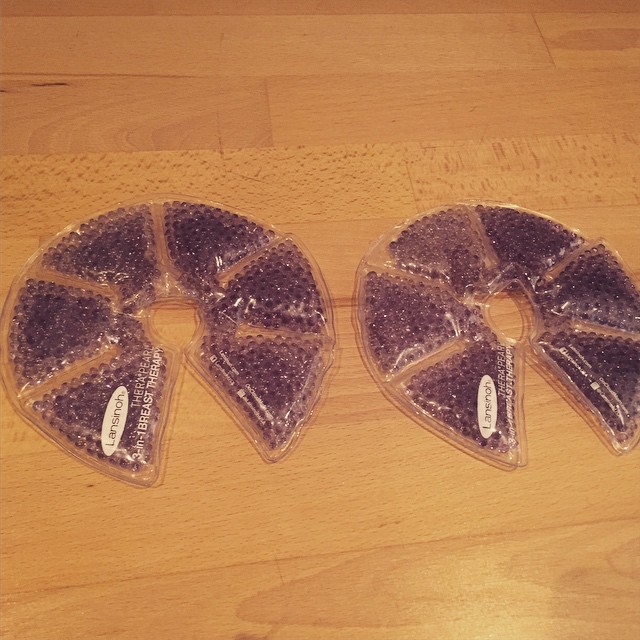


 , to give us her 4 step plan on boosting


 for her thoughts…