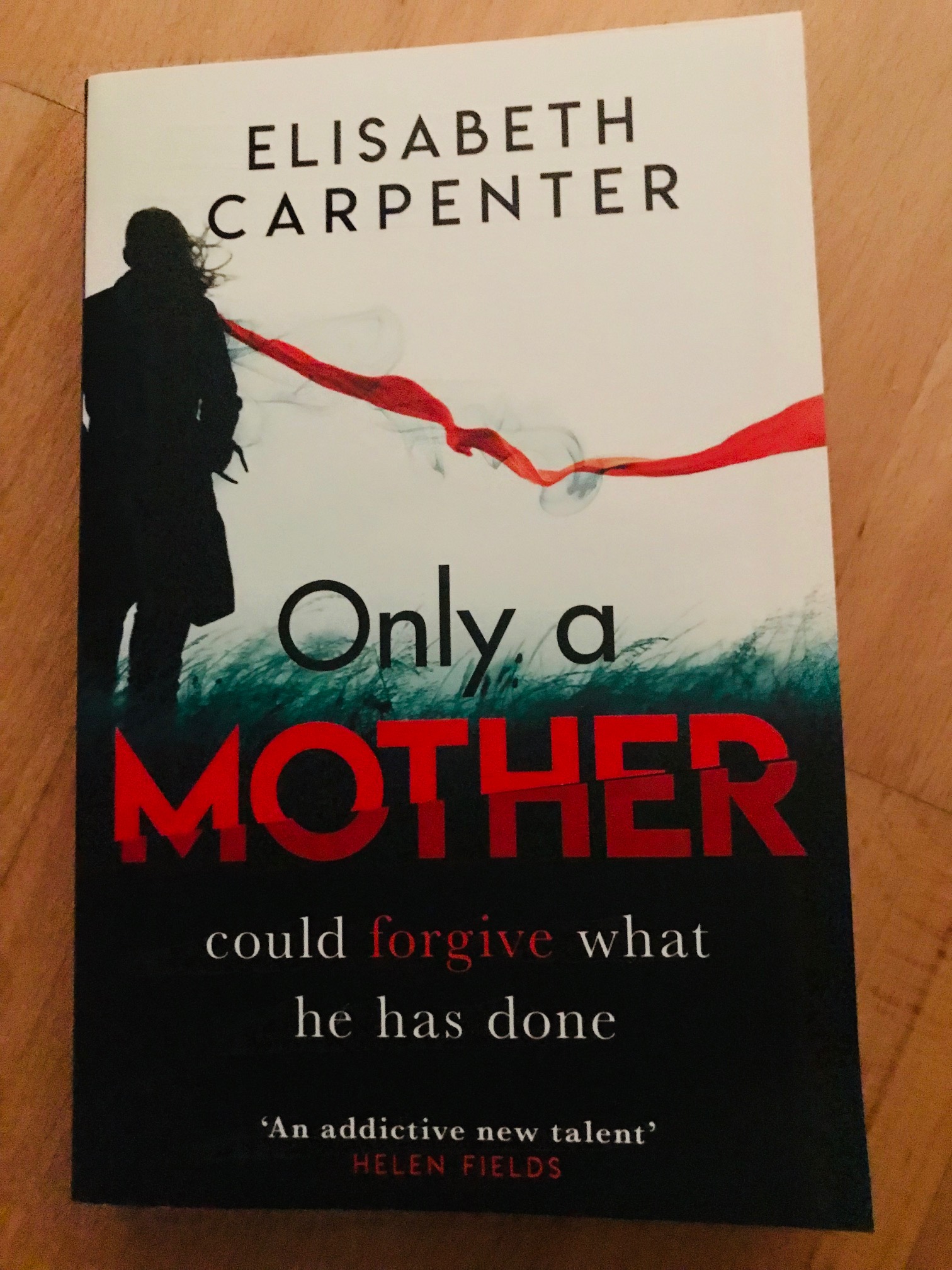
Book of The Week: Only a Mother By Elisabeth Carpenter

only a mother, book, elisabeth carpenter

This is an atmospheric psychological thriller that leaves you wanting more. Brilliant.


ONLY A MOTHER . . .
Erica Wright hasn’t needed to scrub ‘MURDERER’ off her house in over a year. Life is almost quiet again. Then her son, Craig, is released from prison, and she knows the quiet is going to be broken.
COULD BELIEVE HIM
Erica has always believed Craig was innocent – despite the lies she told for him years ago – but when he arrives home, she notices the changes in him. She doesn’t recognise her son anymore.
COULD LIE FOR HIM
So, when another girl goes missing, she starts to question everything. But how can a mother turn her back on her son? And, if she won’t, then how far will she go to protect him?
COULD BURY THE TRUTH

Perfect for fans of Lisa Jewell, Louise Jensen, Katerina Diamond, Helen Fields and CL Taylor – a hard-hitting psychological thriller told from the fresh perspective of a killer’s mother.


Available here.

What it’s like to raise £3.5m and have a baby at the same time

 Rachel CarrellBy Rachel Carrell.
I set up my business, Koru Kids, to solve a huge problem. We’re aiming to profoundly impact the wellbeing of a million families, by totally reinventing after school childcare.
It is a massive goal. To even think about achieving it, we needed some big investors on board.
Makes sense, right?
Except that I was also pregnant.
Raising money in London from professional investors while pregnant isn’t easy. You have to have lots of meetings all over London—ideally, four or five a day. Every day was a scramble up and down the stairs of the Tube, arriving at each meeting just in time but very out of breath.  I took meetings right up until my due date, in a state of denial that a baby was soon arriving. In the evenings I did my whole normal day job, then tried to sleep before getting up and doing it all again the next day. For several months, before and after the birth, I was sleeping 4 hours a night and working until about 1am.
At 5:30 a.m. one Sunday I woke with advanced contractions. Alexander was born an hour later, and we both came home that day.
I resumed meetings the next morning at 9am—this time, by telephone. While my husband, Dave, held Alexander, I did my usual pitch with one small variation: “While running my previous company, I had a baby and noticed how difficult it was to find great childcare. Actually – well, I don’t want to freak you out, but I had another baby yesterday.”
My first in-person meeting was two days after the birth. I pumped breastmilk for Alexander, left him with Dave, spent an hour with the investor then zipped back home. For the next few weeks the three of us—Dave, Alexander and I—travelled to meetings together. I’d feed the baby on the way or in the reception, and do the meeting while Dave looked after Alexander. One time Dave took him off to the National Portrait Gallery nearby while I did my thing in the boardroom.
The process was arduous but in the end, it all paid off. The investment round exceeded expectations—raising £3.5m rather than £1.5m as we originally intended—and we were on our way to achieving our goal. Alexander and his big sister are doing really well too.
What kept me going was sheer bloody-mindedness, and commitment to our cause: Koru Kids needs to exist. The childcare system is inadequate and I’ve met hundreds of parents who are affected by it. People who can’t afford the care they know their children should have. Women who want to go back to work but can’t. Parents whose employers have agreed to part time work patterns but who can’t find the childcare to make it work. Families who are forced to leave London when they don’t want to. Parents who desperately want another child but can’t see how they’re going to manage.
The truth is, we all have challenges in our lives. My challenge was trying to do two difficult things at once. But other people have that too, with different challenges like bereavement, or mental health issues. Raising the money Koru Kids needed while also having a baby was the hardest thing I’ve ever done, but it’ll all be worth it when we’ve built the childcare system I know we need.

Kickstart your inner author: How to write a novel by next new year

By Tobsha Learner

Many of us dream of putting pen to paper and writing our first novel – so how can we make 2019 the year we actually do it? We asked bestselling historical novelist Tobsha Learner for her top tips…

  1. Study the masters: Before you begin writing, choose your favourite example of the genre you want to write and study it. Observe how the plot unwinds throughout the book. Make a graph noting how the subplots feed into the theme of the book and how they all build to the climax and conclusion. Look at how conflicts between characters and the obstacles they have to overcome creates tension. Note how specific characteristics make a protagonist believable… 
  2. Think about tenses and what they do psychologically to the reader before you begin writing: For example 1st person/present places them in the skin of your protagonist and moves them through the landscape right in the moment, the down side is that the description of other characters will always be through the protagonist’s eyes unless you jump tenses. Again look at your favourite books and note how the author is using tenses for different effects…
  3. Do your research – become a razor-sharp observer: For characterisation, interview and record for dialogue and specific characteristics (with permission of course). Get into the habit of eavesdropping and making notes, snippets of dialogue, psychological quirks etc. This will inspire and help build realistic and empathetic characters. For location, visit if possible, take photos, record sound, smell, and architecture. Everything to help create visceral landscape the reader can almost touch. If visiting a location is not possible, go on-line and collect images. On action/careers of characters – search out experts in that particular field and interview them. You’d be surprised how many will agree (with a promised thank you or reference at the back of the book). Just make sure you’re respectful and make it clear it’s for general atmosphere and not to use verbatim… 
  4. When you’re ready to start writing make your desk or writing place a sanctuary me-space. Make it somewhere you will end up yearning to sit and write at – define it with scented candles, fresh flowers, crystals…whatever triggers your creativity. Think about the colours and light around you that will help concentration – you don’t need a view, the view will be the world you’re creating on the page.
  5. Keep a notebook or recording device by your bed, office desk and in your handbag. Start collecting those amazing revelations or sentences that come to you first thing in the morning, in the middle of the night, a little drunk after a bad blind date…whenever it is, catch and immortalise that thought/phrase/idea. Inspiration strikes at the weirdest times, be prepared and get into the habit of collecting ideas, great phrases or snippets of dialogue you’ve overheard. You might not yet realise how you will use them in the future but a good part of writing is observation and you can do this anywhere.
  6. Be prepared to write many drafts: To over-write is better than under-writing. This allows you more choice as you hone down your narrative. Take time out between each draft to get a ‘clear eye’ on each re-write – this will give you more objectivity. I’m talking weeks not days. I call this fermentation time, and it’s important to resist the impulse to sit down and fix what you think is wrong with a draft immediately after finishing reading it… 

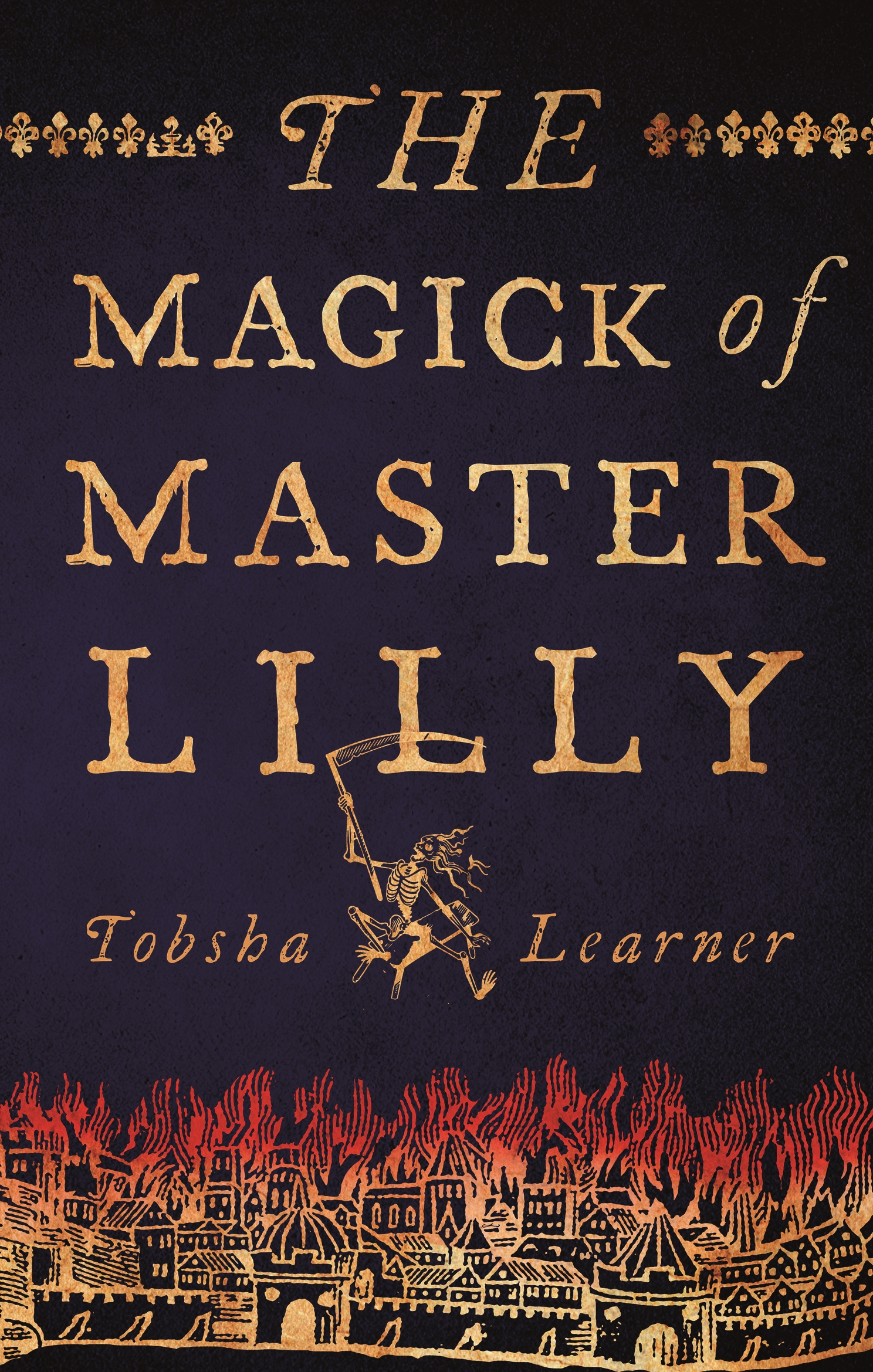
Tobsha Learner’s new historical thriller The Magick of Master Lilly is out now, published by Little, Brown Book Group, and priced at £8.99 in paperback and £7.99 in e-book. For more information visit tobsha.com


Quitting My £60k Job Was the Best Decision I Ever Made. Karen Holden Interview

businesswomen , succeeding in businessKaren Holden is one impressive woman. She was a solicitor at an international practice but saw how female colleagues were ostracised during pregnancy. It made her fear for her career.  Karen also knew that the big corporate firm, would not support her need for a healthy work/life balance and Karen is a woman who wants it all.
Taking matters into her own hands, Karen launched A City Law Firm in 2008, when the UK economy was on its knees and lived off credit cards to survive.
Despite almost going bust in the first year, Karen is now celebrating 10 years in business, has an army of high profile clients and £1m plus turnover.

What was the catalyst that made you quit your job and start your own business?

Three things

  1. I wanted a family at some point in the future and I realised that a women in this sector , having a baby and family, would be difficult. I saw women passed over and treated differently and yet I knew I could still do everything as I have now proven
  2. Clients were becoming numbers and bottom line figures , whereas I still believed in delivering personal service and results
  3. So in short I was becoming disillusioned with the industry and wanted to see if I could do it differently

How do you make it a success?

I deliver what I genuinely believe in and aim to ensure all my team are on board and do the same. We are personal, supportive, specialist and experienced, but friendly and approachable service

I embrace change, disrupt the old fashion traditions, work hard and at the same time enjoy my family time

What have you learned along the way?

To never let anyone or anything stand in your way, learn from your mistakes and be proud of your battle scars.  Having good advisors, mentors and people around you is essential to success – you can never do it alone.

What advice can you give other women?

If you work hard and pick yourself up if a door closes in your face, you can have it all and succeed.  You can earn far more, have quality family life, a nice team to work with and achievable goals if you persist.

How important do you think work/life balance is?

This is fundamental and for me there is no point doing what I do if I cant have quality time with my family and friends.

I work late some week nights, so those nights I can get home early, I spend reading to my son and weekends are precious for us spending time together. Running my own business means I am fortunate to work the hours that suit my family.  If I leave early I can always pick up the work when my son is in bed as flexible working enables me to have it all

Do you think women who want families are still discriminated against? How could we fix this?

Its actually just as bad for men, trying to take paternity leave or time off for their families – we need as a society to embrace family life far more than we currently do in the UK. Likewise though, those with children do need to prove they can work just as well as those without so they don’t put on their colleagues or disillusion employers making it harder for others next in line. Working together employer and employees can often find a good balance that energises both of you which in turn is good for business.

What is your biggest tip for becoming successful?

Never take no for an answer , find another route to where you want to get and fight onwards – BUT always know you will make mistakes and learning from them is essential

Exclusive Paddy Ashdown Interview ‘I Am Devoted To The Liberal Democrats’

Here is part three of our exclusive Paddy Ashdown interview. Take a look at part one and two.

That’s a good answer. In your diaries you are clear about how close you were to Labour before and after the ’97 election, and that PR was the price of coalition. Given that the Lib Dems eventually went into coalition with the Tories, with just a promise of a referendum on AV, how do you think events would have unfolded if you’d accepted a similar deal in ’97?”

I don’t know. I mean I can’t take you through the what would have happened parts of history. I suspect the circumstances would have been very different if we also had the referendum on a sensible system rather than a lesser sensible one. I don’t think you would have had the leading party in the country at the time deliberately doing what they could at the time to destroy the motion and the national newspapers at the time supporting them. That is the ‘what would have happened’ bits of history and we could all spend hours deciding how the world would be different  if Britain hadn’t won the battle of Waterloo; It’s very interesting but it doesn’t bear much relevance.

Paddy_Ashdown_3You also said in your diaries that you were worried that the party would start with Gladstone and end with Ashdown, what do you think was your greatest achievement as the Liberal Democrat Leader?

I have never ever believed that I am a good judge of my own achievements, I leave that to others to decide on what your achievements are. I was very proud to lead the Liberal Democrats for eleven years, I loved it, I am devoted to them. I was also very proud to be the International High Representative in Bosnia for the British Government.  No doubt I made mistakes in both of those jobs, probably quite a lot of them. When you have the privilege of doing jobs like that you can use it to your advantage and I quickly realised what I was good at and what I was bad at.

What do you think will happen with the Liberal Democrats in 2015?

I actually think all the polls now are wrong. I have to rely, as I always have done, on the good judgement of the british electorate, I think we have a good story to tell, we have been in government, everyone said we couldn’t do it. I think we have been more united than the Tories, tougher than the Tories, and played a really serious role in bringing our country through a crisis. If I know the British electorate at all well, when the moment comes, I think we’ll reap the dividends of that. I also think that the British electorate probably, having had the benefit of the coalition may not be very happy returning to absolute power in anybody’s hands. Also, having a coalition of some sort forces people to work together instead of spending all their time scratching each other’s eyes out. Maybe that is a much better system than what we had in the past. Those two things will help us I think.
Who Is Your Favourite Politician?

I think as someone said to me; ‘Who is my hero?’ and I said William Wilberforce who is as unlike me as you could possibly get, apart from Gladstone of course, who is the greatest Prime Minister this country has ever had both internationally and domestically, he was a man who said, “We did not march across the law of anti-slavery, we did not march towards a monument in the distance, we gathered friends like flowers along the way.” and I think he was an extraordinary politician.

Do you think we should have intervened in Syria?

No, I don’t. I’m against intervening in Syria while the opposition is so fractured and defused. Anyways, they’re being funded by extremist elements and encouraging extremist elements so, no, I thought that would lead us towards an engagement in what I think is a widening religious war. I did however think we should intervene in defense of one of the principles pillars of international law; a prohibition on the use of chemical weapons that has stood since 1926 and strained even Hitler and Stalin, and I thought that unless we were prepared to show strength to Assad, not by intervention because we wouldn’t have done, but there was a price to pay that was painful for breaking this principle of international law, then it would only have encouraged the wider spread of chemical weapons. So, no, I don’t think we should have intervened in Syria but I do think we should defend International Law and indeed one of the most important pillars of the international law that preserves some semblance of civilised behaviour in the prosecution of wars.

You testified against Slobodan Milosevic. Was that scary?

No, it wasn’t scary. It was more scary being bombarded by his troops. I mean, I testified about being in the middle of the Albanian villages when they were being bombarded by the main battle units of his army, that was much more scary.

I can understand that. You have done a lot of different things in your life. What is your favourite?

I think there is nothing I’ve done that will match my sense of pride of being a member of parliament for my own community of Yeovil. There is no thing you could ever do that matched being the representative in Westminster of the community you live in and love. So if somebody said you can have one line to put on your gravestone it would be ‘Member of Parliament for Yeovil’.

What was it like being an intelligence officer?

I was a perfectly ordinary diplomat

What is the best advice you have ever received?

Never stop learning.

Thank you Paddy.

 What do you think?

Exclusive: Paddy Ashdown On Clegg, The Tories, The Liberal Democrats & The NHS

Part two of our Interview with Paddy Ashdown. Here he talks about politics. Part three will be up tomorrow. Let us know what you think. Part one, where he talks about writing and his books,  is here.

Do you mind if I ask you some political questions as well?

No, go on.

Would you prefer the Liberal Democrats to side with Labour at the next election?

That is a matter not for me or my preference but it is a matter for the British electorate voting in the ballot box.

Do you think Nick Clegg has been true to liberal values?

Absolutely. I think he is remarkable. I think he is…I am devoted to the man, I think he is one of the most brilliant politicians in Britain today. Hugely, publicly, under-rated. He’s got very, very good judgement. He’s got extraordinary courage and he is a liberal down to the marrow of his bones. So I think he’d undoubtedly make the best Prime Minister that you could have today.

He has a very hard job. Doesn’t he? 

It’s a thankless job. I did it for eleven years and let me tell you it is the most thankless job  because you represent the only philosophy: liberalism, that makes any sense.

He has it tough because generally people don’t seem to like the Tories

No they don’t like the Tories and I don’t like them either. I spent my life fighting them. If the public elects a coalition where the only coalition that can have a majority in the House of Commons inherently, mathematically, adds up to ourselves and the Tories do they really want people that don’t listen to them?, the public democratic view. And you better ask yourself what they like best. Do they really like the complete and utter corrupt mess this country was left in by Labour, which would have bankrupted young people for the next twenty years or do they like two parties that put aside their differences for the national interest and work together to get us out of the worst recession we have had since the 1930s and back on the path of growth. Which of these two would you prefer?

I agree with that, Labour left the country in a very big mess.

Absolutely. People have likes and dislikes in politics and what I’m interested in is doing what’s right for my country. That is what I have always been interested in and if the Liberal Democrats pay an electoral price for that, and I think they will by the way, if they did, if I was doing what I believed to be right for my country and helping it out of a crisis then I am proud of that and that’s what politics is for.

Do you think the Liberal Democrats made an error over tuition fees?

Yes, they made an error by promising it when it couldn’t be delivered. We’ve been in opposition for a hundred years, we haven’t been in government, so of course from time to time decisions which were driven to a certain extent by opportunism. I said at the time that we were making a promise that I didn’t think in the economic climate could be delivered. If we had been in government by ourselves I think we might have decided to sacrifice other things in order to deliver what we promised but we weren’t in government, we were in coalition. So, no, neither parties manifesto has been in operation. Both parties have had to make some compromises. I don’t call that anti-democratic. I call that the operation of democracy.

Do you think the NHS is being privatised?

What concerns me more than anything else isn’t who owns the NHS but how the public is served. How the citizen is served. For instance, even under the last government, under Mr Blair’s government, I had to have some health checks done and I went to a private organisation run under contract from the health service as an alternative means of delivering health services, that is; free at the point of delivery health services, and they did a wonderful job. Now I could have gone to a health service hospital, it’s all paid out of our taxes, it’s all paid by the national health service. One of those organisations was privately run, one was publicly run. It doesn’t matter who runs it. I don’t believe in private health but if there is a private provider providing to the health service under health service conditions and they can do it better for the costumer, then that is surely what you want. I mean I don’t believe the argument that says private/public is the necessary argument. I am strongly in favour of public services being offered free at the point of delivery and paid for on taxation, but who actually runs the organisation that delivers it is far less important to me than how well the citizen is served.

I agree with that. That is a question we get asked a lot but I got an MRI on my back and it was done through the NHS via a private company and they did an amazing job. Very professional, very quick.

Yes, that’s right. If you had a monopoly public service I don’t even think it would be a better public service. It needs competition. It makes people live up to the mark. I bet you there were more people abused and receiving bad service and ignorant service when the NHS was a public monopoly. I don’t believe in public monopoly. I believe in things being paid for either by taxation, free at the point of delivery but then who does that?, providing it is subject to inspection and national control is a matter of irrelevance.


Exclusive Paddy Ashdown Interview: On His Books

Paddy Ashdown has been a Royal Marine, the leader of the Liberal Democrats for eleven years, High Representative for Bosnia and Herzegovina, and is a life peer in the House of Lords. On top of that he has written 8 books, with the 8th coming out on the 5th of June. I can’t wait as I have loved all of his other books. I interviewed him about his books and politics. Here is part one.

Did you get the idea for A Brilliant Little Operation: The Cockleshell Heroes and the Most Courageous Raid of World War 2 while you were a member of the Royal Marines elite Special Boot Squadron?

No, my publisher approached me and said ‘it’s the 70th anniversary how about writing the book’. Which is my seventh book. I am just about to produce my 8th so it was a natural subject really.

What is your 8th book about?

The 8th book is about the largest resistance battle with the Germans in the Second World War. It is called A Terrible Victory, about the Vercors plateau on June 1944 and it was the biggest resistance German battle in Western Europe. [Learn more about the book here. It is about the chronicle of the French Resistance during World War Two]

That sounds fascinating. You have written quite a lot of books. Do you have a favourite?

I think the one I am working on now is always my favourite. I love writing books and whatever you’re working on consumes your mind so it is always the one you are most thinking about.

You’re books are very good. They are always very factual and have lots of history in them. How do you go about writing them. What is your writing schedule?

Writing The Brilliant Little Operation, and the one I am going to produce, Harper Collins will publish it on the 5th of June, takes me about three years of research. I mean, I start writing before then and overall I don’t like writing unless I have all of the research it is possible to get. Normally the whole process will take my three and a half to four years. Of which three years is spent on research. Going to the wonderful archive museum in Britain, the National Archives in Britain. In the case of both of my most recent books, to the Château de Vincennes in Paris, In France there are three key archives you have to go to. And also the Bauhaus-Archiv in Germany.

I spend a lot of time in archives. In writing my present book I have read sixty other books on the subject, all of them in French. In writing a Brilliant Little Operation I have read four books before and a lot of research. So research is very important.

You can really tell that when you read your books.

Thank you, that’s kind. That’s very generous.

Tomorrow: The Liberal Democrats, the Conservatives, Nick Clegg, Labour and the NHS: Exclusive interview.


MumsThread On The Kindness of Strangers

baby, shared parental leave, feminism, equality, childcare, leave, maternal, work, working mothers, lean inMy last few pieces have been quite negative so I thought I would share something positive today: just how kind people can be when you have a child. That knowing look that other parents give you, that it-is-going-to-be-okay smile that complete stranger do to make you feel better. I remember trying to get into my flat once and struggling to get the pram through the heavy door, a man in a van stopped and asked if I needed help, followed by two other people. That was three people in a row. I was really touched and it made my day. I didn’t want to put any of them out- the pram just needed an extra push at that point- but when you are a parent, especially one with a baby, any kindness really does make your day.

I have had people come up to me in restaurants and tell them how beautiful my son is (I know, proud mum alert). Babies and toddlers are social lubricant. I have talked to more people since I had my son than I had in years. It does feel like when you have a child you enter some kind of club. Not in a bad way, just in a way that other parents will usually strike up a conversation or try to help if they can. Having a child opens up an entire new world. I took my son to Baby Ballet recently, and it was so sweet seeing him with all of the other children, but it was also great being surrounded by other parents. Having a child can be an isolating experience, any kindness you can get, any human contact at all can make or break a day. I am grateful to every single person who took their time. Even if it was just a smile.

What are your experiences of parenting? Share them with us by emailing frostmagazine@gmail.com, comment below or tweet us at @frostmag