Channel 4 Dispatches Investigates The Scottish Referendum

scottishreferenduminvestigationreferendumChannel 4 Dispatches looked at claims of personal attacks and mudslinging on both sides of the Scottish referendum debate. (The Great British Break-up? Channel 4 Dispatches. aired 8pm Monday 7 July, available on 4OD)

Among the stories covered in the programme are allegations that many businesses have been pressured into staying silent; accusations that the Westminster government has been misleading voters in Scotland and the revelation that British embassies have been instructed to support the case for a No vote.

Polls show the single most important issue for voters is what might happen to the Scottish economy after independence. While business leaders are probably best placed to answer some of these questions, Channel 4 Dispatches investigates allegations that many have been pressured into staying silent.

Channel 4 Dispatches contacted 50 companies and business leaders believed to have concerns over independence. Five told the programme privately they’d been contacted by the Scottish Government and said they felt pressured to stay quiet about their views. Of the five, one claimed they had been visited by a Minister, two claimed they received a phone call from a Minister, and two claimed they had received a call from the First Minister’s office. And a further 14 claimed to know of other businesses who felt under pressure.

Gavin Hewitt, the former Chief Executive of the Scotch Whisky Association tells Channel 4 Dispatches that he or senior members of his staff met with Angus Robertson – the SNP leader in the House of Commons – on at least six occasions over the past two years:

“He and the SNP have regularly tried to get the message to the Scotch Whisky Association that the Scotch Whisky Industry should stay out of the independence debate. He was, I think, trying to neuter business comment. There was a genuine fear that in fact if we were seen to scupper by coming out publically against independence, there would be retribution down the track.”

“Regardless of whether the SNP win or lose the referendum vote in September they will be in power for many years to come and that those people who have stood against them or worked against the central plank of their policy, independence, will be singled out and will be remembered.”

In response, the Scottish Government told Channel 4 Dispatches that Mr Hewitt’s claims about Mr Robertson are ‘utterly false’.

The programme interviews Professor Patrick Dunleavy, Public Policy Chair at the London School of Economics, who says the UK government’s statement that the Scottish taxpayer would have to fork out £2.7 billion in set up costs misused his figures.

“It’s very hard to describe it in polite terms actually, it’s very crude, it’s alarmist, it’s not been checked and it rests on a whole series of, you know, false steps…That makes this a very dubious document. A dodgy dossier you might call it…. When you take into account all the factors that I’ve been just considering, my actual set up costs, you know the costs that you lose irretrievably just from going independent would be I guess around £150 to £200 million, that compares with numbers given in the treasury document which range from £1.5 billion to £2.7 billion. Given this is quite a polarised debate you should be checking your facts and contributing unimpeachable information.”

In response, a government spokesperson told Channel 4 Dispatches that it had ‘cited several external sources’ to provide context in their calculations for the set up costs.’

The programme reveals new information about what happened following the decision by the CBI to publicly back a No vote. This led to many of its members pulling out, most of whom claimed they’d made the decision in order to remain politically neutral. Channel 4 Dispatches has obtained emails which reveal the role played in this pull-out by the SNP’s John Swinney.

The emails reveal how Mr Swinney seized on the decision by Scottish Enterprise to pull out of the CBI to push others to do the same, with his media advisor urging Visit Scotland to follow Scottish Enterprise’s lead and pull out of the CBI: ‘Mr Swinney has made said that other public bodies should follow suit, if they are CBI members,’ one email states.

Another senior official in the Finance Office emailed the CEO of Visit Scotland, asking him: ‘Can you please let me know … when a resignation letter can be issued.’

In response, a spokesperson for the Deputy First Minister told Channel 4 Dispatches: “A poll from the British Chambers of Commerce concluded that the referendum and the prospect of an independent Scotland “has left most [UK] businesses unfazed.” John Swinney’s comments “were in the context of the CBI” taking “a political stance” that raised “questions as to whether public bodies could remain members of the CBI and continue to meet their statutory obligation of impartiality.”

The programme also includes details of cables, released under the Freedom of Information Act, which the Foreign Office has sent to its embassies around the world. While the government has said that it is neutral on the referendum, one cable, sent out to embassies and consulates, suggests otherwise. It states that the British Government is: ‘Not neutral… and will be actively campaigning to secure a referendum result that will keep the United Kingdom together.’

In response, a government spokesperson told the programme: “The Prime Minister has always been clear that this is a decision for people in Scotland to make but it is no secret that he believes those living outside Scotland should make their views known.”

Lord Sutherland, Former Vice Chancellor of Edinburgh University claims that some of those running Scottish universities have also come under pressure to stay out of the debate despite concerns about the impact of independence.

Professor Chris Whatley from Dundee University tells Channel 4 Dispatches what happened when SNP Sports Minister Shona Robison caught wind of his appearance chairing a Better Together event in a personal capacity, and wrote an urgent email to the Principal of Dundee University.

“I think people did see this as, as an attempt to stifle, public debate, I mean there isn’t any threat or there hasn’t been any threat to public speech in Scotland as long as you’re saying yes. I guess I was seen as a threat,” he tells the programme.

Lord Sutherland adds:
“To be questioned by a Scottish Minister about the propriety of his expressing views in public is disgraceful. It sends the message that you’re being watched, if Big Brother’s looking down on you, then there’s an implicit threat. … The danger is that you have a regime that does things by stealth rather than argues things out in public.”

The spokesperson for the Deputy First Minister told Channel 4 Dispatches that: “Shona Robison’s questions related to the impartiality of the Five Million Questions project” and that “In terms of wider academic views, we welcome all contributions.”


10 Little Known Facts About Dickens

The Charles Dickens Museum has put some great Dickens facts together for us in conjunction with the release of The Invisible Woman which is out on DVD now. . Enjoy.

Dickens was extremely fond of his sister in law, Mary Hogarth, who was 15 at the time they first met. Mary died, aged 17, in his arms at his home at Doughty St (now the Charles Dickens Museum) and Dickens was struck low with grief. He wore a ring from her finger for the rest of his life and kept a lock of her hair. He was unable to work for months following her death – a situation previously unheard of. To a close friend he wrote of her death:

“Thank God she died in my arms and that they very last words she whispered were of me … I solemnly believe that so perfect a creature never breathed. I knew her inmost heart and her real worth and value. She had not a fault…”

the_Invisible_Woman_dvd release

· Dickens love and fondness for Mary coloured his life for years after and affected him profoundly. Years later Dickens spoke of his wish to be buried beside Mary to his friend John Forster:

“The desire to be buried next to her is as strong upon me now as it was three years ago; and I know (for I don’t think there ever was love like that I bear her) that it will never diminish…”.

· Dickens met his first love, Maria Beadnell, at age 17. He was not considered good enough for the attentions of a bankers daughter. He vowed to become an actor to impress her and even when he became a well earning parliamentary reporter in 1835, he was refused by Maria’s parents. Maria contacted Dickens again later in life in 1854 and he was once again infatuated and sent her effusive letters until he discovered she had become dull and matronly. After this he never spoke to Maria again and portrayed her cruelly as Flora in ‘Little Dorrit’

· Dickens met the young actress Ellen Ternan when she was 17 and he pursued her from 1857 and was connected to her until his death in 1870. Dickens went to great lengths to keep the affair a secret from his adoring public. Ellen was the same age when he met her as Mary Hogarth had been when she died.

· As the relationship with his wife Catherine soured, he arranged for a wall to be built in the middle of their shared bedroom making the separation complete.

· In 1858, Dickens officially separated from Catherine and to put an end to rumours in circulation about his affair with Ellen Ternan, he had a notice published in London Times and Household Words to explain the ‘amicably composed’ separation to his wider public.

· When Dickens separated from Catherine, he blamed her mental instability as the cause of their break-up rather than the affair with Ellen Ternan

· A serpent ring tells the story of strained relations between Catherine Dickens and her sister Georgina following the separation of the Dickens’s marriage in 1858; Georgina made the controversial decision to remain with Dickens as his housekeeper. Many years later, after Dickens’s death, Catherine made a gift of the serpent ring to the sister who had deserted her, the symbol of the snake implying her betrayal.

· The affair between Dickens and Ellen was covered up well into 1920’s. Subsequent generations denied that the affair ever happened. A discovery of Dickens’ stolen or lost diary of 1867, found in 1943, appears to confirm the affair through coded entries..

Dickens was extremely fond of his sister in law, Mary Hogarth, who was 15 at the time they first met. Mary died, aged 17, in his arms at his home at Doughty St (now the Charles Dickens Museum) and Dickens was struck low with grief. He wore a ring from her finger for the rest of his life and kept a lock of her hair. He was unable to work for months following her death – a situation previously unheard of. To a close friend he wrote of her death:

“Thank God she died in my arms and that they very last words she whispered were of me … I solemnly believe that so perfect a creature never breathed. I knew her inmost heart and her real worth and value. She had not a fault…”

· Dickens love and fondness for Mary coloured his life for years after and affected him profoundly. Years later Dickens spoke of his wish to be buried beside Mary to his friend John Forster:

“The desire to be buried next to her is as strong upon me now as it was three years ago; and I know (for I don’t think there ever was love like that I bear her) that it will never diminish…”.

· Dickens met his first love, Maria Beadnell, at age 17. He was not considered good enough for the attentions of a bankers daughter. He vowed to become an actor to impress her and even when he became a well earning parliamentary reporter in 1835, he was refused by Maria’s parents. Maria contacted Dickens again later in life in 1854 and he was once again infatuated and sent her effusive letters until he discovered she had become dull and matronly. After this he never spoke to Maria again and portrayed her cruelly as Flora in ‘Little Dorrit’

· Dickens met the young actress Ellen Ternan when she was 17 and he pursued her from 1857 and was connected to her until his death in 1870. Dickens went to great lengths to keep the affair a secret from his adoring public. Ellen was the same age when he met her as Mary Hogarth had been when she died.

· As the relationship with his wife Catherine soured, he arranged for a wall to be built in the middle of their shared bedroom making the separation complete.

· In 1858, Dickens officially separated from Catherine and to put an end to rumours in circulation about his affair with Ellen Ternan, he had a notice published in London Times and Household Words to explain the ‘amicably composed’ separation to his wider public.

· When Dickens separated from Catherine, he blamed her mental instability as the cause of their break-up rather than the affair with Ellen Ternan

· A serpent ring tells the story of strained relations between Catherine Dickens and her sister Georgina following the separation of the Dickens’s marriage in 1858; Georgina made the controversial decision to remain with Dickens as his housekeeper. Many years later, after Dickens’s death, Catherine made a gift of the serpent ring to the sister who had deserted her, the symbol of the snake implying her betrayal.

· The affair between Dickens and Ellen was covered up well into 1920’s. Subsequent generations denied that the affair ever happened. A discovery of Dickens’ stolen or lost diary of 1867, found in 1943, appears to confirm the affair through coded entries..

Dickens was extremely fond of his sister in law, Mary Hogarth, who was 15 at the time they first met. Mary died, aged 17, in his arms at his home at Doughty St (now the Charles Dickens Museum) and Dickens was struck low with grief. He wore a ring from her finger for the rest of his life and kept a lock of her hair. He was unable to work for months following her death – a situation previously unheard of. To a close friend he wrote of her death:

“Thank God she died in my arms and that they very last words she whispered were of me … I solemnly believe that so perfect a creature never breathed. I knew her inmost heart and her real worth and value. She had not a fault…”

· Dickens love and fondness for Mary coloured his life for years after and affected him profoundly. Years later Dickens spoke of his wish to be buried beside Mary to his friend John Forster:

“The desire to be buried next to her is as strong upon me now as it was three years ago; and I know (for I don’t think there ever was love like that I bear her) that it will never diminish…”.

· Dickens met his first love, Maria Beadnell, at age 17. He was not considered good enough for the attentions of a bankers daughter. He vowed to become an actor to impress her and even when he became a well earning parliamentary reporter in 1835, he was refused by Maria’s parents. Maria contacted Dickens again later in life in 1854 and he was once again infatuated and sent her effusive letters until he discovered she had become dull and matronly. After this he never spoke to Maria again and portrayed her cruelly as Flora in ‘Little Dorrit’

· Dickens met the young actress Ellen Ternan when she was 17 and he pursued her from 1857 and was connected to her until his death in 1870. Dickens went to great lengths to keep the affair a secret from his adoring public. Ellen was the same age when he met her as Mary Hogarth had been when she died.

· As the relationship with his wife Catherine soured, he arranged for a wall to be built in the middle of their shared bedroom making the separation complete.

· In 1858, Dickens officially separated from Catherine and to put an end to rumours in circulation about his affair with Ellen Ternan, he had a notice published in London Times and Household Words to explain the ‘amicably composed’ separation to his wider public.

· When Dickens separated from Catherine, he blamed her mental instability as the cause of their break-up rather than the affair with Ellen Ternan

· A serpent ring tells the story of strained relations between Catherine Dickens and her sister Georgina following the separation of the Dickens’s marriage in 1858; Georgina made the controversial decision to remain with Dickens as his housekeeper. Many years later, after Dickens’s death, Catherine made a gift of the serpent ring to the sister who had deserted her, the symbol of the snake implying her betrayal.

· The affair between Dickens and Ellen was covered up well into 1920’s. Subsequent generations denied that the affair ever happened. A discovery of Dickens’ stolen or lost diary of 1867, found in 1943, appears to confirm the affair through coded entries.


Allusondrugs September Tour | Music News

Allusondrugs have announced their September tour dates.
 

Their Eponymous EP


Release Date: 21st July 2014 on Clue Records

  allusondrugstour

Allusondrugs formed in 2012 in West Yorkshire when Jason Moules (Vocals), Drey Pavlovic (Guitar), Damo Hughes (Guitar/Vocals/Effects), Jemal Malki (Bass) and Connor Fisher-Atack (Drums) came together after meeting on the Leeds music scene.  Influenced by Nirvana, Deftones, My Bloody Valentine and Sonic Youth and known for their blisteringly intense guitar rock sound, the band have attracted national press attention and a huge following of fans who are drawn to their captivating live performances.


The Allusondrugs EP was recorded and produced in one week at Greenmount Studios in Armley, Leeds. The record was tracked live to analogue tape as band members performed together in one room.  Although additional overdubs and vocals were added complete the tracks, the core of the recording was done live in an attempt to capture the band’s energy on record.


Social Links:

Facebook

Twitter


Tour Dates:


JULY

5th July = The Wardrobe, Leeds (Futuresound Competition)

11th July = Exchange Arts Centre, Keighley

12th July = The Works Skatepark, Leeds

17th July = Proud Galleries, Camden

20th July = The Rocking Chair, Sheffield

25th July = Tramlines Festival, Sheffield (Millenium Galleries)

26th July = Lounge 41, Workington

27th July = Clarence Festival, Wakefield


 AUGUST

1st August = The Puzzle Hall, Sowerby Bridge

2nd August = Temple of Boom, Leeds

7th August = Bar Bloc, Glasgow

14th August = Wharf Chambers, Leeds


SEPTEMBER


11th September = The 13th Note, Glasgow

12th September = Downstairs, Aberdeen

13th September = Pickett, Liverpool

14th September = Think Tank, Newcastle

15th September = Static Bar, Swansea

16th September = Red Rooms, Nottingham

17th September = The Garage (upstairs), London

18th September = Sticky Mikes, Brighton

19th September = The Crauford Arms, Milton Keynes

20th September = Huddlefest, Huddersfield

21st September = Boiler Room, Guildford

22nd September = Joiners, Southampton


Sexism And Sexual Harassment: The Rise of Everyday Sexism

This is an article I never wanted to write. But something compelled me. A sense of injustice, perhaps. I wanted to write about my own experience of everyday sexism. More importantly, I wanted to write about what happened to me a couple of weeks ago.


everyday sexism a personal experienceTwo weeks ago I was walking home from a party in East London when a car kept beeping. I ignored it. I usually do when I am in a part of London where I don’t know people. I finally turned around and a man gestured with his hand for me to come over to his car which had stopped at a red light. I obviously ignored it because I am not an idiot. Do they really think that a women being summoned by a stranger in a car is going to make her go over there? Insane. He was in a car with three friends. He didn’t like being ignored. In fact, he turned his car around so he and his friends could go past me and yell obscenities that I would never write down, never mind say out loud. To say I was terrified was an understatement. It doesn’t take a lot of courage to yell at a women who is 5.5 and a half inches tall and 130 pounds. If they wanted to get out of the car to hurt me, kill me, rape me, I would have stood no chance. I am an emotionally strong person, I even think that after martial arts training that I can generally look after myself, but, sadly, when it comes to physical strength: men and women are not born equal. I was badly shaken. My fiancé was off at a business conference. I didn’t leave the house the next. Nor the day after that.


I wish I could say this was a one-off. Sadly it wasn’t.  About a week later I was coming back from the post office near where I live and I was about to step onto the road and then I pulled back as a car was approaching very fast. I could have crossed and made it, but I decided to be extra safe. The car beeped at me aggressively. I waved the aggression away with my hand in an almost subconscious gesture. Turns out it was a man driving. He slammed on the brakes and got out of the car. A muscular man of average height and too-high testosterone. I had crossed behind him at this point. ‘What?, What?” He yelled at me with aggressive body language and an incredibly angry tone. I pretended he wasn’t there and walked in the opposite direction. Thankfully, he didn’t follow.


In fact the intimidate-a-women-in-your-car thing isn’t rare at all. It has happened to me four times now and many friends have had the same experience. But I doubt their mothers are proud of them. it doesn’t take a lot of courage to abuse a women who is alone, whilst sitting in a hunk of metal, surrounded by your friends. When I was growing up I wasn’t allowed in certain areas and places unless one of my brothers was with me. I always hated this, thought it was sexist and unfair, but, actually, my parents were smart and knew far more about the brutality and unfairness of the world than I did.


This doesn’t mean that all men are lovely and polite when not in cars. I have been asked ‘How much?’ whilst walking through Leicester Square. I have been followed a number of times, had my bottom groped, had men leer at me, been called everything from a slut, to a whore to a c**t (no, I can’t even write it down properly) I have walked down the street in a knee-length skirt and been treated like I was walking down the street topless. My crime? Just walking down the street, minding my own business. Oh, and having breasts and a vagina. Apparently that means it is open season. I never reply, I just ignore it. Usually I can brush it off but not always. Women should not have to put up with this level of abuse. It is time we took a stand. It is time that women and men unite and say no to everyday sexism.


There is a wonderful project called the Every Day Sexism Project (and I hope they don’t mind me using their name) you can add your experiences of Every Day Sexism.  They can also be tweeted at @EverydaySexism.


Please also comment and add your own experiences below. The more we expose sexism and show how common harassment is, the more we can do to stop it and raise awareness. My one hope is that some of these men don’t realise how their actions affect the women they treat so badly and that when they do, maybe they will think twice.


Five Mistakes Actors Make That Stop Them Getting Work

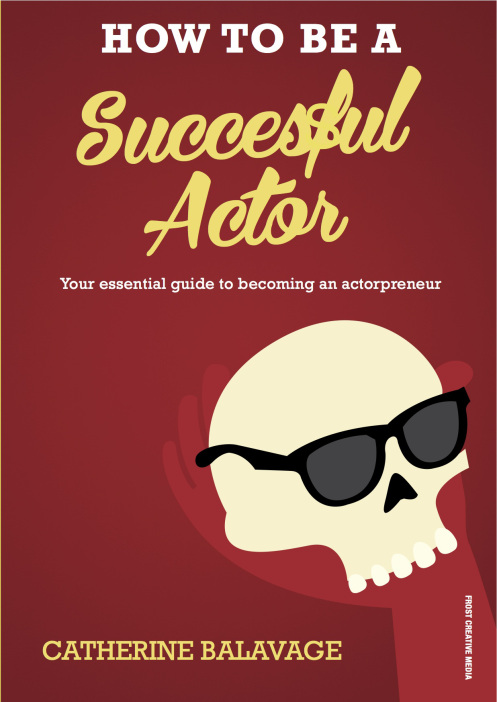
Getting work as an actor is hard. With long periods of unemployment and vast competition. This was the main reason I wrote my book How To Be a Successful Actor: Becoming An Actorpreneur. The odds are not good but you can tip them in your favour. You can make your own work, work on your skills, get your name out there. They say success is opportunity meets preparation. So here are my top five tips to make sure you are prepared and stop making the mistakes that stop you having the best career you can. Here are five mistakes actors make in their career that stop them being successful.


howtobeasuccessful_actor_book become How To Be a Successful Actor: Becoming an Actorpreneur

Arrogance

Far too many actors are arrogant. Especially just after they have left drama school. Thinking you are the best actor that ever walked the earth is not going to convince anyone else to hire you. No one likes arrogance. Always under-promise and over-deliver. Be humble and modest. The traits that make a good human being also make a good actor.


Marketing Yourself Wrong

Yes, you are an artist but you are also a product. You have to brand yourself correctly so people know what you are ‘selling’. If you are Irish and want to market yourself as an Irish actor you must be prepared for only getting Irish roles. People will try to put you into a box but you can do yourself a favour by making yourself versatile. If you don’t want to be known as a certain type of actor, (like Australian, Irish, etc) don’t market yourself that way. Play up to your strengths and downplay what will limit you getting mainstream work.

You must also update your head shots, CV and showreel at least yearly. Don’t forget to update the various online acting sites you may be on every time you get a job.


Not Continuously Working On Your Skills

Actors can go months, and even years without working. If you do not work on your skills when unemployed not only will you be rusty when it comes to audition and getting work, but you will also not be as confident. Your CV will also be lacking. You are a business, invest in yourself. Even if it is getting a camera and making some short films with friends.


Thinking The World Owes You a Living

You are not special. You do not deserve to be a super-successful world famous actor. The world does not owe you anything. A sense of entitlement is not going to do you any favours. This was the main piece of advice American casting director Daryl Eisenberg gave me for my book on becoming a successful actor. Don’t think you are better than anyone else.


Being a Jerk

No one wants to work with horrible people. The film industry is tiny, as is the theatre and TV industry. If you are rude, horrible and difficult to work with then you will have a pretty short career. Be nice. Manners cost nothing.


Catherine Balavage is an actor and writer with over ten years of experience in the industry. Her book, How To Be a Successful Actor: Becoming an Actorpreneur, came out in June this year. She also co-directed and wrote her own feature-length film, Prose & Cons, which will be out later this year.


Frost’s Editor Catherine Balavage Writes How To Be A Successful Actor Book

Frost’s Editor, Catherine Balavage, has written a book on How To Be A Successful Actor. It is called How To Be a Successful Actor: Becoming an Actorpreneur. It has gotten as high as number 5 on the Kindle charts under Stage & Theatre. It will also be released on paperback and Smashwords soon. Handpicked Future did a great piece on it and Catherine was on the front page of the Entertainment section in The Huffington Post with her Actors Who Make Their Own Work article. You can also read an article by Catherine written on her own blog.

howtobeasuccessful_actor_book_cover The book is available here for UK readers and here for US readers. It is also available worldwide.

Cover art by Steve McAleavy


Is This The Best Women’s Magazine Cover Ever? We Think So

The Australian Women’s Weekly has trumped every other women’s magazine cover by featuring Turia Pitt as it’s cover star. 26-year-old Pitt was running a marathon three years ago when she was caught in a bushfire and was left with scars over 65 per cent of her body. Pitt said: “I feel humbled, For me it sends the message that confidence equals beauty.”

bestwomensmagazinecover

Pitt has had over 100 operations, and she spent over two years in hospital. She even lost all the fingers on one of her hands. It is a brave move from Women’s Weekly but it shouldn’t have to be. There should be more diversity in race, age and disability in our media.

Before I go to sleep poster

The poster for Before I Go To Sleep doesn’t do equality any favours however, showing Colin Firth and Mark Strong with wrinkles, looking handsome but looking their age, while Nicole Kidman’s face looks like it has been sandblasted. It seems that women are still not allowed to age in Hollywood, but men are. Firth and Strong look great and are allowed to age, but for Kidman you get the feeling it would be the end of her career. Kidman is 47, Firth is 53 and Strong is 50. I mean, god forbid a 47-year-old woman looks like a 47-year-old woman.

It is not Kidman’s fault of course. She is just a product of her environment. But I can’t help feeling that actresses who nip and tuck everything are perpetrating the problem. I think it is time we made a stand. What do you think?

The Sunday Reeds | Music Profile

The Jesus and Mary Chain Meets Marianne Faithful: It’s Australia’s The Sunday Reeds.

Their new EP ‘Amour Tragique’ on Heartgun Records


Release Date: 1st August 2014

Format: Digital Download 

 TheSundayReedsPic1

L-R: Jeremy Russell, Romana Ashton and Drew Jones.  Photo by Rex Francis


The Sunday Reeds, named after Melbourne’s celebrated patron of the arts Sunday Reed, are Romana Ashton and Drew Jones.  Though forming in 2009 as a duo, they soon started playing live as a three-piece and are regularly joined on stage by drummer Jeremy Russell.


Their first release ‘Drowning in History’ (2009) caught the attention of UK indie label Squirrel Records leading to extensive touring across Australia, the UK and Europe, during which bridges were burned, relationships ended and nervous breakdowns became commonplace.  At one point the founding duo spent three days in Paris where the most romantic city in the world became an ironic backdrop for a particularly bitter relationship break up, one that culminated in their latest EP ‘Amour Tragique’ (Tragic Love).


A collection of five songs that detail doomed romances and love lost, ‘Amour Tragique’ combines the grittiness and angst of ‘90s grunge with the pop sensibilities of ‘60s pop, rock ‘n’ roll, a good measure of old fashioned blues and ‘80s new wave/post punk.


With contralto female vocals likened to Marianne Faithfull and Shirley Manson, and a rock ‘n’ roll swagger reminiscent of The Rolling Stones, The Kinks and Nirvana, The Sunday Reeds skillfully combine the most exciting elements of rock ‘n’ roll to create lyrically rich, infectiously melodic songs with a sound distinctly their own.


‘Amour Tragique’ will be launched at The Old Bar, Melbourne on Saturday July 5th.


Videos for the singles taken from the EP ‘Jean-Luc’ (a song about the tumultuous relationship between Jean-Luc Godard and Anna Karina) and ‘Something About You’ (a dark pop song about love and loss) will be released later in 2014.


Discography


Amour Tragique (EP 2014 – Heartgun Records)

Drowning in History (LP Vinyl Re-Release) (2013 – Heartgun Records)

Kill This Party/Fall from Grace (Single – 2012 – Heartgun Records)

Dark Rainbows (EP – 2011 – Squirrel Records UK)

Drowning in History (LP – 2009-Squirrel Records UK)