The Fitzroy – The Final Week on Kickstarter

A post-apocalyptic comedy about the last
refuge for a seaside holiday
www.thefitzroy.com/ks

The final week of the Kickstarter Campaign

The Fitzroy, is black-comedy live action feature film set in a post-apocalyptic 1950’s, on board The
Fitzroy hotel, a leaky submarine beached just off Margate – the last refuge for a traditional summer
holiday

Written and Directed by Andrew Harmer and Produced by Liam Garvo & James Heath, the team
behind Dresden Pictures.

Short Synopsis:
Set in an alternative post-apocalyptic 1950’s, The Fitzroy hotel, a derelict submarine beached just
off Margate, is the last place for a traditional summer holiday.

Bernard, the hotel’s bellboy, cook, maintenance man and general dogsbody faces a constant battle to
keep the decaying hotel airtight and afloat.

But when he falls in love with Sonya, a murderous guest, he is thrown into a world of lies,
backstabbing and chaos. As Bernard struggles to hide her murders from the other guests and
suspicious authorities, the hotel literally begins to sink around him.

As his world implodes, Bernard must choose between the woman he thinks he loves and the hotel
submarine that is keeping them all alive.

THE FITZROY: ONE WEEK TO GO

The Fitzroy, Kickstarter campaign really caught alight in the last week. On Tuesday 11th December
we were delighted to be announced by Kickstarter as their ‘Project of the Day’ and featured on the
home page spotlight for the whole day, this led to over a £7,000 increase in pledges. Kickstarter
followed this up on Thursday 13th December by naming The Fitzroy as ‘Projects we Love’ in their
weekly newsletter, with the subject line ‘Hotel Submarine’. This went to everyone registered on
Kickstarter, and over the next 24 hours resulted in 200+ new backers.

To create The Fitzroy, Dresden Pictures are looking to raise £60,000 through Kickstarter. We’ve
had some incredible support and at the time of writing have raised 83% of the target, an incredible
£50,000. We really couldn’t be happier and now we are looking for one big final push to get us over
our goal.

The campaign finishes Sunday 23rd December at 6pm GMT. For The Fitzroy to happen we need
to reach 100% of our target by this time or we don’t get any of the money and none of our generous
backers will be charge and lastly the film simply won’t get made.

THE STORY SO FAR
One of the key reasons why we believe Kickstarter have got behind the campaign is due to our
eagerness to engage the audience throughout the campaign in new and original ways.
In the first weekend, The Fitzroy team was out in full force at the Sci-Fi London Post Apocolympic
event on Nov 9th & 10th chatting to the patrons about the project, its rewards and raising
awareness. This was followed by an open invite shindig, in Hoxton, London at the Underbelly on
Nov 19th and had the film’s soundtrack producers, the Green Rock River Band (GRRB) playing
their mean doom-folk sound.

On the weekend of 8/9th December we were brave (maybe foolish) enough to take on making a
short film in 48 hours based on ideas provided and voted for by our followers on Twitter and our
friends on Facebook – we called it the Mini-Fitz Challenge!
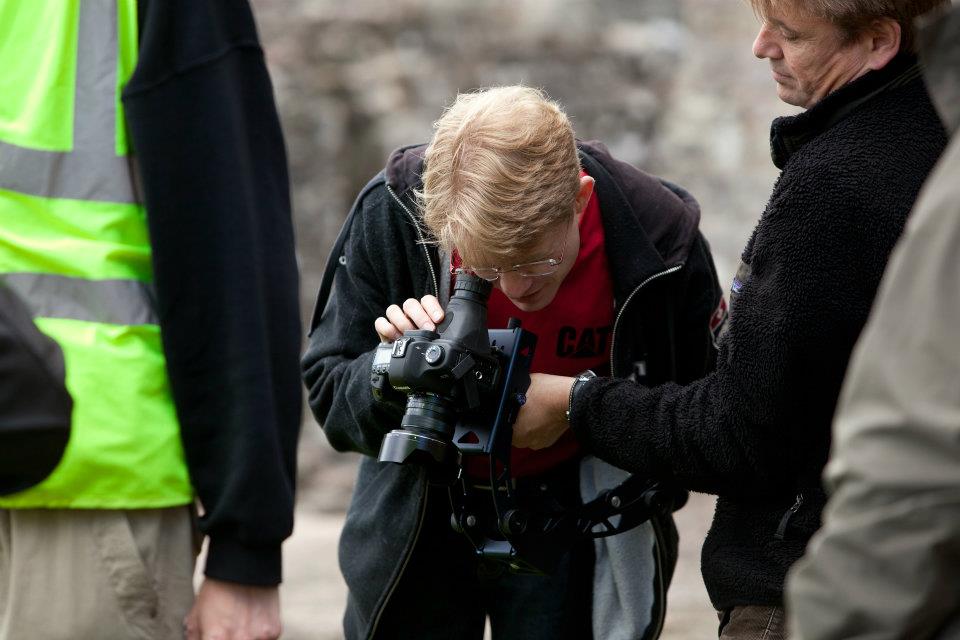
Still from the ‘Choke Mate’ shoot.

We wanted to give something back, so asked our fans for their favourite idea, prop, location and title
as well as calling them out to help out as cast and crew. The end result was a five minute film ‘Choke
Mate’ that premiered online on 10th December. It’s a much darker piece than the feature film but
one we are all very proud of achieving with no budget and very little time – check it out for yourself:
https://vimeo.com/55276148

On Sunday 16th December we went street busking, with the fantastic GRRB on the London South
Bank. We tapped into a new audience as the crowds gathered round and GRRB soon sold out of
albums. The band got a brilliant reaction from fans. The video of highlights from the day will be going
live in the last week of the campaign.
‘GRRB’ busking on South Bank

We really want The Fitzroy to be a film made by people who like us, at heart, are film fans. We want
them to be part of it and share the experience with us. For example, one of the cool rewards is an
animated cartoon version of you or your loved one, which will inhabit the opening title sequence.
We’ve really tried to tailor the Kickstarter rewards to be as exciting as possible. Our rule was if we
wouldn’t pledge for it, then how can we ask others to. So we feel there are some great rewards in the
form of posters, DVD box sets out of a Beach Survival kit and gas mask props from the finished film!
The full list is viewable on our Kickstarter page, as well all other details on The Fitzroy.
View the Kickstarter video for The Fitzroy

The DIRECTOR AND PRODUCERS
Writer & Director Andrew Harmer
James Heath (Producer), Andrew Harmer, Liam Garvo (Producer)

Midnight’s Children | Film Review & Interviews

Midnight’s Children is an ambitious and sprawling film. Based on the celebrated 1981 Booker Prize-winning novel by Salman Rushdie and adapted by Rushdie himself, it is thoroughly enjoyable. It is visually stunning and allows itself time to tell it’s story.

Filmed in Sri Lanka and spanning several decades, the film is something of a history lesson. The surrender of the Pakistani army and the subsequent creation of Bangladesh is filmed incredibly well. No overplaying of the situation and a good overtone of respect. Although I knew the history surrounding this time it was great to see it on screen. History is too often forgotten.

The film starts with Saleem telling how his grandparents met, then his parents, until we come to his birth on the stroke of midnight on the day of India’s new independence from the United Kingdom in 1947.

I loved that this film takes it’s time to really tell the story, but it is not filler, it has a good length. The actors are all brilliant and the film is beautifully shot. This film may be a history lesson, but it is an entertaining one. An ambitious film which has payed off.

Definitely one to watch.


“Born in the hour of India’s freedom. Handcuffed to history.”


Spanning decades and generations, celebrated Canadian filmmaker Deepa Mehta’s highly anticipated adaptation of Salman Rushdie’s Booker Prize®–winning novel is an engrossing allegorical fantasy in which children born on the cusp of India’s independence from Britain are endowed with strange, magical abilities.


Midnight’s Children follows the destinies of a pair of children born at the stroke of midnight on August 15, 1947, the very moment that India claimed its independence from Great Britain — a coincidence of profound consequence for both. “Handcuffed to history,” and switched at birth by a nurse in a Bombay hospital, Saleem Sinai (Satya Bhabha), the son of a poor single mother, and Shiva (Siddharth), scion of a wealthy family, are condemned to live out the fate intended for the other. Imbued with mysterious telepathic powers, their lives become strangely intertwined and inextricably linked to their country’s careening journey through the tumultuous twentieth century.


IN CINEMAS DECEMBER 26TH  


INTERVIEW WITH DIRECTOR DEEPA MEHTA

Why this book? This story?

I first read Midnight’s Children in the winter of 1982 in Delhi. I distinctly remember talking about the wonder of it all with a friend while we walked around Lodhi Gardens. It had an enormous impact on me. It uncannily echoed my own upbringing, and for a novice filmmaker in the early ‘80s the book seemed to read like a movie – full of cinematic language and rooted in popular Indian cinema. The novel’s fearless dark humour combined with its affection for all human foibles stayed with me. Salman and I often talked about working together. One night, over dinner, I asked him who had the rights to Midnight’s Children. He said he did. I asked to buy them and he sold the option to me for one dollar. It was not premeditated; it was just gut instinct.


What is the movie about?

It is a coming-of-age story, full of the trials and tribulations of growing up, and of the terrible weight of expectations. What separates it from other similar thematic films is that this coming of age story is not only about a boy but also about his country, both of whom are born at the very same time at a pivotal point in Indian history. Saleem’s journey as our vulnerable, misguided hero is always intertwined with the struggles of the newly independent India, as it finds its own voice in the world.


Art by its very nature is political and I believe that Midnight’s Children says something important and universal about survival, freedom and hope.


Why this movie now, for you?

There is a saying – luck favours the prepared. The choices that I have embraced in life and the movies that I have made previously have certainly given me the technical and emotional confidence to tackle an epic about my homeland, but in many ways, I felt that I was learning the filmmaking craft all over again. My desire to make this film came from a gut instinct. I knew I wanted to do it but it required a huge amount of chutzpah to then wrap my head around actually filming it. I think that my producing partner David Hamilton’s dedication and leadership really did make it possible. Some of the most meaningful decisions in life are based on that indiscernible feeling of just knowing it’s time. And it was.


My core team: design, camera, wardrobe, editing were all available and wildly keen to work on Midnight’s Children, as was the wonderful ensemble cast. But I think the most vital factor of all is the pure delight and fun of working with Salman, and how profoundly in synch we are about the heart of the story. Salman and I have both made our homes in the Indian Diaspora; I in Canada, he in Britain and America, and we have similar complicated intertwined roots in India. Those shared perspectives and memories, plus his creative generosity and wit, kept me, and the movie, going. Salman once said, about Indian born artists who have emigrated, “ Our identity is at once plural and partial. Sometimes we feel that we straddle two cultures; at other times, that we fall between two stools. But however ambiguous and shifting the ground may be, it is not an infertile territory for a writer to occupy.”


Is this film a “love letter to India”  from you?

Salman has often said that the book is his love letter to India. I hope the film reflects the same sentiment. The last lines are, “The truth has been less glorious than the dream. But we have survived and made our way. And our lives have been, in spite of everything, acts of love.” The story, in its detail, becomes universal in its message of love and redemption.


How did you and Salman work on the adaptation, and what are the key changes from the book?

After Salman sold us the option to the book, he agreed, reluctantly, to write the screenplay. The book is inherently visceral and cinematic; the problem is length. The novel is 533 pages long and first drafts of the script were 260 pages. Early on, at our most important script meeting, Salman and I both brought handwritten lists of the dramatic moments which absolutely had to be preserved. One might spot some karma or magic at work here – our lists matched, in almost every way. The ruthless surgical decisions about cutting had to be Salman’s alone: whole swathes of story and characters – gone. And then the intricate balance of what to shape, change, or add was our shared task. I suggested scenes, moments, emotions. Drafts went back and forth as they do. Painful cuts continued to be made right up to shooting and also in the cutting room. We preserved and protected the central thread of the story and tied it always to Saleem.


The biggest changes from the book are that Saleem and Shiva are now inextricably linked throughout and Shiva is given greater prominence; the story builds towards the Saleem-Parvati- Shiva triangle. Recalibrating and reshaping the last scenes during the Emergency and afterwards are important shifts, but it would ruin the ending to say anything further about those specific changes. We also deleted the overall narrator (from the novel), and in its place Salman wrote a spare, precise, evocative voiceover, which he performs – wonderfully.


How did you prepare for Midnight’s Children?

I have the terrible reputation of spending my down time not moving unless I have to. Devyani, my daughter, has often said that her mum’s favourite exercise is “turning the page of a book”! Well, a slight exaggeration but somewhat true. All that changed about six months after Midnight’s Children was green lit. I found an empathic, encouraging trainer and went to the gym every day (reluctantly!) before production. I felt I needed every bit of stamina and awareness, and this physical preparation was perhaps the most essential of all. This film, more than most, because of its sheer scope was going to need not just my focus but also my stamina. The wisest decision I made.


Preparation with the cast is a given. A month before shooting there was an intensive workshop in Mumbai with the actors and me, led by my friend Neelam Choudhry, a theatre director from Chandigarh. This was not a rehearsal of the script; it was work based on the Natya Shastra, a treatise written in India in the 4th century AD about the art of drama, which includes a rasabox or grid of nine essential mental states and emotions: love, repulsion, bravery, cowardice, humour, eroticism, wonderment, compassion, and peace. This intensive work knitted us together as a group and grounded us in the emotional arcs of the film.


I don’t use shot lists or storyboards; the actor motivates my camera. From the actors I know what the emotional centre of the scene will be and then we shoot it. By now my long time DOP Giles Nuttgens and I have a finely honed shorthand.


But the most important preparation (except perhaps for the gym!) was meticulously planning the world of the movie. In Midnight’s Children we meet four generations over five very distinct time periods; there are three wars, 64 locations, and 127 speaking parts, plus animals, babies, snakes, cockroaches [Well, that didn’t really work out. Our cockroach wrangler failed]. And everything in the world of the film had to be shipped or found or designed or built in Sri Lanka. My closest ally and second brain/eyes is always my brother Dilip, who is responsible for the entire “look” of this film. He fought for authenticity in every aspect of the movie: visuals, historical period, class, accents, religious backgrounds…no detail too large (wars, helicopters, parades) or too small (ants, lizards) to escape his scrutiny. There is no one else whom I fully trust who knows the historical landscape and the “real” India, and who could create all of this flawlessly and with such a passion for accuracy and for beauty.


Did you have any filmmaking touchstones or influences as you planned the shooting of Midnight’s Children?

During the script process I thought a lot about classic elegant films like The Leopard, which is also a historical/political film. As we got closer to shooting Midnight’s Children and I got more inside the script and the energy needed to keep the story going, I began to think about movies like The Conformist – movies with tougher and more immediate storytelling. All along Giles and I planned on a traditional camera department, and many extra tracks and dollies had been shipped to Sri Lanka. A week before shooting I realized that we had to ramp up the energy of the movie, keep constantly moving psychologically, always have a sense of immediacy and fluidity, and free ourselves from time consuming set ups. There was just too much to cover. So we ditched most of the equipment and Giles shot almost the entire movie handheld, up close, intimate, and full of energy. This was a major liberation for all of us, especially because I do all of my blocking with the actors right on set.


How did you want to deal with the magic or magic realism elements?

I always wanted to show the fabulist as realism. I never wanted masses of CGI and visual effects; there are some effects in the movie, but pretty minimal. I wanted the fantastical elements to be grounded in reality. Salman has described the Children as “gifted or cursed with telepathy”. It’s up to audiences to draw their own conclusions about Saleem’s experiences, his loneliness, his vivid imagination and the Children’s corporeal reality.


The movie intentionally plays around with time shifts, foreshadowing, dreams and witchcraft. The most significant magical item is probably Parvati’s basket of invisibility, yet it is used in very practical and credible ways. Or at least Picture Singh believes so…and magicians are the last to believe in real magic. For me the film magically changes the definition of family. By the end of the movie, Saleem’s concept of family (and perhaps ours) is truly transformed.


How did you pull all the aspects of this complex story together in the edit?

When we came back from the shoot my editor Colin Monie and I knew Midnight’s Children had to be constructed in stages, and that we had to get each stage right before we moved on. These stages were:

1) The flesh and blood: Saleem and the character/family saga stories had to be shaped first;

2) Then the history-wars-time periods had to work within the overall story and be clear;

3) Then the theme, politics and what the film says about India, had to be woven in

…and that actually is how the movie came together: cut by cut, screening by screening.  From intimate personal story – to family saga – to epic.


We protected the personal, the intimate, and the emotional core of all the characters inside this roomy canvas, full of disasters, wars and shattering events. That was not always easy, nor was figuring out how much of the history and politics to include. This is a movie for audiences all around the world who will have very differing amounts of knowledge about India and we did not want to over explain, or under explain.

Deepa Mehta


****************************************************************************


ON  T H M A K I N G   O F   M I D N I G H T C H I L D R E N SALMAN RUSHDIE


Deepa Mehta and I agreed to work together to make a film of Midnight’s Children on June 9th, 2008. I was passing through Toronto on the North American publication tour for The Enchantress of Florence and had dinner with Deepa on my one free evening. She asked me who had the rights to Midnight’s Children; I replied that I did; she asked me if she could film it; I said yes. It was as simple as that.


Four and a quarter years later, the film of the “book that was impossible to film” is finally finished, and I’ve had quite an education in what it actually takes to get a film made. I’ve learned, for example, that when some potential financial backers tell you that they totally adore your book, they 100% love your script, they worship Deepa, and they are totally committed to helping us get our film made, this is what they mean: “Hello.”


Over the years, before Deepa, David Hamilton and I started on our journey together, more than one attempt to film Midnight’s Children had foundered. There are so many ways a film can fail to get made. Consequently, I’ve developed a great respect for anyone who gets any film made and puts it out there. I’ve also come to feel – and I am not ordinarily a superstitious or mystically inclined individual – that it was right that those earlier attempts to film my book failed, so that this one could succeed. One might almost use the word “karma.”


I’m happy that we were able to retain complete creative control of the project and to make the film that Deepa and I wanted to make. Nobody told us how to write it, cast it, shoot it or cut it, so there’s nobody else to blame, and that’s exactly the way we both wanted it to be.


Years earlier, Hanif Kureishi had told me of his happy collaboration with Stephen Frears on My Beautiful Laundrette, and Paul Auster had said much the same about working with Wayne Wang on Smoke and Blue in the Face. I had long hoped that I might some day encounter a filmmaker with whom I could have such a close, happy, fruitful working relationship. Deepa Mehta was the answer to that dream.


From our first script meeting, we found we were almost uncannily of one mind about how to approach the adaptation. When I suggested dropping the novel’s “frame narration” in which the protagonist, Saleem, tells his story retrospectively to the “mighty pickle woman” Padma at the Braganza Pickle Factory, Bombay – dropping it because it was too “literary” a device which, on film, would constantly break the audience’s emotional engagement with the characters – Deepa said, “I was going to suggest that but I thought you wouldn’t like it.” And when I showed her my first list of scenes we needed to include to make it a true adaptation of the novel, she produced her own list, and the two were almost identical.


We did much of the casting together in Bombay, and even when we weren’t in the same place at the same time we discussed actors together, watched clips of their work, grew excited about some and rejected others. When Deepa thought of the then relatively unknown Satya Bhabha for the lead role she sent him to meet me and only after both of us had seen, in him, the sweetness and vulnerability we were looking for, did Deepa formally offer him the role. We met with a number of Bollywood titans, to whom I had to “narrate” the film in their homes and even in their stretch limousines; but we agreed, in the end, to avoid casting those Bombay ultra-stars who were unfamiliar with working as part of an ensemble cast. Instead, we chose wonderful actors, highly acclaimed wherever Indian films are seen, who left their egos at home and gave us their all.


It has been an extraordinary experience to watch my novel brought to life by so many talents working in harmony. Dilip Mehta’s production design, with its meticulous eye for period detail, re-created the world of Midnight’s Children, much of it drawn from my own childhood memories, so vividly and accurately that there were moments when I gasped – see, there was my father’s old Rolleiflex! And look, there were my grandmother’s ferocious geese! Giles Nuttgens’s magnificent camera photographed a world that was both epic and intimate, which was afterwards given rhythm and shape by Colin Monie’s editing; Nitin Sawhney’s score lifted scene after scene to new levels, adding layers of emotion; and above all Deepa Mehta’s kindly, ferocious direction orchestrated it all and made a film that’s true to the spirit of the original novel, but that also, I think, possesses its own authority, and establishes itself as a work of art in its own right.


And now it’s done, and it’s for others to judge what we did. This is the gamble of art: to make the work you want to make and then offer it to its audience, and to hope that it will touch them. When that happens, with a book or film, it’s the best feeling in the world.

Salman Rushdie


HISTORICAL BACKGROUND TO MIDNIGHT’ S CHILDREN

Midnight’s Children is an epic movie based on a novel drenched in the history of India. While the characters are almost always fictional, the major events, wars, and seismic power/political shifts are not. In order to give extra historical context for the movie we asked a friend, Professor Deepika Bahri, who teaches at Emory University, where Salman Rushdie is Distinguished Writer in Residence, to write a brief essay about some of the historical aspects, as they intersect with our story.


———————

“Handcuffed to history”, Saleem Sinai is the designated Midnight’s Child whose fate will mirror that of the nation as he finds himself center stage at major events in the history of the region. Right at the core of Midnight’s Children are the two signature events in modern Indian history that are joined, like the clock hands at the midnight hour (Saleem’s birth) on August 14/15, 1947: the partition of British India, and the independence of India and Pakistan. After some 150 years of colonial occupation, the British left India divided in two on the basis of religion, with Pakistan as an Islamic state led by Governor General Mohammed Ali Jinnah, and India a secular democracy under Prime Minister Jawahar Lal Nehru. Muslim leaders who advocated Hindu- Muslim unity and dreamt of an undivided nation free from British rule are represented in the film by the fictional figure of Mian Abdullah. The movie presents an intricate metaphorical rendition of events that are vastly more complicated in the historical record. The murder of Mian Abdullah and the concealment of his secretary Nadir in the basement signal the muffling of resistance to

Partition. Scholars do not agree on the causes or reasons for Partition, but they recognize that it left behind unresolved boundary issues, and set the stage for decades of conflict in modern South Asia. Also left unresolved, like Amina’s longing for her first husband, Nadir, was the nostalgic hankering for a united subcontinent–a dream that would gradually fade from historical memory.


The movie’s unusual hero Saleem is our way through this fractured history. A cruel school teacher points to Saleem as a study in “human geography”, his face and nose “the [Indian] Deccan peninsula hanging down” and the stains and birthmarks on either side of his face the Western and Eastern wings of Pakistan. Some 1000 miles of Indian territory separated these two regions. Apart from nation-status and a majority-Muslim population, the two wings shared little either by way of language or culture, eventually separating into two nations in 1971 with Indian intervention. In the years following Partition, India and Pakistan would fight two other wars in 1947 and 1965, largely over the fate of Kashmir (where the film begins on the beautiful Dal Lake). The two nations remain deadlocked over a volatile Kashmir to this day.


India-Pakistan Wars

Although Saleem’s story is tied most closely to the modern nation of India, Rushdie’s novel and screenplay conveniently and brilliantly place him center stage for major events in the entire region, including in Pakistan, and later, Bangladesh. After Jinnah’s death in 1948  (we see his photo is on display in the medical clinic in Karachi) and the assassination in 1951 of its first Prime Minister, Liaqat Ali Khan, Pakistan suffered decades of political and economic instability, with democratically elected governments struggling to complete their terms. In 1958, President Iskander Mirza suspended the constitution (lines echoed in the movie): shortly afterwards, the military sent President Mirza into exile and the Army Generals assumed control of a military dictatorship. Eleven-year old Saleem is at hand to participate in the plotting of this bloodless coup at the dinner table, having been exiled to his aunt Emerald and uncle General Zulfikar’s household in Rawalpindi, the military headquarters of Pakistan.


By the time he is seventeen in 1964, Saleem is reunited with the rest of his family in Karachi. The Sinai family’s forced departure from Bombay in search of a fresh start in Pakistan is destined to be ill fated; they perish a year later in a bomb attack during the next Indo-Pakistan war – the second futile war over Kashmir which ended in a stalemate and small tactical victories for India. Saleem survives the bomb attack, but he is brained by a fateful, silver spittoon which was presented to his mother Amina and her first husband before Partition. He awakens in a Pakistani army hospital six years later in 1971, “remembering nothing,” ready to be thrown into the next major event in South Asian history: East Pakistan’s secession from the Western half of Pakistan.


The Birth of Bangladesh

Less than a quarter century after the formation of Pakistan, its Eastern wing, aided by India, would break off to become the sovereign nation of Bangladesh. The outcome of the 1970-71 elections in Pakistan had strained the already fragile relations between its eastern and western sections to a breaking point. The Awami League, which advocated autonomy for the more populous East Pakistan, swept the elections to gain an overall majority. Faced with the unacceptable prospect of a national government led by an East Pakistani leader, then President Yahya Khan postponed the National Assembly session, leading to massive insurgency in the East. Negotiations to form a coalition government broke down and a devastating civil war ensued. India’s third Prime Minister, Indira Gandhi (Nehru’s daughter), decided to intervene on the side of Bangladesh, defeating Pakistan quickly and decisively in 1971. Naturally, Saleem is present to witness Pakistan’s surrender to India and the birth of Bangladesh, before he is magically returned to India in Parvati’s basket of invisibility.


The Emergency

India’s victory over Pakistan catapulted Prime Minister Gandhi to unprecedented heights of popularity. In 1975, however, she was found guilty of electoral fraud, prompting calls for her immediate resignation. Gandhi’s response was to manipulate the Indian Government to declare a State of Emergency, citing threats to national security and a crisis in law and order. In the 21 month long period of suspension of elections and civil liberties during the Emergency the nation’s claim to democracy was tested in the extreme. Saleem and the other Midnight’s Children, the “promises of independence,” bear the brunt of historically recorded excesses during the Emergency: forced sterilization, the razing of slums, the incarceration of opponents, and the torture of detainees. These abuses, which are shown in the film, continued until an overconfident Indira Gandhi called the next elections in 1977, with every expectation that her party would win. Instead, it was soundly routed. India had chosen democracy, and has continued on that often bumpy, but courageous path, ever since. As does our film’s hero Saleem, who in the end embraces a tougher optimism, and recreates a family which includes many of the factions and faiths of his beloved India.

Deepika Bahri

————-


Deepika Bahri is Associate Professor in the English department at Emory University. She is the author of Native Intelligence: Aesthetics, Politics and Postcolonial Literature and editor of two collections of essays, Between the Lines: South Asians and Postcoloniality and Realms of Rhetoric: Inquiries into the Prospects of Rhetoric Education. In 1996 she edited Empire and Racial Hybridity, a special issue of the journal, South Asian Review. HIV/AIDS in developing countries is a secondary research interest. She also maintains an extensive Postcolonial Studies Website. Her current book project examines representations of racial and cultural difference in literature.

 

Handpicked Media release charity #HPMemory2012 book

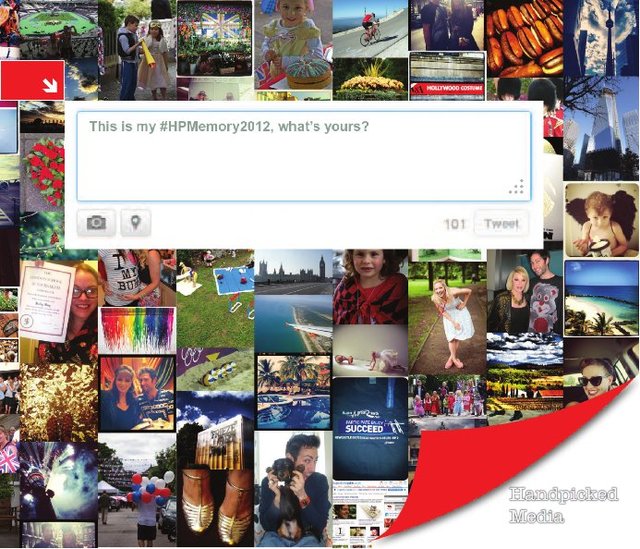
Handpicked Media in collaboration with Blurb, the creative publishing
platform, has created a book showcasing memories of 2012. Curated via the eyes of Handpicked
Media’s blogs and websites it’s about capturing the mood of the nation in 2012 and all the incredible
but personal times that were had.

Frost Magazine has our own entry in the book and we have already ordered our copy.

Entitled ‘This is my #HPMemory2012, what’s yours?’ it is a snapshot of what they experienced from
new babies, and exploring new cities to iconic London events with the Queen’s Diamond Jubilee and
London 2012 Olympics.

An ebook version can be bought for under £5 from http://store.blurb.co.uk/ebooks/361990-this-
is-my-hpmemory2012-what-s-yours, with a printed copy available for £25 via www.blurb.co.uk/
bookstore/detail/3872418. 100% of all proceeds from the book will go direct to When You Wish
Upon A Star, a charity that grants wishes for children living with life-threatening illnesses.

Callum Watt, Marketing Director of Handpicked Media says, “With the release of this book we hope
to capture a snapshot of 2012 and share people’s memories. It doesn’t stop there though; we
want to get people talking about their own memories on social media channels using the hashtag
#HPMemory2012.”

Teresa Pereira from Blurb says, “It’s been an unbelievably exciting and eventful year for the UK and
this book celebrates everything from the personal right through to the epic. What better way to
capture the highlights of the past year than with a beautifully designed book that can be shared with
friends and families and cherished as a lasting memento of 2012 for years to come.”

We Need To Talk About Gun Control

The news of mass shootings in America has become a depressingly common occurrence. Each time the same thing happens: the debate on gun control.

This year two of the worst shootings happened in America, in a Colorado theatre and a Connecticut elementary school. This excellent Washington Post article has a run down of shootings in America for 2012. What is really interesting about the article is that it tells you what type of gun was used in each shooting. Some of these shootings were done with military assault rifles or automatic weapons. To have a gun is one thing, but for a civilian to buy this type of weapon, which only purpose is to kill people, is something that should be re-examined. In fact it was former President George W Bush that allowed a federal ban on assault weapons to expire in 2004 when he was president. President Obama has previously mentioned his support for a ban on assault weapons.

Yes, I did say those guns are used to only kill people. Aren’t all guns for that? Well, no. Farmers need guns, guns can be used for shooting clays, or animals. For hunting and even for protection. I am not pro-gun, but I do not think the issue is as clear as the hordes on Twitter and Facebook think it is. If you make guns illegal in America then there is an obvious problem: you drive the gun trade underground and people who want to protect themselves would not be able to legally own a gun. I don’t want to live in a world where only the bad people have guns.

On the same day of the mass shooting in Newton there was a similar attack on children in China, but with a knife as a weapon instead. No children actually died in the China attack, but there have been fatalities in similar attacks. it does raise a point: a gun is only a weapon when a human being is holding it. But so is anything else when there is an intention to kill.

President Barack Obama promised “meaningful action”, after the Connecticut shooting. Also saying, “As a country, we have been through this too many times.”

The fact is that most gun legislation is set by states rather than federal government, and Connecticut has relatively tight firearms restrictions by US standards. Some people are saying that the shootings are a mental health problem rather than a gun problem, but what is abundantly clear is that tighter regulation is needed.

According to a 2012 report by the United Nations Office on Drugs and Crime, the US has 3.2 firearms homicides per 100,000 population compared with 1.6 for Canada, 1.0 for Australia and 0.1 for England and Wales,

There are an estimated 300m guns in America, nearly one for every one of the 315m Americans in America, and the National Rifle Association (NRA) has more than 4m members. America is a nation where guns are embedded into it’s very foundation, there constitution even declares the ‘right to bear arms’, even if guns were banned where would all these guns go? What is clear is that we have to talk about gun control, but solving the problem will not be easy.

Top 5 Christmas Dresses

Christmas. The time of festive joy and parties. But what to wear? Well, what about one of these dresses at Bank Fashion I have chosen my Top 5, plus one for the very brave.

This maxi dress is perfect for winter, because you can wear thermals underneath!

This look is slightly demure, but classy and smart.

And this one is for the brave. Perfect if you really want to be noticed.

Sponsored post.

The Most Searched 2012


who did brits search for in 2012?

TULISA HAS THE X FACTOR, KATE AND HARRY REIGN, VIC PENDLETON GOES FOR GOLD AND BIEBER LOSES HIS GRIP AS BING RELEASES ITS UK MOST-SEARCHED LISTS FOR 2012


Bing UK searches show 2012 was a year in which Britons clamoured to see more (literally) of their favourite people than ever before. The search engine today releases its most-searched lists, based on the aggregation of billions of search queries conducted by Brits on Bing.com this year.


Singer Tulisa Contostavlos shows she has the X Factor as the UK’s most searched person in 2012, beating 2011 winner Justin Bieber, who dropped to fifth place this year. And while Tulisa’s singing career and role as X Factor judge no doubt inspired many of these searches, the leak of a certain video in March might also have played a part.


It was also a big year for 2012’s second-most-searched person, Kate Middleton, with not just the Royal Wedding but some unauthorised holiday snaps sending people online in their droves to find out more. Prince Harry also got people searching after his right royal Vegas antics. The third in line to the throne was the UK’s sixth most-searched person, behind Cheryl Cole, the late Whitney Houston and Justin Bieber.


Robert Pattinson, Rihanna, Kim Kardashian and disgraced TV presenter Jimmy Savile round out the top 10.


In the afterglow of the Games, it’s to be expected that Olympics and London 2012 were the most-searched events of 2012, with Olympians leading the most-searched sports stars list. Gold-winning cyclist and Strictly Come Dancing star Victoria Pendleton raced to the top, followed by sprinter Usain Bolt and gold medallist tennis star Andy Murray. Stricken footballer Fabrice Muamba was the fourth most searched sportsperson, with heptathlete Jessica Ennis in fifth place.


Most-searched celebrity couple Robert Pattinson and Kristen Stewart kept Britons guessing with their on-again, off-again romance this year, but their new movie, Twilight Breaking Dawn Part 2, could only muster fifth place in the most-searched movies list, with the top spot taken out by The Avengers. EastEnders beat out reality TV rivals Big Brother and X Factor to become 2012’s most searched TV show.


Bing UK Director of Search Dave Coplin says: “Every year, the Bing search results give us a unique insight into what and who is top of mind for Brits. It’s always fascinating to see which celebrities have had the biggest impact on Britons throughout the year, and of course it’s no surprise to see that the 2012 Olympics and Olympians have captured our hearts and minds after such a golden summer.”


See below for more fascinating insights into what Brits searched for – from fashion to Facebook to food to festivals – this year on Bing.com.


2012’s most searched people
1.       Tulisa Contostavlos

2.       Kate Middleton

3.       Cheryl Cole

4.       Whitney Houston

5.       Justin Bieber

6.       Prince Harry

7.       Robert Pattinson

8.       Rihanna

9.       Kim Kardashian

10.   Jimmy Savile


2011 results1.       Justin Bieber

2.       Kim Kardashian

3.       Lady Gaga

4.       Jennifer Aniston

5.       Pippa Middleton

6.       Katy Perry

7.       Kate Middleton

8.       Tulisa Contostavlos

9.       Scarlett Johansson

10.   Angelina Jolie


2012’s most searched sports stars1.       Victoria Pendleton

2.       Usain Bolt

3.       Andy Murray

4.       Fabrice Muamba

5.       Jessica Ennis

6.       Tom Daley

7.       Cristiano Ronaldo

8.       Lance Armstrong

9.       David Beckham

10.   Mo Farah


2011 results1.       David Beckham

2.       Ryan Giggs

3.       Lewis Hamilton

4.       Andy Murray

5.       Maria Sharapova

6.       Wayne Rooney

7.       Cristiano Ronaldo

8.       Usain Bolt

9.       Jessica Ennis

10.   Jenson Button

2012’s most searched events

1.       Olympics

2.       London 2012

3.       Euro 2012

4.       Diamond Jubilee

5.       Paralympics

6.       Wimbledon

7.       Tour de France

8.       Hurricane Sandy

9.       US election

10.   Leveson Inquiry

iggs

2012’s most searched movies

1.       The Avengers

2.       The Hunger Games

3.       Prometheus

4.       Skyfall

5.       Twilight Breaking Dawn II

6.       Dark Knight Rises

7.       The Amazing Spiderman

8.       Snow White & The Huntsman

9.       Taken 2

10.   The Dictator


2012’s most searched TV shows

1.       EastEnders

2.       Big Brother

3.       X Factor

4.       Doctor Who

5.       Coronation Street

6.       Strictly Come Dancing

7.       The Only Way Is Essex

8.       Celebrity Big Brother

9.       Game of Thrones

10.   The Walking Dead


Most searched social networks

1.       Facebook
2.       YouTube
3.       Twitter
4.       LinkedIn
5.       Tumblr
6.       Spotify7.       Pinterest
8.       Myspace
9.       Instagram
10.   WordPress


Top searches:

Celebrity couple               Robert Pattinson & Kristen Stewart

Celebrity wedding           Jessica Biel’s pink wedding dress

Celebrity death                 Robin Gibb death

Celebrity divorce              Katie Holmes divorce

Celebrity baby                   Robbie Williams baby pics

Celebrity pregnant          Imogen Thomas pregnant

Celebrity chef                    Jamie Oliver

Girl band                              Little Mix

Boy band                             One Direction

Lyrics                                     Call Me Maybe

Festival                                 V Festival

Fashion brand                   Next

Store                                     Argos

Supermarket                     Tesco

Football club                      Liverpool FC

Movie trailer                      Skyfall

Politician                              David Cameron

US politician                       Barack Obama

Car model                           Nissan Qashqai

Car make                             BMW

Airline                                   Ryanair

Holiday destination         Turkey

Viral video                           Gangnam Style

Diet                                        Cambridge diet

Recipe                                  Pancakes

Astrologer                           Jonathan Cainer

Who…                                   unfollowed me

What…                                  car

How…                                   I met your mother


Team GB starlet Jessica Ennis admits ‘I’d love to start my own fashion label

Jessica Ennis has had quite a year, winning gold at the Olympics and becoming an idol for young girls everywhere. Now Jessica is branching out.

Speaking exclusively in City’s AM luxury magazine Bespoke, Olympic starlet Jessica Ennis said:

“I ADORE Victoria Beckham and Alexander McQueen…”

“I’d love to start my own fashion label…”

“I’ve been to two award ceremonies in the last two nights…”

You could be forgiven for thinking these were the words of a Hollywood starlet or seasoned pop star. But this is Jessica Ennis – the poster girl for the 2012 Olympics and contender for BBC Sports Personality of the Year, who, in the mind of the nation, wears lycra as a second skin.

Almost overnight she has become a focal point for the post-Olympics revival of Cool Britannia, as likely to be spotted in Stella McCartney as the new Adidas collection (which she is modelling the day City’s AM luxury magazine Bespoke caught up with her).

The change must be startling: one moment she’s a promising heptathlete, relatively unknown outside a group of loyal fans committed to the sport, the next, she’s an unexpected fashion darling.

So how is she enjoying the transition from tracksuits – and looking very good in them, mind you – to being dressed by some of the most sought after labels in the world? “It’s a brilliant position to be in,” she says. “It’s nice to have the option to pick and choose – it’s less stressful when you’re deciding what to wear.”

Her reinvention as a poster-girl has also given her design ambitions of her own and she confides that a collection is definitely on the horizon. “I would love to go down that road,” she says, “whether it’s collaborating with [a big sportswear brand] or doing the more fashiony side of things.”

With the amount of work coming her way, plus the prospects of further gold on the horizon, don’t expect Jessica Ennis, national treasure, unlikely fashion queen, to take her foot off the pedal for long.

Vanessa Bailey & Richard Perryman on Three Days Film | Film interview

When I interviewed Vanessa Bailey and Richard Perryman about their new film, Three Days, we had so much fun and laughed so hard. Vanessa has co-written and is starring in the age gap romance alongside Richard who is fresh out of drama school. Vanessa is beautiful and talented but doesn’t seem to know it, as is Richard. They are both also wonderful company and building quite a following for their film which will start shooting early next year. To find out more, read on….

;

Tell us about your character.

Richard Perryman: ‘I am playing James, a recent graduate, a young guy who does odd jobs. He is flyering for a jazz club and has a care-free lifestyle. He is not really looking for love but just by chance it happens. We were talking about this earlier. It just happens and he is not looking for a long term thing. It just happens to him and he can’t really get away. [laughter]

Vanessa Bailey: [laughing] He can’t really get away! These two characters are not the two people you would expect to see in a relationship. Not just with the age gap, which does sometimes happen, but also with their personalities. She is no a cougar, she is not predatory. She hasn’t been walking around looking for impressionable young leafleters to drag back to her hotel room. He’s not a lad.

;

Richard: It’s not a trophy for him.

;

Vanessa: It is just a sexual connection between them.

;

Richard: Well, not the main one.

;

Vanessa: [laughing] No, not the main one. It is about two real people. It is about finding what that connection would be and how it would work out in real life. They are not caricatures. It is not about romantic cliches. If two people really did connect, how would that work. Can it work?

;

Richard: Can that relationship last or is it just a fling?

;

Vanessa: And we don’t know the answer yet.

;

Richard: I think they are probably both going into it thinking it is just a fling. And not expecting to find that they actually fall in love.

Age gap relationships are popular in film at the moment. Why do you think they are popular and what is your favourite?

Vanessa: I really liked the ITV one, Leaving, although I kinda thought they had stolen our thunder because we had written the script before it came out. What appealed to me about that one, and about Three Days, is most of the other films, the age gape in The Graduate isn’t that big. There is only six-years between them because they are playing up and down. So what I really liked about the ITV one was that they had Helen McCrory who is really gorgeous. They were able to make the audience believe. It was a slightly different story and it was about self-improvement. That one would be my favourite because it was anchored in real life. You can recognise it in real life. Whereas with the other ones, they are lovely stories, but they are not real.

;

Richard: I have only seen The Graduate. I think with that one he has that relationship thrust upon him. It is much darker. She is more of a cougar and she reels him in. This is more of a chance. It is a more filmic story.

;

Vanessa: It is more of a romance. It is not dark in any way. Which is more challenging. There is no gender game. It is more, ‘why has this happened and what should we do with it?’.

;

Why do you think there is still a stigma attached to the older women/younger man thing?

Richard: There has been a rise in those type of films. I think there is a stigma attached but it is becoming less and less. There is still that taboo and it is still fine with older men and younger women.

;

Vanessa: Again, we were talking about that earlier. I think with the older man and younger women, largely they are a physical manifestation of his success and being sexually attractive to women. It is more of a trophy thing. It is interesting because, as you said, the storyline is really popular. We have 1,300 people following us on Twitter. We have no media, no trailer, nothing really about the film, but I think the story has lots of appeal. We have a lot of different people following us. Younger girls, 17 or 18 years old and older men.

;

We had a guy who said when I was in my 20s I had a relationship with a women who was 20 years older than me because it is common. See I am 43.

;

Richard: And I am 22.

;

Vanessa: Oh my god it has gotten bigger! What is that gap?

;

Richard: 21 years.

;

Vanessa: Yes, 21 years. That is quite a big gap.

;

Richard: It’s not that big.

;

Vanessa: Oh, bless you. We can make it work. But I think people are really fascinated by that. I am not going to name names but I had a lot of people say I had this relationship with this women who was 20 years older than me. It is really interesting. It does actually happen but I don’t think film shows that as much as the older guy.

;

Another issue with younger men with older women is the fertility issue….

;

Vanessa: Yes, I think that is true. It doesn’t work quite as well from a family point of view, biologically the other way around. Maybe some women are at the point when they don’t want to have kids.

;

Richard: I think going into that relationship they won’t really think about it and then when they did the pressure would start adding on to it. Like, ‘what do we do?’

;

Vanessa: I was talking to some friends about it and they were like, ‘lucky you’ and then I was thinking, no, because in reality when you are an older women it is hard. You have insecurities.

;

Richard: Yeah, you were saying to me that when we go out people will be like, ‘Your son is waiting for you’ or ‘Is that your mum?’ or something. Which would be really tough.

;

Vanessa: [laughing] There is always a 21-year-old girl around the corner and you are getting older, and you look older, and the point of this, of Three Days, is also when older women are portrayed in films they don’t look their age. They have had all of that plastic surgery and they don’t look their age. I do look my age [she doesn’t] so it is not like, yeah, she is a hot 43 but she looks 33. She is just 43. So there is that whole physical insecurity.

There is also this myth that is spread that men get better looking as they get older but women don’t. It places a lot of pressure on women and it also happens a lot in film. Then when you do get a part it is not a really good part. In this film it is a women in a really good role, which could actually have a lot of significance.

;

Vanessa: And that is the great thing about indie film. You have raised a great point actually and that is the good thing about Three Days. There are not the parts out there that actresses my age necessarily want to play. You get typecast in commercials and then you have to wait until you are 75 to play a dowager in Downton Abbey. There is a massive gap in-between. You are just wandering around wondering what you are going to do. A few of us do have a natural look so you are not going to get the barmaid parts or the cougar parts. So I kind of wanted to come up with a part that a lot of women my age would want to play because it is interesting and it is fun. There is a massive gap for older actresses.

;

How did you come on-board

;

Richard: I didn’t really do anything.

;

Vanessa: That is the joy of Twitter. I am going to write a book. Instead of the Joy of Sex I am going to write The Joy of Twitter, and [to Richard] you are probably too young to even know the book. It was out in the 1970s. [to me] You know the book? [Yes, I know the book] See, women know the book.

;

So, Twitter, we were looking for someone. I was looking at showreels because I love watching showreels. I saw Richard’s headshot and someone tweeted a link to a short film he was in called Emmeline, which was gorgeous. So I stalked him. I asked him to be in a film with me.

;

Richard: I got an email asking me if I wanted to be in the film. We met up for a coffee. Then I wanted to do it. She reeled me in. We were both on the same page in terms of character and what we wanted for the film.

;

Vanessa: What clinched it was that halfway through we were talking about the dialogue and how we wanted it to be really natural, and be very real and he said it should be like ‘Before Sunrise’, which is my favourite film. At that point I was really hoping he wanted to be in the film.

;

So it was the power of Twitter and short film. And the mocha that I bought him that I then drank.

;

Richard: Yeah, I had a latte and she had my mocha.

;

Vanessa: Start as you mean to go on.

Tell us about the process of the film so far.

Vanessa: It has been a long time actually, nearly a year. I wrote it. I wrote a really bad script originally. I sent if to Jon Rennie, our director, and basically what he did was he rewrote it from a cinematic point of view. Jon said he liked the story but this is how he thought the physical journey of the film would go. We have beautiful locations we are filming in. Then he gave it back to me to fill in the dialogue. We knew we had Huw onboard who is just phenomenally good.

;

The film is quite like Notting Hill on acid. Huw Walters (Cinematographer) and Jon and myself all worked on Bubbles [an excellent short film. See it] Our composer had seen Bubbles and asked us if we had a composer. Then I looked at his credits and I was like, wow. He has worked with the BBC, with Tom Jones, with loads of people.

;

Our hair designer, Jason Hall, also asked to come onboard and he had done London Fashion Week. He was also from twitter. He contacted us and asked us if we needed a hair stylist.

;

The producer, Sam Smith-Higgins, was following the film since it started on Facebook and she said she would really like to collaborate and asked if we had a producer. She has an entire production company that she is bringing with her. The Executive Producer, Suzie Boudier, has been a constant source of inspiration.

;

The great thing about this film is that everyone has come on-board because they really want to make this film rather than just a film. It has been a really long process. I am really excited.

;

How did you approach funding.

Vanessa: We will be crowd funding in February. Consolidating everything in March and then we are shooting in April. We are looking at different crowd funding options at the moment.

;

Tell us about you.

;

Richard: I just graduated from E15 from a contemporary theatre course. I set up my own theatre company with a couple of friends called Antler. We took two shows up to Edinburgh.

;

Vanessa: Who have got some amazing reviews. Should I quote some of them? Richard excels in dry humour. That is what it said.

;

Richard: We got some lovely reviews. Since then I have done a short film with the same company. I was lucky to be a part of that. And from that I got this. Which is great and exciting.

;

Vanessa: I am completely different. No training. I am a teacher. A music specialist whatever that means. I came out of it after I had my children and decided I wanted to be an actress. So I did a lot of background work just to get into the scene and I was lucky to break that rule that you never become an actor after being an extra. I managed to get there. I have managed to blag my way to some good jobs so far.

;

You are so self deprecating

Vanessa: Yes I am. But I have no reason to be here. Once I got Spotlight and a DVD I sent it out and Sam [Samantha from Simon & How, out mutual agent] was the first person to give me an audition. I absolutely love it.

;

Do you think the age of the actor is dead and you have to be an actorpreneur and do your own projects.

;

Richard: I have only ever done my own projects. So I think, yes, you can’t really trust anyone else to do anything for you. You have to do it yourself. If you are lucky enough you will be handed lots of jobs. It is the luck of the draw. If not you have to go out and do it yourself. [to Vanessa] Like you are doing.

;

Vanessa: All actors know that it is a really small pool that people fish from. Especially in television. It is hard and it is not going to talent unfortunately. You see people who work regularly who are not good and lots of people who are very talented who don’t get any work. So, yes, I do think you have to be an actorpreneur.

;

Richard: I am very bad at selling myself because I am not on Twitter.

;

I often lose roles to people who are more famous or someone’s girlfriend.

;

Vanessa: Yes, that is frustrating. I can see the other side of that. We all work with people we know because it is better the devil you know.

;

Richard: Then that creates those little cliques who work with the same people and you can’t break into it.

;

That is why I left Scotland. I had to commute from Glasgow to London because there was the group of Scottish actors who always got work and I could not break into the industry.

;

Vanessa: There are a couple of casting directors who fight it. A casting director said to me that he was sick of seeing the same faces in television over and over again.

;

And you do. You see the same faces over and over again. We need pioneers who are bringing new faces in and trying to get people seen.

;

Richard: But we are a little family. [We all have the same agent. Samantha at Simon & How]

;

That’s right.

So is the process to make a short and then a feature film.

;

Vanessa: I would love to. I would love to make a feature. Are you playing footsie with me Richard?

;

Richard: Yes, I am getting into character.

;

Vanessa: Two things with the short film. Firstly, I would like it to get into festivals. But also it is like a calling card. Hopefully people will see this. When we had one of our first meetings with Jon and Huw you could very much see the potential of the film and the ensemble cast. I would love to make a feature film.

;

Richard: It has the potential to be a great British film.

;

Vanessa: I am such a champion of British film so I would love to make it into a feature.

;

What are you shooting on?

;

Vanessa: I’m not sure. I have left that to Jon. Not film. Because it is too expensive. We want to do a few different takes on this film and we don’t want to worry about how expensive it would be. I know Jon was talking about filming on mono. So a combination I think.

;

What’s next?

;

Richard: I just graduated. I am not sure what is next. I am just putting myself out there.

;

Vanessa: You are developing….

;

Richard: Oh yeah, with my company, Antler, we are constantly developing work. Putting things together and trying out new ideas.

;

Vanessa: Everything at the moment is Three Days. Then hopefully after that it will be the festivals. [Vanessa also has a lot of acting work coming up. Including a part in Southcliffe and some short films]

;

Thanks Vanessa and Richard.

;

Director: Jon Rennie @jon_rennie
Writers: Vanessa Bailey, Jon Rennie @vbaileyactor @jon_rennie
Producer: Sam Smith-Higgins http://www.redbeetlefilms.co.uk/ @SamSmith-Higgins
Executive Producer: Suzie Boudier @Superboooo
Cinematographer: Huw Walters http://vimeo.com/user4428776 @huwcamera
Composer: William Goodchild http://www.williamgoodchild.com/ @WGoodchildMusic
PR: FireflyPR http://www.firefly-pr.com/ @FireflyPR

Hair Design: Jason Hall http://www.jasonhallhairdressing.co.uk/ @Jhhair