Mother-of-Three Proudly Displays Her Stretch Marks in Viral Picture

In an empowering move, lifestyle blogger Rachel Hollis posted a picture of herself wearing a bikini in an uplifting photo post on her Facebook page.. She was tired of worrying about the stretchmarks left on her body after three pregnancies with ‘huge’ babies. The picture soon went viral.

Looking amazing and with a wide, beautiful, smile the photo of Hollis has been liked over 465,000 times and shared over 62,000 times. Many other mothers are posting pictures of their own mummy tummies below. The photo, along with the inspiring statement has gathered a lot of support from other women. This is what Hollis said:

“I wear a bikini because I’m proud of this body and every mark on it…It’s never ever going to be like a Victoria’s Secret model, but I think I look good and my husband wants to make out with me, so I’m doing something right.”

I have stretch marks and I wear a bikini. I have a belly that’s permanently flabby from carrying three giant babies and…

Posted by The Chic Site on Saturday, 21 March 2015

I have stretch marks and I wear a bikini. I have a belly that’s permanently flabby from carrying three giant babies and I wear a bikini. My belly button is saggy… (which is something I didn’t even know was possible before!!) and I wear a bikini. I wear a bikini because I’m proud of this body and every mark on it. Those marks prove that I was blessed enough to carry my babies and that flabby tummy means I worked hard to lose what weight I could. I wear a bikini because the only man who’s opinion matters knows what I went through to look this way. That same man says he’s never seen anything sexier than my body, marks and all. They aren’t scars ladies, they’re stripes and you’ve earned them. Flaunt that body with pride! ‪#‎HollisHoliday‬


What do you think?


Chuffing brilliant! The Railway Children Theatre Producer Tristan Baker Talks

The Railway Children on stage at Kings Cross, London

The Railway Children on stage at Kings Cross, London

Theatre producer Tristan Baker talks about the show where the West End’s heaviest leading lady is not only delighting audiences of all ages, but is also inspiring marriage proposals …

Take one of the best loved books and films of all time. Add a vintage steam engine, a superb cast and mix well. While the ingredients are blending, crack on and build a theatre from scratch, including a railway track, against the clock. Add a dash of blind panic and garnish with lashings of Edwardian style. Serve to critical acclaim and enchanted audiences of all ages.

That’s the simplified version of how The Railway Children came to life at its new home in London’s Kings Cross. The unabridged version involves so many technical challenges that you could travel from London to York on old rolling stock in the time it would take to tell. Certainly one of the show’s producers reckons that the team who made it happen deserve their share of the five- star reviews.

“I am very proud of the team,” says Tristan Baker, with feeling. “In five weeks they built a one-thousand seat, purpose-built, theatre from the ground up, including laying a train track. It meant working around the clock to get the show on – they were sometimes laying track in the rain at 2am – but they did it.”

And when he says it’s a purpose-built theatre Tristan isn’t exaggerating. Walking around the venue on King’s Boulevard with him, the detail is extraordinary; from the state of the art heating system (to ensure maximum audience comfort), to the unique railway platform stage. Located behind King’s Cross Station, the site has been loaned by Google and will one day be Google HQ. But for now it is home to The Railway Children – “a steam engine rather than a search engine,” laughs Tristan, explaining that the objective was to create not just a show, but an experience.

“It is very site specific. From the moment you arrive and pick up your tickets you are in Edwardian England.” Bang on cue a group of costumed front of house staff surge forwards to greet members of tonight’s audience, directing them to the foyer, which is a perfect replica of an Edwardian station waiting room.

“Our front of house team are all carefully selected and trained to give the audience a really wonderful and authentic experience,” says Tristan, navigating a path through an excited party of teenagers and a group of middle-aged ladies who have come up from Cambridge for a day of shopping, lunch and theatre.

Undoubtedly it is a show with universal appeal. An average audience comprises dating couples, families (from toddlers to great grandparents and all the generations in between), tourists, students, WI ladies, book clubs, Guides and Scouts – people of all ages.

“They are all transfixed,” says Tristan, adding: “I think adults experience it on a different level. Maybe they remember the film from when they were children, or perhaps reading the book, but as adults they realise the political and emotional aspects of the story.” Leaping nimbly up the steps of the bridge that separates the two platforms (the audience sit either side of the track) he stops and looks fondly up at the hefty leading lady, her paintwork gleaming under the lights. “And who can fail to be excited by a three-hundred ton steam train arriving on stage?”

He’s got a point. The magnificent engine is breath-taking. Dating back to 1896, complete with a vintage carriage, this grand old lady is, quite literally, the West End’s biggest diva. Transported from the National Railway Museum in York on a low loader, even her arrival was the kind reserved for superstars as, like the most illustrious celebrities, she arrived with a police escort.

Adapted by Mike Kenny, The Railway Children was first produced by York Theatre Royal at the National Railway Museum, York in 2008. Two sell-out seasons were followed by a transfer to Waterloo Station, where it opened in the former Eurostar terminal and again enjoyed smash-hit success, bagging the 2011 Olivier Award for Best Entertainment along the way. And steaming into Toronto in 2011, Canadian audiences also fell in love with this stage version of Edith Nesbit’s classic story.

Telling of three children whose lives change dramatically when their father is mysteriously taken away and they are forced to relocate from London to a cottage in rural Yorkshire with their mother, the book was first published in 1906. Exciting, with plenty of adventure and drama at its heart (“what happens to the children is quite awful but they are resilient and make the best of their situation”), heading the current cast is Caroline Harker as Mother and comedian and actor Sean Hughes as Mr Perks.

“Sean has just joined us and he brings a joyous warmth to the role,” says Tristan, agreeing that ‘joyous warmth’ pretty well sums up the feeling that audiences go away with.

And it seems that The Railway Children also inspires romance. “We do get a lot of couples coming to the show on date nights and we have recently received a request for permission to make a marriage proposal from the train,” smiles Tristan, as we take our seats.

Long before we reach the end of the last act, with the heart-rending ‘Daddy, oh my daddy!’ line, the reasons for the production’s success are abundantly clear. With ‘wow!’ factors at every turn, this much-loved classic story has been transformed into chuffing brilliant theatrical experience. Whether you’re eight or eighty, it’s one that should not be missed.

Come on now! All aboard!

Vicky Edwards

THE RAILWAY CHILDREN

King’s Cross Theatre, Goods Way, King’s Cross, London N1C 4UR

Currently booking until 6 September 2015

Box Office 0844 871 7604

Website www.railwaychildrenlondon.com

Facebook www.facebook.com/railwaychildrenlondon

Twitter @TRCKingsCross

Google+  plus.google.com/+RailwayChildrenLondon

Rise of The ‘Returners’ Women Over 30 Starting Their Own Businesses Increases

feminism, working women, equality, Naomi West is at the front of a trend: Women over 30 taking the plunge and starting their own businesses.

Naomi West, 32, worked in digital marketing for a Financial Services company before her first son, Jacob, now almost 3, was born. She no longer wanted to be on conference calls at 6am with her colleagues in Australia and Skype meetings at 9pm with her American team. She freelanced for a while but still found it difficult to juggle family life with deadlines and client commitments. The peaks and troughs of work made planning childcare difficult and when her second son, Benjamin, was born with a heart defect, Naomi knew she needed to find a new way of working that would enable her to be there for her family.


Having enrolled both her children in Baby Sensory classes, Naomi waited for an epiphany about her future career. It came when her Baby Sensory class leader told her she was recruiting for a new class leader and Naomi got the job, gaining valuable experience. When the opportunity to take on her own franchise came up in her area of Bromsgrove, Worcester, she jumped at the chance, borrowing £15,000 in two loans from Startup Direct and launching her first classes in January this year. She now runs 11 classes per week, with up to 20 babies in each class.


“When the opportunity to start my own franchise came up, I felt instantly it was something I could make a success of”, said Naomi. ”I had experience with the business as a client and class leader, and had the skills from my career in digital marketing to set up and market the business in my own area. I now have regular class hours doing something sociable and creative, which fits brilliantly around family life. What’s not to love?”

Data released by Startup Direct shows that the number of women over the age of 30 seeking start up finance and mentoring increased by a third in 2014.


In 2013 women over the age of 30 made up just 25% of enquiries to the Government start up loan provider, but this grew to 57% in 2014, an increase of one third (32%). This trend is being driven largely by ‘Returners’; women who have taken a break from the workplace to have a family and are motivated to start their own business by the challenges of finding flexible and stable employment which is well paid enough to cover the cost of childcare.


They are starting predominantly internet-based micro businesses, employing fewer than 5 employees, which they can run part-time from their homes and are undeterred by the challenge of juggling home and family commitments with the demands of a new business.


James Pattison, CEO of Startup Direct, said: “A growing number of women are disillusioned by the difficulties of combining family life with a traditional 9 to 5 job, not least the inflexible hours, lack of well paid part time work and the cost of childcare, which continues to spiral. The internet has made it easier than ever to start up a business from home and women are drawn to the prospect of being their own boss, choosing their hours and cutting childcare bills by working flexibly around family life.”


Startup Direct is encouraging more women to follow their dream of launching their own business by running a series of workshops aimed specifically at women, offering advice on all aspects of entrepreneurship as well as practical advice on childcare and time management. In particular it is targeting ‘Returners’, those are want to start businesses following a period of maternity leave or a career break after having children.

To apply for a start up loan, visit www.startupdirect.org


37⁰ Thermoband Maguari Review | New Children’s Safety Product

thermobandreview

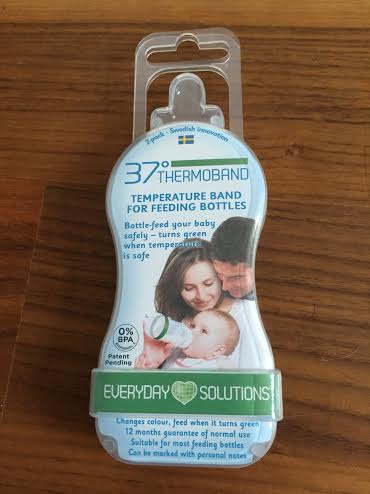
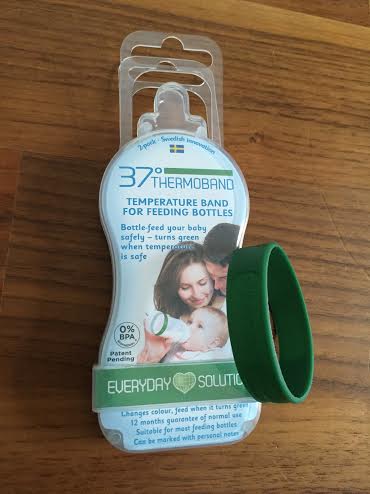
The  37°Thermoband is a new handy gadget that takes the guessing out of milk temperature. Whether you bottle feed or express your breast milk. This is a clever flexible silicon band which will let you know when your baby’s bottle is the perfect temperature for feeding. It changes colour when the safe temperature is reached. very handy indeed.

It fits most glass and plastic bottles and the band can be personalised using a ball point pen. You could put your child’s name and any health or allergy information.  Information can be removed during cleaning, or made permanent by simply placing the band in boiling water for five minutes. Smart technology indeed. We were impressed. A time-saving gadget that makes a parents life a little bit easier.

thermobandeverydaysolutions everydaysolutionsthermobandreview

Dishwasher, microwave and steriliser safe, 37° Thermobands are BPA free, FDA approved and EN tested.


RRP of £13.00 from maguari.com or jojomamanbebe.co.uk


Carole & Nadim Saad Authors of Kids Don’t Come with a Manual Interview

Carole & Nadim Saad Authors of Kids Don’t Come with a Manual Interview, parenting, kids, book, tips, advice, Tell us about your own parenting experience.

As a couple with conflicting parenting styles, we were torn between the gentler ‘laissez-faire’ approach and the more disciplinarian ‘tiger parent’ philosophy. What we really wanted was a way of parenting that could fit with our two different personalities, and allow us to parent in harmony, and raise our children to become happy and fulfilled adults.

So casting the parenting fads to one side, we turned to the latest research in child psychology and neuroscience and devoured hundreds of the world’s leading parenting books to find practical, tried and tested evidence. And we were delighted to discover that there really are clear, straightforward methods for achieving what we call a ‘balanced’ approach to parenting.

How is your book different from other parenting books?

Our book is different in that it gives the perspective of two different parenting styles, which removes the guilt associated with having to fit into an ‘idealised parenting mould’. It also equips parents with specific step-by-step tools that are based on the latest scientific and psychological research in childhood development. These tools are designed to support you through the immediate challenges of everyday parenting, whilst also meeting your long-term goal to raise children to become happy, self-reliant and responsible adults.
Interview With Carole & Nadim Saad Authors of Kids Don’t Come with a Manual parentingexpert

What are the biggest parenting challenges?

It’s difficult to answer this as it largely depends on your child’s temperament/personality and our own personality, as well as our individual style of parenting. We all encounter challenges so the key thing is to learn how to prevent such issues from happening in the first place, which is one of the key objectives of our book. Learning how to anticipate challenges before they happen allows us time to think, so that we can respond rather than react to our children’s misbehaviour. So we’d say that one of the biggest challenges that parents face is learning to be more strategic in their approach to parenting.

Is there ever a right way to raise children?

We are under no illusions about the reality of family life and have no wish to make it ‘perfect’. The fact is that there is no magic wand to make a family life perfect! However, with a bit more awareness of our children’s needs, combined with some simple practical trouble-shooting tools, we can go a long way to making a real difference to our children’s, our family’s and our own lives.

What are the dangers of over-praising our children?

Research suggests that overpraising our children and particularly using evaluative praise with statements such as “You’re smart” or “You’re good” can create a fear of failure, because children become afraid to do anything that could expose their ‘flaws’ and call into question their ‘talent’. This type of praise results in children becoming less likely to try new things or taking risks for fear of not getting it ‘right’ and so they end up missing out on essential opportunities to develop their confidence and sense of self.

How do you stop other relatives becoming too involved?

We think that other relatives will always get involved and we need to accept this as they think that they are doing this to help us. However, if we are more confident in our parenting and we demonstrate that we can manage our kids without overreacting, etc. then other relatives tend to find it impressive, then start making compliments and ultimately become much less involved.

Top parenting tips.

1. Focus on planning and prevention – instead of always being reactive.
2. Give empathy as often as possible – and do not discount feelings.
3. Model any behaviour you want to instil in your children – starting with respect and joy.
4. Use encouragement and descriptive praise – instead of general or evaluative praise.
5. Focus on what you can control – and don’t undermine your authority with empty threats.
6. Allow your children to have some control over their lives – offer them limited choices and ask them questions.
7. Allow mistakes to happen – they are opportunities for learning.
8. Coach your children to own and solve their problems – and they will become self-responsible.
9. If you have to deliver consequences, do it with respect and empathy – and delay them when needed.
10. When you say or do something you regret, ‘Rewind and Replay’ and ‘Repair’ – to keep a strong connection with you children.

What is the biggest mistake people make when raising children?

This is another challenging question as it’s difficult to identify one key mistake! However, one that is really common and can really affect children as they grow up is for their parents to frequently discount their feelings. This is something that parents do, often without even realising it. We tend to either reassure our children or try to ‘toughen them up’ – whichever approach we use, the message they hear is that they’re not supposed to feel the way they are feeling.

They grow unable to trust their feelings and cannot manage their emotions well, and this is an essential life skill. It’s far better to use empathy as a way of establishing and nurturing a bond with your child than try to ‘make light’ of their feelings, as this simply undermines their innate need to be listened to and have their feelings acknowledged.

Can parenting be made easier?

Our book ‘Kids don’t Come With a Manual – The Essential Guide to a Happy Family Life’ is designed to help empower parents to deal with most situations effectively. So that misbehaviour and the challenges that your children throw your way become opportunities for learning and growing rather than being stressors or negative experiences. Our main goal is to empower parents to deal with everyday parenting challenges without confrontation or anger, and raise their children to become the happy and confident individuals that they deserve to be.

Kids Don’t Come with a Manual by Carole and Nadim Saad, Best of Parenting, £12.99, www.bestofparenting.co.uk/books

Kids Don’t Come With a Manual – The Essential Guide to a Happy Family Life is available here.


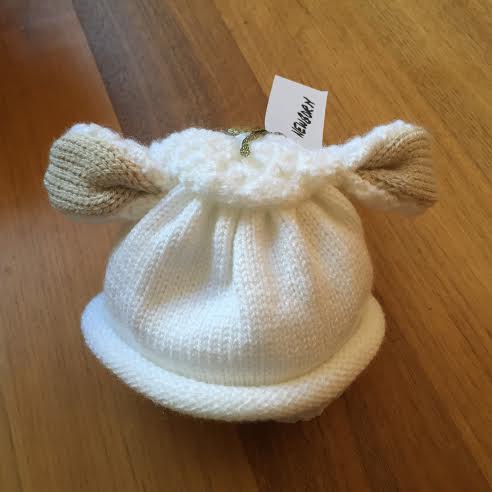
CobWebKnits Lamb Newborn Baby Hat Review

cobwebknitshatreviewroyal cobwebknitshatreviewlamb cobwebknitshatreviewbunny cobwebknitshatreview

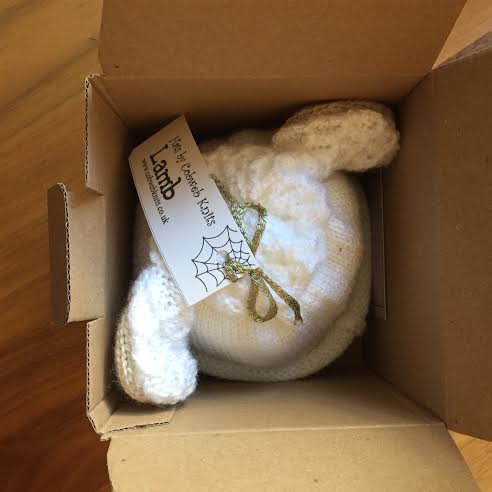
When we saw the CobWebKnits baby hats we could not help but melt a little. Not only are they so small, they are also just super-cute. They are machine washable soft acrylic yarn that is soft to the touch and won’t irritate baby’s skin. Being machine washable at 40 C they are practical too and dry quickly. These hats are adorable and of the highest quality. I was very impressed by the hat, the quick delivery and the presentation.

CobWebKnits Lamb Newborn Baby Hat Review CobWebKnits Lamb Newborn Baby HatCobWebKnits Lamb Newborn BabyCobWebKnits Lamb Newborn

Each product is handmade in their Welsh studio where they also make beautiful knitwear and clothing.  Every attention is paid to each item which is lovingly handmade with the wearer in mind.  From start to finish Su from CobWebKnits is responsible for its production and presentation, ensuring that it will be of the highest quality and stylishly packed for the customer. Unlike some other companies offering handmade products delivery is quick – within 1-3 working days.

The hats are available on their website, Beatrix Potter’s Nursery Shop in Lake Windemere and the Historic Royal Palaces (including the Tower of London) as well as other boutiques around the country. They can include a gift message free of charge and delivery is quick.
 Service is great too. Frost Loves….

Mums of Young Children in Breach of EU Working Time Directive

baby, working mothers, overwork, stress

We are not surprised at the news that mothers work so hard that they are in breach of Articles 3, 5 and 6 (b) of 2003 of the of EU Working Time Directive. Mums caring for a baby full time exceed maximum working hours, are not given adequate rest periods and do not receive paid annual leave from their baby employers

The number of hours each week that British mothers spend looking after their children would be in breach of the European Union’s Working Time Directive if this work were to be treated in the same way as paid employment, research by leading greeting card and gift retailer Clintons has revealed.

The Working Time Directive states that employees should work no longer than 48 hours per week. Workers are also entitled to a rest period of eleven consecutive hours in every 24-hour day, a rest break every six hours of work; an uninterrupted rest period of 24 hours in every seven day week, and paid annual leave of at least four weeks every year.  Employees who work night shifts have extra protection and cannot be asked to work more than eight hours in a 24-hour period.

Baby experts recommend that a baby between the ages of 12-18 months should sleep for around 14 hours a day, meaning a parent is actively looking after their child for the remaining ten hours. Across a 7-day period, this comes to a minimum of 70 hours a week, exceeding the maximum limit of a 48-hour working week specified by Article 6 (b) of the Working Time Directive by a shocking 22 hours. On top of this 70-hour minimum, mothers also have several hours of ancillary work each day and are constantly “on call” to respond to any emergencies, meaning their actual rest period is often reduced to six hours a day.

Of the 14 hours of sleep a baby should get each day, around three hours come in the form of daytime naps, and the remaining 11 hours come at night. Article 3 of the Working Time Directive states that workers are entitled to a “minimum daily rest period of 11 consecutive hours per 24-hour period” and therefore getting up in the middle of the night if the baby starts crying would be in breach of this rule.

Looking after a baby for seven days a week is also in breach of Article 5 which specifies that “per each seven-day period, every worker is entitled to a minimum uninterrupted rest period of 24 hours plus the 11 hours’ daily rest referred to in Article 3.”

Article 7 of the 2003 EU directive states that “every worker is entitled to paid annual leave of at least four weeks.” A Clintons survey of babies found that 0% of them had made provisions to fulfil this requirement.

Tim Fairs, director at Clintons, said: “Parents put in a huge amount of work, week in and week out, looking after their kids. Often this work goes completely unrewarded. Mothers’ Day is an opportunity to say thank you for everything mums do, but we shouldn’t wait for just one special day every year to acknowledge their hard work. We should celebrate mums every day of the year.”

Mother’s Day originated in the United States in 1908 when Anna Jarvis from West Virginia held a memorial for her mother. During the Second World War, American soldiers brought the celebration to the UK, where it merged with the older religious festival of Mothering Sunday when people would return to their mother church for a service held on the fourth Sunday of Lent known as Laetare Sunday.

Introduced in 2003, the European Union’s Working Time Directive (2003/88/EC) gives workers within the EU certain rights relating to numbers of hours worked each week, annual holiday entitlement, rest breaks and days off.

In the UK, workers have the option to work in excess of the 48 hours specified by the working time directive if they choose to, however this option does not apply to employees in all sectors. The statutory leave period in the UK is 5.6 weeks per year.

Tim Fairs, added: “Many mothers work incredibly hard all year round and never have a day off. No matter how old you are, take a moment this Mothers’ Day to let your mum know how much you appreciate her.”


Two Thirds of Men Would Be Happy To Be a Stay-at-Home Dad

baby, shared parental leave, feminism, equality, childcare, leave, maternal, work, working mothers, lean in The times they are a changing. It is true that women and men will never be equal until men take up their share of childcare (and while we are at it, domestic chores) and it seems that that might actually be happening. A recent survey suggests that two thirds of men would be happy to be a stay-at-home dad.

Despite mums traditionally dealing with the majority of childcare, three quarters of men say they would be happy to quit work during their son or daughter’s first year so that their partner can return to their job, instead of taking the usual period of maternity leave.

And almost one in twenty men are already responsible for looking after their children whilst their wife or girlfriend goes to work.

It also emerged that 72 per cent of women would also be happy if their other half wanted to look after the children with 65 per cent worrying about the effect any time off would have on their career.

The statistics emerged in a study commissioned by national law firm Irwin Mitchell a month before a change in the law which will see couples have the opportunity to start sharing parental leave.

But these results show the new laws designed to encourage parents to share time off work following the birth of their child look set to be far more popular than government predictions had previously stated.

Irwin Mitchell employment partner Glenn Hayes said: “For a long time now, the traditional roles have seen dads returning to work just days after their baby has been born, while mums take a year or so away from their career to look after the children.

“But times are changing and it’s becoming easier, and more acceptable, for dads to take on the role of caregiver, while mums become the main breadwinner. What’s more, it seems the majority of men are happy to have it this way around.

“Thanks to changes coming into effect in April, working couples will be able to share that period of leave over the first year, meaning neither one has to miss out on such a large amount of time away – whether it’s from their career or baby.

“Shared parental leave is one of the most significant changes to flexible working rights but it is still uncertain how many families are expected to take up the new right.

“According to Government projections, as few as 5,700 men will apply over the next 12 months, but the figures in this survey suggest that the appetite for doing so could be much stronger with take up being much higher.

“So it’s important businesses and employers need to be prepared for the changes before they come into force, and know their rights as well as those of their employees.”

The study of 2,000 men and women found 66 per cent of men would be happy to take on the role of stay-at-home dad, whilst another three quarters would happily work part-time to allow their partner to return full-time.

Four in 10 say this is down to them wanting to be a bigger part of their child’s life than they would be if they worked full-time while 19 per cent worry they will miss out on too much of their child’s life otherwise.

More than a third say it’s the most sensible option for them as their wife or girlfriend earns more than them, with another 23 per cent not enjoying their job whilst their other half does.

One in twenty said taking the time off work will be less detrimental to their career than that of their partner.

Other reasons men want to take on the childcare role include it being easier for them to work around school or nursery hours than their partner, believing it would be less stressful to look after the kids than go to work and not wanting to commute anymore.

Sixty-one per cent even claimed they would be happy to become a stay-at-home dad, even if it had a detrimental effect on their career in the future.

But the researcher found that whilst most would be happy to share their decision, 23 per cent of men wouldn’t be comfortable telling their friends about their plan to be a stay-at-home dad, while 49 per cent would be worried about others judging them.

Glenn Hayes, an employment Partner at national law firm Irwin Mitchell, added: “These figures may take businesses by surprise and it is vital that they deal effectively with what is an extremely complex piece of legislation.

“It is important that employees start their conversations with their employers as early as possible in relation to shared leave, but it is vital that companies deal with the requests in the correct manner.

“Many businesses have been slow to prepare themselves for this important change and in doing so have left themselves exposed open to the risk of mishandling requests and inviting claims for discrimination.”

Shared Parental Leave rules allow those whose children are expected to be born or adopted from 5 April will be able to share up to 50 weeks of parental leave between mum and dad during the first year after a baby is born/child is adopted.

Previously, the majority of dads had two weeks paternity leave while mums could have up to 12 months maternity leave and nine months paid maternity leave.