Frost Magazine

Books and Lifestyle

Frost Magazine

Charlize Theron Negotiates $10 Million Pay Rise After Sony Hack Revealed Male Co-Star Was Paid More

Charlize Theron Negotiates $10 Million Pay Rise After Sony Hack Revealed Male Co-Star Was Paid More, equal pay, charlize theron, The Sony Hacks revealed a lot of unpleasant things, and one of them was the unequal pay between men and women, even in Hollywood. One, amazing, ballsy, actress was having none of this however. Charlize Theron negotiated a $10 million pay rise after reading that male co-star Chris Hemsworth was to be paid millions more for The Huntsman. She will now be paid the same as her male co-star. What an inspiration. We need more honesty about pay so more women can get paid what they are worth, and certainly as much as men. The pay gap between men and women is still significantly unequal. 

The hacked emails from Sony showed vast pay gaps between male and female stars. In American Hustle all of the male stars, and the male director, got 9 per cent of back-end profits. The two female stars, Amy Adams and Jennifer Lawrence only got 7 per cent. This is despite the fact that Jennifer Lawrence was an Oscar-winning actress and that Amy Adams had been nominated four times.

At Sony things were not any better. Out of 6,000 employees, only one of the seventeen who made over  $1 million or more was a woman. Even worse, while Michael De Luca and Hannah Minghella share a job as co-presidents of production at Columbia Pictures, De Luca makes almost  $1 million more than Minghella. 

In the UK the pay disparity between men and women is so great that women effectively work from November 4th until the end of the year for free. There are a number of social and feminist movements trying to make a difference. We must join them and do what we can. Find out how much men doing the same job are being paid and negotiate a better deal.

Not That Kind of Girl By Lena Dunham Book Review

9780008101268Where to start? I guess with the fact that this book is not what I thought it would be. It’s not bad, it’s just not what I expected. Let’s get the controversy out of the way: I don’t believe Lena molested her sister. The passage about ‘spreading open her vagina’ makes for very uncomfortable reading but, in my opinion, is very different from sexual abuse. Same gender curiosity in young children is different from sexual abuse, many have said that if this book was written by a male things would be different, but not if the male did what Lena did to his brother. Young children don’t even know what sex is. So, end of.

The thing is, I don’t relate to Lena Dunham. Or at least I thought I did until I read this book. I don’t get the drug use, I am very anti-drugs and always have been. I don’t even care if I come across as boring but mentioning casual drug use as if it is not a thing to me is irresponsible. Many people think drug use is ‘cool’ and ‘artistic’ but it’s not. Drugs ruin lives and society. Now go ahead and judge me for my controversial view: I don’t care. The book is full of sex: masturbation and sexual encounters. This also makes for uncomfortable reading. Not bad reading, just uncomfortable. Dunham seems to want to punish herself with jerks and bad sexual encounters. It’s a version of self-loathing and it made me want to pick her up and hug her. Then of course there is the fact that Dunham was raped. Rape is never fun to read about, but Dunham’s courage in telling her story is commendable. The book is full of brutal honesty.

I know that in many ways this review will seem like a bad review, it’s not. I still think Dunham is talented, amazing, brilliant: a trail blazer. We are similar in age and I also made a web series about young twenty-somethings struggling to find their way in life, though with less success than the juggernaut that is Girls. We are both writer/producers/actors/directors and I always thought that Dunham was so together. I think she is now and that is what is interesting about this book. After all of the self-loathing, punishing herself dating/having sex with men who treated her terribly and other self-destructive behaviour the book comes beautifully full circle: she no longer runs away from people and herself, she in many ways, becomes a grown up. She finally stops causing herself pain. While I related more to Amy Poehler and her awesome book, Yes Please, there is something here to learn. Dunham is unvarnished, naked, almost embarrassing in her honesty. Dunham has been called the voice of her generation many times. Truth is, she doesn’t speak for me or many people that I know. But the thing is: it doesn’t matter. She is still paving the way for women, still creating waves in the film and TV industry, still making progress in a brutal, sexist industry. It doesn’t matter that I don’t 100% relate to her: she is still awesome.  I may not write endlessly about my vagina the way Dunham does but then, maybe my vagina just isn’t that interesting. There is a lot of stories of bad sex in this book, and I hope that other women who read it don’t think this is par for the course. It shouldn’t be.

This book is certainly worth a read. It really made me think and feel. This is essentially a collection of autobiographical essays which Dunham was paid £2.3m for by Random House. It is not as good as it could have been, and Dunham could have done with more editing, but she is certainly a talented writer and I am sure there will be more to come. As Dunham says in the book: “There is nothing gutsier to me than a person announcing that their story is one that deserves to be told, especially if that person is a woman,”

Not That Kind of Girl: A Young Woman Tells You What She’s Learned is available here.


A Time For Courage By Margaret Graham Book Review

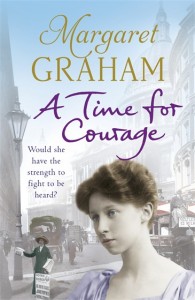
a-time-for-courage-cover-195x300I have been a fan of Margaret Graham for a while now and have read many of her books. It was with much excitement I got my hands on a copy of A Time For Courage. Margaret Graham has a special talent for writing about ballsy heroines who are worthy of making history. More than role models, these women tend to change history and pave the way for future generations, Hannah is no exception, she is the heroine of this story. Daughter to a tyrant, the sexism of the world starts at home but this is Victorian times and women are not even allowed to vote.

War is a running theme in this book and Graham has a rather special knack of writing about war well. Few writers can match her skill and knowledge of military historical fiction. You can tell that she knows her stuff. Her book draws you in and does not let go. At the start of the book is the Boer war and the aftermath, later is the first world war. That great destroyer of generations of men and broken women. Hannah is torn between one class and another, she is born into wealth and much is expected of her. If you consider embroidery and simply being a wife and mother a lot. But Hannah wants to be a teacher, she wants an education. University is denied to her by her tyrannical, misogynistic father but she finds a way with the help of her mother, even though her mother is weak, broken by her father and multiple pregnancies. In contrast Hannah has a cousin called Esther. The difference between Hannah and the selfish Esther is vast.

This is not just a story about Hannah, but also about her brother, Harry. The siblings have much in common: decency, morality, a love of family and an understanding of what is wrong and what is right. Unfortunately their decency and morality is ahead of its time. Harry  fights against racism and Hannah fights against sexism. They both face penalties and conflicts of loyalty for their values. Sometimes doing the right thing brings consequences.

This book is so well-researched it is impossible to not be impressed. This book is gritty and complex with a love story at its beating heart. Over 400 pages long and I raced through it and was sad when it finished. There is much in this book to applaud and I found myself learning a lot about history. Much is covered, including the Suffragists and Suffragette (not everyone will know the history behind the two different groups), diamond mining, human rights after war, social changes…this is more than a novel, it is also a social document. Her writing really works the imagination, creating a beautiful, wonderful and vivid story. I was sad to leave Hannah and her story behind after the last page. I feel the author probably did too.

Stunning: a must read.

A Time for Courage is available here.


‘The UK must not abandon Afghan women to the Taliban’ Olivia Colman

Olivia ColmanThe UK must not abandon Afghan women, actress Olivia Colman warned after featuring in documentary which explores the dangers women face while undertaking ordinary jobs there.

A BBC documentary, Speaking Out, Losing Lives,  on Radio Four explored the extraordinary risks women in Afghanistan face. Award-winning BBC correspondent Lyse Doucette has travelled to the country to talk to women and girls about the future of their country, at a time when security is deteriorating following the departure of foreign troops from the country.

The programme, produced with Amnesty International, features the stories of three women: a gynaecologist, the head teacher of a girls’ school and a women’s rights political advocate. Originally conceived as a performance of a play based on their testimony, Even If We Lose our Lives, commissioned by Amnesty, the programme now features extracts from the play but not interviews with the real women on whom it’s based as two of them have recently been forced into hiding due to renewed security threats.

Actress Olivia Colman voices the women’s stories. She said:

“Being a teacher, a doctor, a politician – these are important jobs but they shouldn’t be dangerous ones.

“The brave women whose words I’ve voiced risk so much to educate, to care and to shape the future of their country. Women like these are the hope for Afghanistan’s future and the UK must not abandon them to the Taliban now.

“It’s an honour to read these brave women’s words.”

Last week, to coincide with the London Conference on Afghanistan, a coalition of charities and aid organisations, the British and Irish Agencies Afghanistan (BAAG), released survey results showing that aid workers and rights campaigners in Afghanistan feel dramatically less safe than a year ago.

Sixty percent of the Afghans who responded reported that they felt less safe in their work during the past year, with half of survey respondents stating that either they, or their colleagues, have suffered intimidation or death threats during that time.

Amnesty has been running an “Occupational Hazards” campaign over the last year, drawing attention to the dangers women in work face in Afghanistan. Further details are available at www.amnesty.org.uk/afghanistan

Equal Pay Day: Female? You Will Work The Rest Of The Year For Free

Today is Equal Pay Day- so called because the average pay gap between men and women is so large that women effectively work for free from November 4th until the end of the year. Depressing, isn’t it? Something must be done about it. Maybe women should strike. I am up for it. A holiday from now until 2015? Sounds fun.

It is not just because women tend to bear the brunt of childcare, although more paternity rights and men picking up their slack in this area would help, read this brilliant article on equal pay from the Huffington Post. This year equal pay day is three days earlier than last year because the pay gap has widened. Truly shocking. For every £1 earned by a man, a women gets 80p.

Feminist_Suffrage_Parade_in_New_York_City,_1912

On Equal Pay Day 2014, Iain McMath, CEO of Sodexo Benefits and Rewards Services had some great comments on how pay differences are affecting employees and what employers can do to help:

“It is alarming to see that the difference in take home pay for men and women is actually increasing, despite it being over 40 years since the arrival of the Equal Pay Act. With figures now showing that women earn 15.7% less than their male colleagues, this inequality shows no signs of abating.

It is unsurprising, therefore, that women are suffering financial consequences of this disparity. According to our recent survey of UK workers, 54% of women say they struggle to put aside any funds due to limited disposable income, compared to just 40% of men, which clearly shows the impact that unequal pay has on financial planning.

Equal Pay Day serves to highlight the fact that there is still significant work to be done before men and women are treated equally in the workplace. Until this happens, employers need to be aware of the financial stress that many of their employees are facing, and must take steps to ensure they are helping staff to manage their money and reach their financial goals.”


Actresses Deserve Much More Than Being ‘The Girl’ And a Naked One At That

film characters - anna paquinIn my other life as an actress I have noticed a worrying trend. Well, I say ‘trend’ but actually it has been going on for years: female parts in films were the character has no name and is called ‘The girl’. The girl is usually the only female part in the film and will also have at least one nude scene. Just because it is not humiliating enough to be offered a script where all of the men have names and you don’t, you also have to get your tits out. Nameless and objectified: actresses deserve better than this. WOMEN KIND deserves better than this.

It is hard to describe just how depressing it is to work in an industry where women are reduced constantly to the sum of their parts and not even named. the worrying thing is that this is a common practice. Upon complaining about this on my Facebook, prominent film maker and casting director Rory O’Donnell said: “This is incredibly common. I made fun of it when I wrote The Landlady and gave all the female characters first, last and nicknames and called the only male character ‘The Boyfriend’….but he did get a name during shooting.” If only there were more people like Rory. 

But what is to be done? Well we need more female filmmakers for a start. Here are some highlights from an amazing survey done by Stephen Follows on his must-read blog.


  • Between 2009-13, women made up 26.2% of crew members on British films.
  • This compares favourably with top US films over the same period (22.2%)
  • Of all the departments, the Transportation department is the most male, with only 7.7% women.
  • The only departments to have a majority of women are Make-up, Casting, Costume and Production.
  • Visual Effects is the largest department on most major movies and yet only has 16.5% women.
  • 6.4% of composers on UK films were women.
  • 14% of UK films had a female director, compared with 3% of top US films.
  • The percentage of women on British films has barely changed in the past five years.


Read more about his survey here. It was in all of the papers so Stephen is truly doing his part for equality.  I often get asked why I don’t leave the industry. The truth is I did take a little break. Of course if my agent had called during that period I would have not said no, but it was a quiet period and I took the moment to reflect on my chosen path. One of them anyway. I often think that if I did not have this magazine and did not make my own projects I might go slightly mad. Luckily I do and I can fight instead. I made Prose & Cons which had a strong female cast and I am making more films with my filmmaking partner Steve McAleavy. The way forward is not to quit the industry, not to let these men give our breasts the starring role while our actual talent is just a nameless supporting character: the key is to raise awareness and FIGHT. Get men to join the battle and equal the playing field. Women deserve more and we won’t stop until we get it. The fightback starts here.


Catherine Balavage is a writer, film director, actress and the owner and editor of this magazine. She is also a published author and wrote the book How To Be a Successful Actor: Becoming an Actorpreneur which has received rave reviews and is a must for actors everywhere.


Sexism And Sexual Harassment: The Rise of Everyday Sexism

This is an article I never wanted to write. But something compelled me. A sense of injustice, perhaps. I wanted to write about my own experience of everyday sexism. More importantly, I wanted to write about what happened to me a couple of weeks ago.


everyday sexism a personal experienceTwo weeks ago I was walking home from a party in East London when a car kept beeping. I ignored it. I usually do when I am in a part of London where I don’t know people. I finally turned around and a man gestured with his hand for me to come over to his car which had stopped at a red light. I obviously ignored it because I am not an idiot. Do they really think that a women being summoned by a stranger in a car is going to make her go over there? Insane. He was in a car with three friends. He didn’t like being ignored. In fact, he turned his car around so he and his friends could go past me and yell obscenities that I would never write down, never mind say out loud. To say I was terrified was an understatement. It doesn’t take a lot of courage to yell at a women who is 5.5 and a half inches tall and 130 pounds. If they wanted to get out of the car to hurt me, kill me, rape me, I would have stood no chance. I am an emotionally strong person, I even think that after martial arts training that I can generally look after myself, but, sadly, when it comes to physical strength: men and women are not born equal. I was badly shaken. My fiancé was off at a business conference. I didn’t leave the house the next. Nor the day after that.


I wish I could say this was a one-off. Sadly it wasn’t.  About a week later I was coming back from the post office near where I live and I was about to step onto the road and then I pulled back as a car was approaching very fast. I could have crossed and made it, but I decided to be extra safe. The car beeped at me aggressively. I waved the aggression away with my hand in an almost subconscious gesture. Turns out it was a man driving. He slammed on the brakes and got out of the car. A muscular man of average height and too-high testosterone. I had crossed behind him at this point. ‘What?, What?” He yelled at me with aggressive body language and an incredibly angry tone. I pretended he wasn’t there and walked in the opposite direction. Thankfully, he didn’t follow.


In fact the intimidate-a-women-in-your-car thing isn’t rare at all. It has happened to me four times now and many friends have had the same experience. But I doubt their mothers are proud of them. it doesn’t take a lot of courage to abuse a women who is alone, whilst sitting in a hunk of metal, surrounded by your friends. When I was growing up I wasn’t allowed in certain areas and places unless one of my brothers was with me. I always hated this, thought it was sexist and unfair, but, actually, my parents were smart and knew far more about the brutality and unfairness of the world than I did.


This doesn’t mean that all men are lovely and polite when not in cars. I have been asked ‘How much?’ whilst walking through Leicester Square. I have been followed a number of times, had my bottom groped, had men leer at me, been called everything from a slut, to a whore to a c**t (no, I can’t even write it down properly) I have walked down the street in a knee-length skirt and been treated like I was walking down the street topless. My crime? Just walking down the street, minding my own business. Oh, and having breasts and a vagina. Apparently that means it is open season. I never reply, I just ignore it. Usually I can brush it off but not always. Women should not have to put up with this level of abuse. It is time we took a stand. It is time that women and men unite and say no to everyday sexism.


There is a wonderful project called the Every Day Sexism Project (and I hope they don’t mind me using their name) you can add your experiences of Every Day Sexism.  They can also be tweeted at @EverydaySexism.


Please also comment and add your own experiences below. The more we expose sexism and show how common harassment is, the more we can do to stop it and raise awareness. My one hope is that some of these men don’t realise how their actions affect the women they treat so badly and that when they do, maybe they will think twice.


The Rise of Topless Activism: But Is It a Good Or Bad Thing?

There is a worrying new trend in feminism: topless activism. Not men being topless. Women being topless because of course. Even more worrying is the number of women falling for it. The trendy #freethenipple campaign has gained ground when, in fact, it does nothing but mock the real struggle for equality. Amanda Foreman wrote an amazing piece on this for The Sunday Times. She starts off:

“New York last week was awash with nipples. Actually, it was a tiny corner of downtown Manhattan. And it wasn’t so much a sea of breasts, as a handful (or an eyeful) of women who went topless in support of a campaign to “free the nipple”. For the uninitiated, #FreeTheNipple, was the brainchild of 29-year-old Lina Esco, who felt it was unfair that men can show their nipples in public in all 50 states, whereas for women it’s a mere 13. Esco struggled in comparative obscurity until her protest was annexed recently by Scout Willis, daughter of Bruce Willis and Demi Moore. She is locked in an ongoing struggle with Instragram over the freedom to post naked selfies. The internet company maintains a blanket policy against nude photos as a way of deterring pornographers and paedophiles.” 

She then goes on to point out that the previous week in Washington another struggle for women’s rights was happening, Senator Claire McCaskill of Missouri and others were part of a task force to confront the increase in violence against female students on US Campuses. Up a shocking 20% this year. The White House is holding hearings and using Title IX, a 1972 civil rights law, to force universities to provide better protection for female students.

Foreman also goes on to say that “one does not necessarily fuel the other” and makes the good point that countries in which women are covered up are worse for violence against women and sexism but she has a problem with ‘the American tendency to confuse life and death struggles for personal freedom with exhibitionist demonstrations of myopic self-regard’. I think this is well said but I don’t think it is just an American thing.

When it comes to the nipple there is nothing to free. It is everywhere, in television shows, films, magazines, Page Three, online porn,  even women’s magazines for god’s sake. I mean, why do fashion spreads in women’s magazines nearly always have a topless women in? It is just weird.

Thing is, I am not against nudity. Neither is Amanda. She posed nude for Tatler at one point. (no nipples though).  I am not a prude. I wouldn’t go topless on a beach but I love Helmut Newton’s fashion photography. The women in those pictures are all sexy, strong and in charge. Nudity, as with most things in life, is about context.

Femen, the Ukrainian political group, is run by a man and all of the women are slim and gorgeous. When it was Femen member  Inna Shevchenko’s birthday, Femen wrote: “Femen congratulates its most famous leader, real revolutionary, wunderkind of feminism and beauty Inna Shevchenko with her birthday!” The most important word there is ‘beauty’. Femen calls itself a feminist group but is just another organisation that has become famous through the exploitation of women and their bodies. 

They may be put in the paper, but no one is listening to what they are saying. The most interesting thing about Femen’s coverage is how big the pictures are of near-naked beautiful women, compared to how small the print of whatever they are protesting against is.  Anyone can get in the paper for getting their breasts out. It does not take talent or skill, women have been doing it for years and men have been exploiting them and selling magazines and newspapers off the back of that exploitation. When Vladimir Putin was protested against by a topless activist, his leering, pervy facial expression said it all.

Femen: the rise of topless activism

They are called private parts for a reason. People may call me a prude and think I am a killjoy but, actually, it’s rude to try and make someone else live by your rules. Breasts may be ‘functional’ but so is my vagina. I don’t whip that out either.

Some women think that a women going topless is the same thing as a man going topless. Or at least should be. Unfortunately, that cannot happen now. Breasts have been too sexualised for too long. It isn’t fair but the world isn’t fair. Breasts are sexual. They always will be. A topless man is not the same as a topless women. It’s not fair, but it is a fact.

If you don’t believe me, do an experiment. Flash your breasts at a man and then ask him what you said after. If he knows what you said, let everyone know his name; he deserves a medal or something.

Topless activism gets publicity but that doesn’t mean it works. Sex sells and the world is full of perverts. People love boobs and will use any excuse to print them, as long as they are attached to an attractive women.

Even the daughter of Demi Moore and Bruce Willis, Scout,  has gotten in on the act. ‘Protesting’ against Instagram not letting her post topless pictures of herself on Instagram. She then said she was going to ‘move to Europe’. She seems sweetly unaware that in ‘Europe’ we all wear clothes and that walking around topless is called indecent exposure.

She tweeted

Scout LaRue Willis @Scout_Willis 

I’m moving to Europe, people’s victorian sensibilities need to calm the fuck down

What @instagram won’t let you see 

Scout Willis walked around the streets of New York topless to make her point, but she could have chosen something more pressing to use her celebrity for. Like the fact women are stoned to death by their own families or teenagers being raped and then hung from trees in India.

Scout Willis #freethenipple protest Scout Willis #freethenipple protest


The thing is, we have to decide what we want. Feminism can’t have it both ways. Either we want to get rid of Page Three because it is wrong and objectifies women or we want to get our nipples out to be ‘equal’ to men. Which one is it? Easy. If you want to be equal to men then ask to be paid the same as them. Ask for the same opportunities. There are more MPs called John in the House of Parliament than there is women. The average college graduate in the US who becomes a mother will sacrifice a million dollars over her lifetime and single women make 90% of what men make. The list of what to fight for is endless and, trust me, freeing our nipples is the least of it.


What do you think? Is Topless Activism a good thing?



Frost Magazine