4 in 10 admit they go online to seek health and wellbeing advice

Where Do You Go For Reliable Health Advice?

New research has revealed the growing trend of people taking important health and well-being advice from unreliable sources.

health advice online. Almost 4 in 10 people would choose to go online to seek advice on their own health and wellbeing and around 1 in 20 Brits have admitted they would turn to social media sites like Facebook or Twitter for advice on health issues.

While there are many reliable sites offering health and nutritional information, it can be easy to take the wrong advice.

The research, commissioned by Viridian Nutrition, also revealed that more than 1 in 3 people surveyed said they would go to their doctor for medical advice, only 1 in 4 claimed they would take advice from their local specialist health food store.

Jeff Martin is Managing Director of As Nature Intended, and he said health food stores are good sources of reliable health information, ‘People coming into health food stores and asking for health advice is a cornerstone of what we’re about. If people came in and saw me earlier they would have got a resolution to whatever problem they had a lot quicker’.

A further survey from the Health Food Manufacturer’s Association also revealed that, of the 10,000 adults questioned, 40% said they don’t think they have access to enough information on vitamin supplements.

The research also revealed that around 55% of the UKs population now take food supplements (a 9% rise over the past two years) and that almost 1 in 4 people get the majority of their information about vitamin supplements from the box or packaging they come in.

We also spoke to Nutritionist and Lecturer Ben Brown, ‘In terms of the reliability of health information there are a number of different potential consequences. One of the more obvious ones is misdiagnosis – you may have something that seems like a garden variety headache but it could be more serious and the same is true for diet and nutrition information.

‘You could be following something that’s potentially misguided and unhealthy in the long term. If you’re looking for general diet and lifestyle advice and in particular advice on natural products, it’s much better to get off the internet and get into your local independent health food store and speak to someone there’.

Bottled Water Causes Fire & Other Useful Things Campers Should Know

As the heatwave continues and Pitchup.com reports record levels of daily bookings (averaging around 1,000 per day), the outdoor holiday specialist has revealed six top tips for anyone taking a camping, caravanning or glamping holiday this summer.

Camping_ground_in_Kippel

  1. Pick a campsite with shade, such as a forest location. US research shows forests can be up to five degrees Celsius cooler due to the shade and evaporation.

  1. If buying a new tent, pick one with a separate groundsheet. This allows air to circulate inside the tent, even when closed, which has a cooling effect.

  1. Take extra freezer blocks: rotate them to keep food and drinks cool. Choose a site with ice pack freezing available.

  1. Pack a fan. A battery-powered fan will provide a great cooling effect, especially if a bowl of ice is placed in front of it – instant air conditioning!

  1. Put a tent over your tent – if pitched in direct sunlight, provide shade or reflectors that will keep the sun’s rays off and the tent cooler.

  1. Be careful with innocent objects that could start a fire if left in direct sunlight. Bottles of water can concentrate the sun’s rays and ignite groundsheets.


Dan Yates, founder of Pitchup.com, commented: “These are just a few of our top tips for  keeping cool – and staying safe – while camping in warm weather.  Camping air conditioning units are available but these can prove expensive and require an electric hook-up, so are not ideal for all campers on non-electric pitches.”

 “Visitors to our site can search to find the perfect site for hot weather,  from forest locations to those near water or sites that offer outdoor swimming pools.  This is our busiest time of year and with the mercury still high, we’re getting more visitors to our website every day:  daily visits average 60,000 with bookings at around 1,000 per day.  Most site owners are well versed in staying safe while camping in summer, so if in doubt always ask for advice on arrival and request a cool and shady spot that gets the least sunshine and perhaps cut back a bit on the booze.”

For more information visit www.pitchup.com.  All prices correct at time of writing.

Tips for Watch and Jewellery Care for Surf and Sea Holidays

anouska jewelleryWhether you’re planning to hit the beaches in the UK or abroad this year for some sun and sea, be sure to take care of your watches and jewellery.

WatchShop.com, provides tips on buying a watch for sea holidays as well as taking care of it and precious jewellery you may take as well.

“As you leave for holiday, be sure your hotel has a safe or in-room safe for any jewellery you may want to leave behind before heading to the beach” suggests Terry Markham of WatchShop.com. “This is especially important for high value items or even those that hold sentimental value.”

1. When choosing a watch to take to the beach, be prepared for it to be used, and used well. Make sure it is durable and tough enough to handle what you plan to do with it.

2. Sun and salt is a bad combo for anything except a tan, so choose a watch that might not fade, coloured watches can fade or can change colour slightly. This adds character in some minds, but not all, so be mindful when you buy it.

3. When buying or taking a watch you already own to water-related destination, be sure they are either water proof when submerged or at least water resistant.

4. If you’re planning to swim a lot or dive, be sure you choose a watch that is water proof to at least 5 bar (marked 50m) or higher.

Terry Markham of WatchShop.com says, “A watch can look good, but if it is full of water and doesn’t work, it is just a fancy bracelet”.

Caring for your watch and jewellery at the beach

· If you do swim with your watch, ensure the crown is pushed in fully, screwed down if the watch has this function. Don’t try to use the chronograph while the watch is wet as water can get into the pusher mechanism and enter the watch.

· If your watch does get soaked in the sea, wash it off with clean water, as prolonged exposure to sea water can damage cases and bracelets, and can affect gaskets and seals making the watch lose its water resistance.

· Try to keep all watches and jewellery out of direct sun, especially leaving on a hot surface such as a table for hours on end. Watch dials end up being faded and warp from the heat, and oils within the watch may dry up and stop lubricating delicate components.

· Try to keep leather straps dry, and keep out of water. Leather straps can cause sweat to permeate the strap leaving it salty and horrid, and water will eventually weaken the leather.

· Make sure your watch and bracelets are loose when worn in hot countries to allow the skin to breathe. This will help reduce skin rashes caused by heat.

· Don’t wear your watch or jewellery while applying sunscreen. On watches it can penetrate any leather straps and make them feel very uncomfortable, as well as discolouring stones on the case. Chemicals can also impact on the water resistance.

· If you have had the battery changed in your watch changed recently, make sure the watch is resealed to the correct pressure rating, so it performs best when you need it to.

· Make sure you don’t damage the watch when diving or doing any other high impact sports. This can lead to the watch performing terribly.


Five Mistakes Actors Make That Stop Them Getting Work

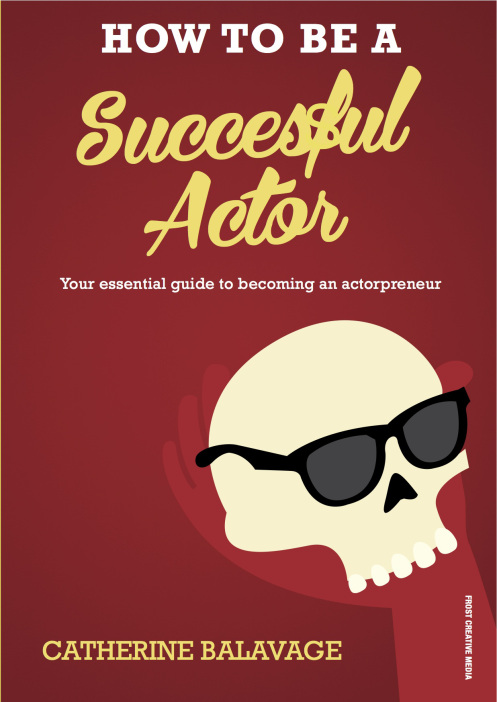
Getting work as an actor is hard. With long periods of unemployment and vast competition. This was the main reason I wrote my book How To Be a Successful Actor: Becoming An Actorpreneur. The odds are not good but you can tip them in your favour. You can make your own work, work on your skills, get your name out there. They say success is opportunity meets preparation. So here are my top five tips to make sure you are prepared and stop making the mistakes that stop you having the best career you can. Here are five mistakes actors make in their career that stop them being successful.


howtobeasuccessful_actor_book become How To Be a Successful Actor: Becoming an Actorpreneur

Arrogance

Far too many actors are arrogant. Especially just after they have left drama school. Thinking you are the best actor that ever walked the earth is not going to convince anyone else to hire you. No one likes arrogance. Always under-promise and over-deliver. Be humble and modest. The traits that make a good human being also make a good actor.


Marketing Yourself Wrong

Yes, you are an artist but you are also a product. You have to brand yourself correctly so people know what you are ‘selling’. If you are Irish and want to market yourself as an Irish actor you must be prepared for only getting Irish roles. People will try to put you into a box but you can do yourself a favour by making yourself versatile. If you don’t want to be known as a certain type of actor, (like Australian, Irish, etc) don’t market yourself that way. Play up to your strengths and downplay what will limit you getting mainstream work.

You must also update your head shots, CV and showreel at least yearly. Don’t forget to update the various online acting sites you may be on every time you get a job.


Not Continuously Working On Your Skills

Actors can go months, and even years without working. If you do not work on your skills when unemployed not only will you be rusty when it comes to audition and getting work, but you will also not be as confident. Your CV will also be lacking. You are a business, invest in yourself. Even if it is getting a camera and making some short films with friends.


Thinking The World Owes You a Living

You are not special. You do not deserve to be a super-successful world famous actor. The world does not owe you anything. A sense of entitlement is not going to do you any favours. This was the main piece of advice American casting director Daryl Eisenberg gave me for my book on becoming a successful actor. Don’t think you are better than anyone else.


Being a Jerk

No one wants to work with horrible people. The film industry is tiny, as is the theatre and TV industry. If you are rude, horrible and difficult to work with then you will have a pretty short career. Be nice. Manners cost nothing.


Catherine Balavage is an actor and writer with over ten years of experience in the industry. Her book, How To Be a Successful Actor: Becoming an Actorpreneur, came out in June this year. She also co-directed and wrote her own feature-length film, Prose & Cons, which will be out later this year.


Top Schools ‘Too Dominant’ In Acting

Sir Peter Bazalgette, the chairman of Arts Council England, has said that the British film and TV industries are ‘too dominated’ by actors who have gone to private schools and that state school pupils have too few opportunities to have a career in the arts.

He told the Sheffield Doc/Fest: “I personally don’t see why all the male actors getting Baftas should come from Eton, Good for them, and great actors, but why should they all come from Eton?”

HOMELAND_series 2

Damien Lewis went to Eton.


Actors who went to Eton include Damian Lewis, Dominic West, Tom Hiddleston and Eddie Redmayne. Actors who went to other private schools include Rory Kinnear, who went to St Paul’s, Benedict Cumberbatch, who went to Harrow and Hugh Bonneville, who attended Sherborne.


12 Years A Slave actor Chiwetel Ejiofor went to Dulwich College – where Sir Peter went to school.


“Seven per cent of the population go to private schools, and in those private schools they get an absolutely, crackingly good education in the performing and visual arts. Ninety-three per cent don’t go to those private schools and, in some state schools, people get a wonderful education in visual and performing arts as well. But in quite a lot of them they don’t.


Visual performing arts have been marginalised in some areas in the curriculum as the curriculum becomes more instrumentalist and focused on what’s known as the Stem agenda – science, technology, engineering and maths. If there is one message, we say Steam, not Stem – put the ‘a’ for arts in.”


Dame Helen Mirren also recently warned that acting was becoming the “prerogative only of kids who have money”.


Check out Frost editor, Catherine Balavage’s, new book, How To Be a Successful Actor: Becoming An Actorprenur, which tells you how to become an actor, no matter what your background.


What do you think?


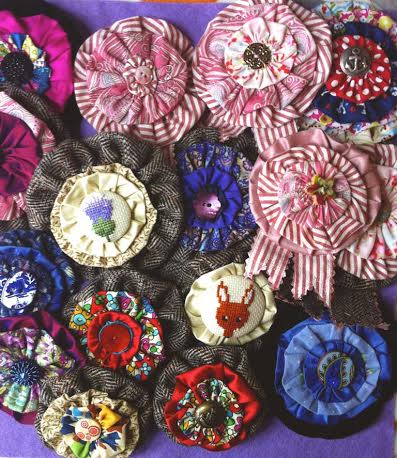
Make a Pretty Rosette Brooch To Go With Any Outfit

To celebrate summer, Maggie Robb from Made by Maggie will be sharing some of her favourite seasonal makes. They’re simple enough for everyone to try and you’ll love the results. Visit her on Facebook MadebyMaggie07 for more making tips and lovely stuff.

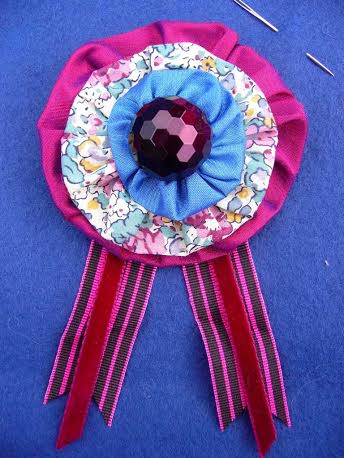
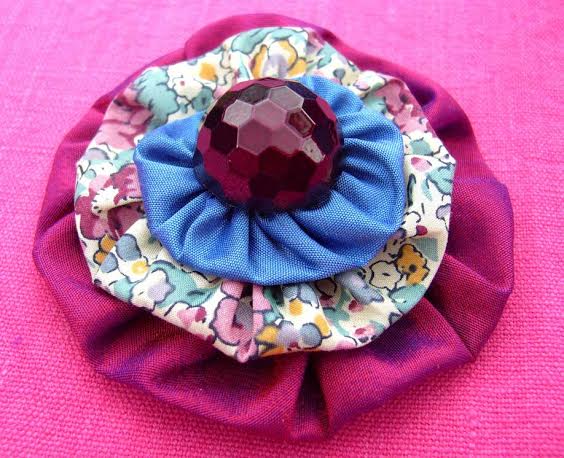
This month – Up-cycle pretty fabric scraps into an eye-catching rosette brooch.

rosettebrooch

“I totally love making these brooches – they’re a great way to use up the scraps from my other projects and it’s very satisfying piecing the rosettes together and choosing their centres from my stash of vintage buttons. You can make the rosettes as big or as little as you like, and also use them to embellish t-shirts, bags, children’s clothes- your whole world!”


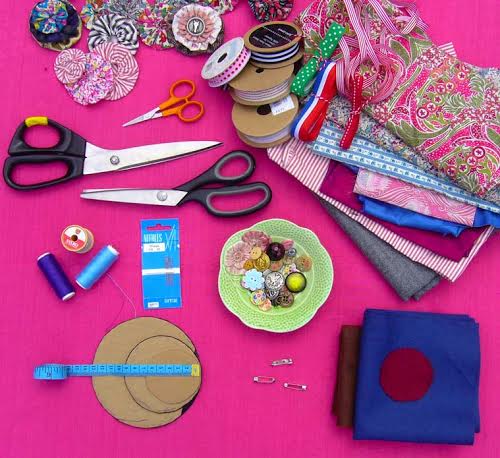
What you’ll need –

Scraps of Fabric in contrasting colours, patterns and textures.

Ribbons and buttons

Wool felt for the backing

Needle and thread

Scissors and Pinking sheers

Brooch clasp (can be found in craft shops like Hobbycraft)

craftingmagazine

howtomakerosettebrooch

#crafting

sewing

hwotomakeabrooch

howtomakearosette

craft

craftingideas

crafting

madebymaggie

First, cut out three different sized circles from your fabrics. I use cardboard templates with diameters of 16, 13 and 9 cm but you can also draw round anything handy you have at home – a cereal bowl makes a great large rosette and a mug or glass is good for a smaller size. The general rule is that your finished rosette will be approximately half the size of your ‘raw’ circle.

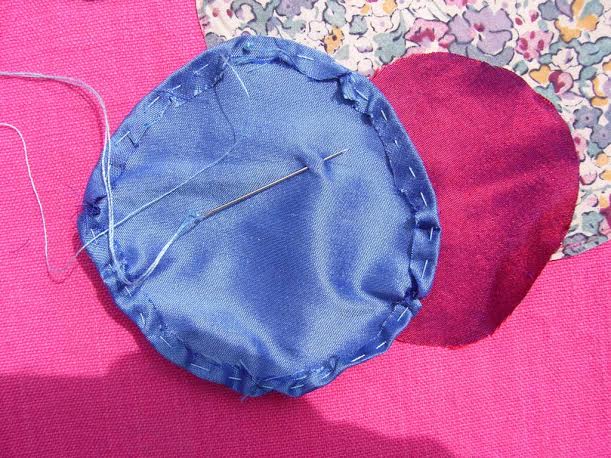
Next, fold over the edge of your first fabric circle and sew a narrow hem with a running stitch.

Gently pull your thread tight to gather up your rosette – smoothing the fabric with your fingers to create neat and even pleats. Thick fabrics like tweed or velvet work better with a larger circle but silks and Liberty Lawn and other thin fabrics can be smaller. Secure your rosette with a couple of stitches.

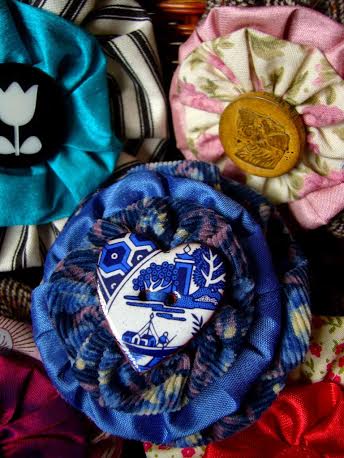
Now for the fun bit! Once you’ve got two or three different sized rosettes you can start assembling your brooch. Choose a centre piece for it from your stash of buttons or pop down to your local fabric or craft shop and choose something – buttons with ‘shank’ fastenings at the back rather than holes can be especially effective. You need to place your rosettes pleated side up to achieve the ruched rosette effect. Secure your layers and button in place with a couple of stitches.

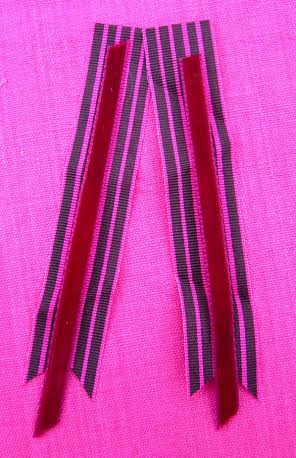
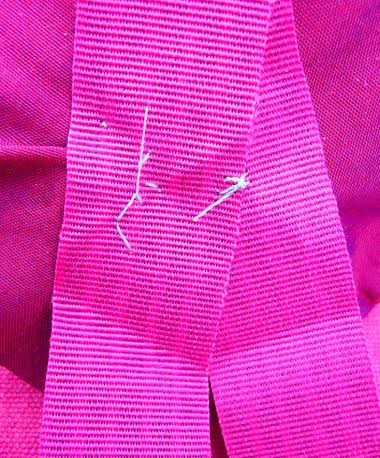
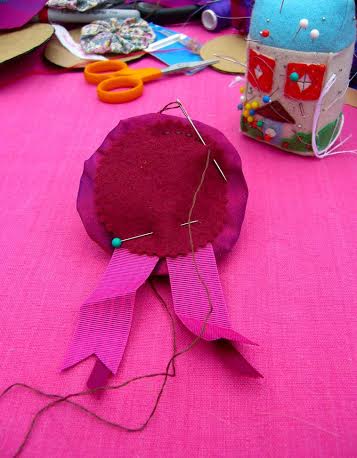
To sew a set of ‘tails’ onto the back of your rosette select a couple of lengths of matching ribbon of different widths. Cut them to the desire length and trim the ends to an arrow to avoid fraying. Attach to the back of your base rosette so that they cross over with a few stiches.

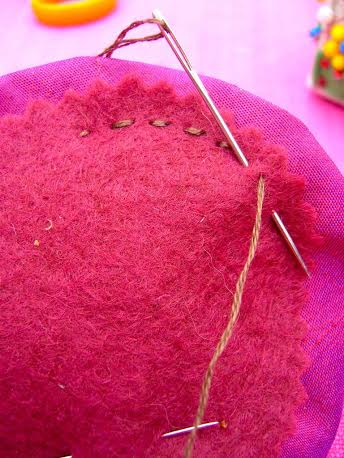
To give your brooch a professional finish cut a circle of felt in a matching shade using pinking shears (zig zag scissors!) to achieve an attractive and non-fraying edge, and sew in place on the back of your brooch using a simple running or back stitch. It’s a good idea to pin your felt circle in place before you start to sew.

Then attach your pin fastener two thirds up and in the middle of your felt circle. And you’re done!

craftingforclothes

maggierobbcraftingideas

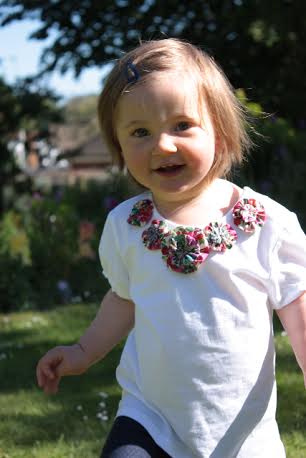
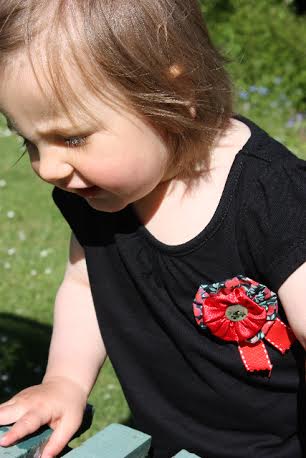
You can experiment using stripy fabrics, porcelain buttons or even cover your own with fabric or snippets of embroidery using self-covering buttons (try any haberdashers or craft store or online) for a really personalized effect. The brooches look great on coats, dresses or even pinned to canvas bags. Or sew a selection onto a t-shirt for you or a little friend! When making rosettes for young children to wear, leave out buttons as these could be a choking hazard.


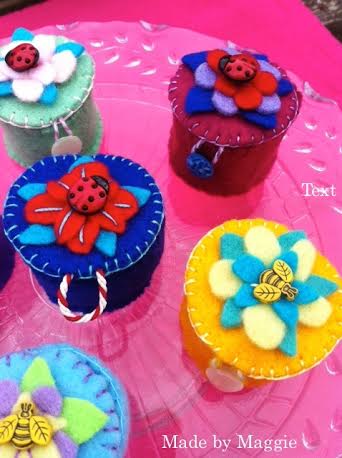
Next month…… Join Maggie as she shows you how to make a cute little tape-measure holder out of scraps of felt.


The Art of Conversation By Judy Apps Book Review

theartofconversationbookreviewSome people are socially inept. It is not polite to point it out and I never do. But let’s be honest, we have all been there: opposite the person at the party who talks about themselves endlessly, at a wedding next to someone who is critical about everything or sat beside someone who just endlessly moans on a long journey. There is an art to conversation, and plenty of people have not mastered it.


So I might be buying this book in bulk and handing it out liberally, anything to lessen the social trauma of listening to someone else droning on about their own life for an hour, or moaning and complaining and then just leaving, a negative aura lingering behind them. I once spent an hour and a half, no exaggeration, listening to a women talking about her biological clock and how it was running out, and forty minutes at another party trying to explain to someone where the Scottish Borders are “What country does it border with?” they asked. I managed to keep a straight face, wondrously.


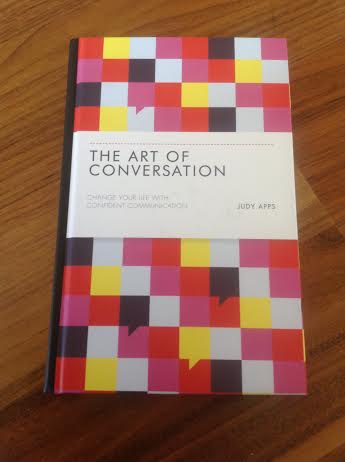
The Art of Conversation by Judy Apps is a fascinating book. It also has a section on dealing with the type of drains above. So called because they drain your energy. It has anecdotes and quotes galore, all of which are brilliant. It also has exercises and will help you understand the different levels of conversation and how they work. I read this book very fast as it is both enjoyable and educational. It also helps you overcome fear and express yourself more powerfully with your voice and body language.


An educational, insightful and enjoyable book. Definitely worth a read.


The Art of Conversation: Change Your Life with Confident Communication is available here.


Wedding Planning For Dummies | Book Review

It is well-known that planning a wedding is hard. But it is not until you actually plan a wedding that you realise that it is even harder than you thought it would be. And then some.

weddingplanningfordummiesbookreview

The mixture of organisation, planning, ideas and different family members is quite a toxic mix, making even simple decisions seems insurmountable sometimes. I am planning my own wedding at the moment and it is rapidly approaching. So when Wedding Planning For Dummies dropped through our letterbox I was incredibly happy. I am that dummy and I need that book.

Before a relative reads this and panics about how close the wedding is, it is mostly done, I am just worried I will forget something. Not so with this book. It is thorough and fun to read. What’s more, it taught me things that I never even knew. It may be a ‘For Dummies’ book but, like all in the series, it leaves you feeling very competent in the end.

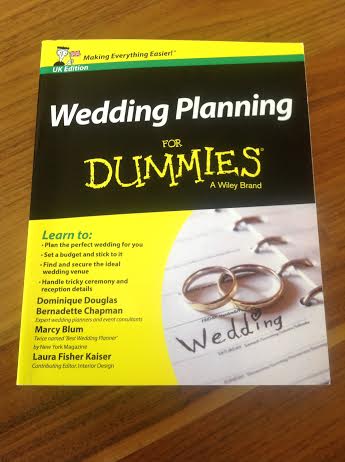
It has lots of tips on how to not pay too much, tips on finding the perfect venue, ideas for making your wedding personal and suggestions for the invitations.  Actually, it just has every basis covered that you will need for your wedmin.

It even tells you the different types of marquees you can get and I loved the section on how much alcohol to order depending on how many guests you have. It really was invaluable. Brilliant book, a must read for those planning their wedding. The authors really know their stuff.

Wedding Planning For Dummies is available here.